
Bioenergy Potential of Various Bamboo Species Carbonized in a Brick Kiln
-
Runumee Devi Borthakur

Indian Council of Forestry Research and Education, Rain Forest Research Institute, Deovan, Sotai, Jorthat, Assam, India
R.K. KalitaIndian Council of Forestry Research and Education, Rain Forest Research Institute, Deovan, Sotai, Jorthat, Assam, India
Kumud BorahIndian Council of Forestry Research and Education, Rain Forest Research Institute, Deovan, Sotai, Jorthat, Assam, India
Nilabh C. DasIndian Council of Forestry Research and Education, Rain Forest Research Institute, Deovan, Sotai, Jorthat, Assam, India
Bhuban KachariIndian Council of Forestry Research and Education, Rain Forest Research Institute, Deovan, Sotai, Jorthat, Assam, India
| Received 11 May, 2025 |
Accepted 11 Sep, 2025 |
Published 30 Sep, 2025 |
Background and Objective: Bamboo, a renewable energy source, offers a long-term supply of quality raw material due to its excellent fuel wood properties. North-Eastern Region of India, the hub of naturally grown bamboo, is lacking behind in the technical knowledge of value addition in the form of bamboo charcoal, and hence the present study has been made to assess the fuel wood characteristics of different bamboo species carbonized in the Brick Kiln. Materials and Methods: Carbonization of bamboo was done by using the Brick Kiln method. Four commonly used/available bamboo species, viz., Bambusa tulda, Bambusa balcooa, Bambusa nutans, and Dendrocalamus hamiltonii were selected for the study. Fuel wood properties like Gross Calorific Value (GCV), fixed carbon content (FC), ash content (AC), and volatile matter content (VM) were studied using the standard test method for chemical analysis of wood charcoal (ASTM). Results: The highest calorific value (6973 Kcal/kg) was recorded in B. balcooa, and the lowest was recorded in B. tulda (6363.1 Kcal/kg). Among the four bamboo species, B. balcooa has shown excellent fuel wood properties, and it can be taken up as a suitable raw material for bioenergy production. Conclusion: The Brick Kiln method of charcoal production is safe, efficient, and simple, producing good quality charcoal with high calorific value and little ash. Among the four bamboo species, B. balcooa has shown excellent fuel wood properties.
| Copyright © 2025 Borthakur et al. This is an open-access article distributed under the Creative Commons Attribution License, which permits unrestricted use, distribution, and reproduction in any medium, provided the original work is properly cited. |
INTRODUCTION
Bamboo, the green gold of the forest, once considered as ‘poor man’s timber’, is now a product of export in the global market. India occupies 10.03 million ha of natural bamboo forests out of which Northeast India covers two-thirds of the total bamboo area of our country. Thirty-five percent of the total harvested bamboo is used for making pulp, while 20% bamboo is used for housing and rural uses1. Bamboo is abundantly available in the North-Eastern Region as a “Gift of God”, and more than eighty species of bamboo are available in this region2. It plays a vital role in the socio-economic life of the rural masses due to its amazing properties like fast-growing nature and versatility, which is unique and unparalleled by any other timber being used for making items from cradles to coffins. It offers significant advantages to promote the livelihood of the rural communities as it requires less intensive management and expertise, little capital investment, and technology. The potential of bamboo to raise living standards is being recognized globally, and several countries utilize bamboo resources for sustainable development.
Bamboo, being a multipurpose, eco-friendly crop abundantly available, yet an underutilized natural resource, needs special management for sustainable use. This renewable resource needs to be utilized as an industrial raw material, renewable energy source (bio-fuel), as a wood substitute in rural and urban dwellings, engineering projects, handicrafts, furniture, and value-added products. Owing to its high calorific value, surface area, and other advantageous characteristics, it is an enthralling and superior renewable energy source that provides a long-term sustainable supply of high-quality raw materials for energy purposes3. A significant greenhouse gas CO2, can rise in the atmosphere as a result of using fuel wood as an energy source. Burning fuel wood produces CO2, which destroys an important CO2 sink in the atmosphere. Bamboo, as a CO2-neutral source of energy, can replace fossil fuels, the traditional charcoal made from trees, which alternately reduces deforestation. In the North-Eastern Region, bamboo is envisioned as the thrust area in the industrial development, economic, and ecological security of the people. This would greatly boost the rural economy and act as a poverty alleviator for the rural poor in particular through the processing and sale of bamboo goods. In the North-Eastern Region, wood and wood charcoal have been used from time immemorial. The requirement for fuel wood and charcoal increased globally with the increasing human population. To fulfill the requirement and to meet the growing demand for fuel wood significant amount of forest produce has been used, resulting decline of natural forest coverage. In India about 275 million people and 100 million forest fringe dwellers directly or indirectly depend on forests3. In various part of the country reckless destruction of natural and manmade forest for fuel wood/preparation wood charcoal and other construction purposes showing a decreasing trend of forest, contributing to climate change, soil erosion, loss of soil fertility, scarcity of water, reduction in carbon sequestration as well as habitat loss to inhabitant flora and fauna4. Bamboo has the potential to be a sustainable biomass chain worldwide to mitigate this issue. The alternative use of bamboo as a bioenergy crop would generate local jobs and income for the poorest sectors in a rapid and continuous way. The production of bamboo charcoal will promote the sustainable development of the economy, and prevent further destruction of the forest. Common charcoal is widely used in industrial as well as domestic sectors as furnace fuel, as fuel for household cooking, heating, and, in industrial furnaces, metal-working,as raw material for activated carbon and other products. It is a light, black, porous material resembling coal, with about 80-85% carbon, traces of volatile matters, and ash3. Charcoal is produced by heating biomass under a system of controlled air supply, which results in the removal of water and most of the volatile constituents. Any biomass like wood wastes, sugarcane waste, rice husk, and bamboo, is commonly used for making charcoal. There are several types of carbonization/pyrolysis Kilns, which include earthen kiln, tubular furnace, electric furnace, oil barrel kiln and metal kiln5-10. In Thailand, people in rural areas still produce charcoal using the traditional way of using earth kilns5, but it is a time consuming method and the whole process is based on assumption with no control over the yield and the charcoal obtained from earth kilns was of low quality with high tar content and volatile matter16. Pit (earth kiln) kiln method is the most primitive type of kiln, it is still used in many parts of the country and depicted as a remarkably slow or inefficient method of biomass carbonization and causing widespread deforestation and pollution11,12. Bamboo biomass, under pressure, may be converted to charcoal using the flash carbonization method in less than 30 min; however, industrial application of the reported laboratory work is not available11. The Brick Kiln method of charcoal production is an effective traditional method in comparison to other traditional method10. It is a simple method, labour requirements are moderate, and can be done by an individual farmer as a sideline business over and above giving good yields of quality charcoal. High conversion efficiency, the ability to conserve the heat of carbonization, is one of the amazing functionary properties of the Brick Kiln3.
Therefore, the present study is conducted to evaluate the properties of the bamboo charcoal produced through Brick Kiln method for energy purposes. The information obtained from the study will help to determine the suitability of the bamboo species for charcoal production, quality of bamboo charcoal produced in Brick Kiln and further value addition of charcoal for industrial application.
MATERIALS AND METHODS
Study area: The present study was conducted at Jorhat, Assam, India. During the collection of the bamboo samples, mature culms of approximately four years were selected from the Bambusetum of Rain Forest Research Institute, Jorhat, Assam, during October/November, 2021-2022. Four commonly used bamboo species viz., Bambusa tulda, Bambusa balcooa, Bambusa nutans and Dendrocalamus hamiltonii were collected and were cut in the size of 2, 1.5, and 1 m drawn from the top, middle, and basal region, with five replications each, and air dried to moisture content up to 15-25%. The bamboo samples of known moisture content were fed into the kiln for carbonization.
Bamboo carbonization process: There are several methods of carbonization. In this study Brick Kiln method of carbonization was used. A schematic diagram of the bamboo charcoal production process is given in Fig. 1.
Brick Kiln method: In the present study, the conventional Brick Kiln method for carbonization of bamboo was used . The Brick Kiln is a hemisphere in shape, with a diameter of 3 m, and is made of clay bricks with mud. The kiln has a rectangular opening at the bottom through which raw material is loaded into the kiln. The dome will have several small openings for the inflow/outflow of air. The total volume of the kiln is about 14 m3, covering an area of about 5 m2. The stake of bamboo was kept over the angled iron rods supported by bricks, which reduced the quantity of partial carbonization and smooth firing. After loading the kiln with bamboo, the loading door is closed with brick and mud plaster. It was then ignited from the small opening left below in the loading door. When the fire has caught the bamboo lot in the kiln, thick whitish smoke is emitted from the air inlets located on the upper side of the kiln, as air is taken in from the openings located near the base of the kiln. The closing of air inlets begins after the whitish smoke turns hyaline or colorless. This is the time when the exothermic reaction of the kiln begins, and the air inlets s depending on the type of bamboo (split or round). In the case of round bamboo, the completely closed kiln is left for the next 48, and 36 hrs for split bamboo. need to be closed. It usually happens after 4-6 hrs in case of thick-walled and unsplit bamboo species and 3-5 hrs in case of thin-walled unsplit bamboo species. The air inlet closing begins at the top, and the lower most is closed at the end. In case of any opening left open will turn the whole lot of bamboo in the kiln into ashes. The duration of pyrolysis varies depending on the type of bamboo (split or round). In the case of round bamboo, the completely closed kiln is left for the next 48, and 36 hrs for split bamboo.

|
After completion of the process, the main loading door is broken up, and the content in the kiln is drenched with water. The solid residue remaining in the pyrolysing chamber is called charcoal, has a porous microstructure, and primarily comprises carbon. Pyrolysis produces solid (charcoal), liquid (water and organics), and gaseous (CO, CO2, CH4 and H2) products with proportions and compositions depending on feedstock and process conditions. Bamboo biomass, when heated in the absence of air above a fixed temperature and undergoing carbonization, emits volatiles which are condensed to yield vinegar as a product containing valuable elements used in pharmaceutical products and soil amelioration. Activated charcoal is used as a deodorant, purifier, disinfectant, medicine, agricultural chemical, and absorbent of pollution and excessive moisture. The yield of charcoal per unit volume, weight, moisture content, and its calorific values were recorded using the standard method.
Determination of bamboo charcoal yield percentage: Bamboo charcoal from all four species was collected and weighed. The bamboo charcoal yield percentage was calculated according to the equation (ASTM D 1762)13:
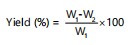 |
(1) |
where, W1 is the weight of the bamboo sample before carbonization, and W2 is the weight of the bamboo after carbonization (charcoal).
Proximate analysis: Proximate analysis was conducted to determine the fixed carbon, volatile matter, ash, and moisture content. The analysis was carried out according to the equation13 as follows:
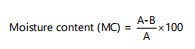 |
(2) |
where, A and B represent the weight (g) of the air-dried sample used and the weight (g) of the sample after oven-drying at 105°C, respectively.
Volatile matter content (VMC) (%) was calculated based on the following formula13:
 |
(3) |
where, B and C represent the weight (g) of the sample after oven-drying at 105°C and the weight (g) of the sample after drying at 950°C, respectively.
Ash content (AC) (%) was calculated as follows13:
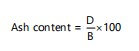 |
(4) |
where, B and D represent the weight (g) of the sample after oven-drying at 105°C and the weight (g) of the residue.
Fixed carbon (FC) content (%) was obtained using the following formula13:
Fixed carbon content = 1-MC-VMC-AC |
(5) |
where, MC is the moisture content, VMC is the volatile matter content and AC is the ash content of the sample.
Gross caloric value: The Gross Calorific Value (GCV) was determined using the following equation13:
GCV = -0.03 (AC)-0.11 (M)+0.33 (VM)+0.35 (FC) |
(6) |
where, GCV unit is kilocalorie per kilogram (Kcal/kg), and AC, M, VM, and FC represent ash content, moisture content, volatile matter, and fixed carbon, respectively.
RESULTS AND DISCUSSION
The energy potential of the bamboo charcoal was estimated based on Gross Calorific Value (GCV) or high heating value. Calorific value is the amount of heat released during the combustion of fuel, and it is an important attribute in evaluating the quality of biofuels14. The calorific value of bamboo biomass is a critical factor in determining the suitability of any particular bamboo feedstock for the production of products targeting their use as a bioenergy source, such as bamboo chips, bamboo pellets, or bamboo charcoal. The calorific values of bamboo charcoal derived from different species of bamboo were determined with a Bomb Calorimeter (IP-12, with digital Bechman Thermometer) and depicted in Table 1.
It is observed that the average energy value of bamboo charcoal ranged from 6363 Kcal/kg in Bambusa tulda and the highest of 6973 Kcal/kg in Bambusa balcooa. The study shows that the calorific values of bamboo charcoal are not only at par with the wood charcoal but also higher than those of commonly used fuel woods15. It is reported that the basic density, ash content, and volatile matters of bamboo charcoal are higher than the charcoal from Eucalyptus urophylla wood and have an average calorific value of 7800 Kcal/kg16. Studies conducted by Jarawi and Jusoh17, on five Malaysian bamboo species reported overall mean GCV in between 24.4 and 29.2 MJ/kg (~5831.6-6978 Kcal/kg). Few studies by Kumar and Chandrashekar18 and Rusch et al.19 reported that, the average GCV of bamboo is 6994 Kcal/kg, which is comparable to Eucalyptus grandis×(urophylla hybrid) wood (6670 Kcal/kg). The findings of the current studies are comparable (6973 Kcal/kg) to the reported results.
Proximate analysis of raw materials is very important to determine the quality of charcoal produced. The important parameters that were to be measured were moisture content, volatile matter content, ash content, and fixed carbon content. Moisture content (MC) that was measured for proximate analysis is the MC that was taken before the analysis was carried out.
Table 2 and 3 show the comparison of the proximate analysis of bamboo charcoal. The comparison was made to observe the properties of the traditionally produced charcoal to compete with value-added marketable products.
Charcoal with lower moisture content is more resistant to biodegradation as it is less susceptible to biological agents and environmentally stable. During combustion, charcoal with moisture content greater than 8% induced greater material consumption20. Park et al.16 reported that the volatile matter content of charcoal is related to the fixed carbon content, and the charcoal with lower volatile matter content has higher fixed carbon content. In the current study, the volatile matter content percentage in bamboo charcoal from B. tulda (20.28) and B. nutans (27.03) was significantly higher than the other two species (B. balcooa and D. hamiltonii) recorded at 13.30 and 18.61%, respectively. It is reported by Sayakoummane and Ussawarujikulchai21 that charcoal with low volatile matter content and high fixed carbon content is generally heavier, stronger, and has a higher heating capacity.
| Table 1: | Calorific values of different bamboo charcoal | |||
| Species name | Calorific value (Kcal/kg) | Average | Standard deviation |
| Bambusa balcooa | 7120 | 6973 | 71.55 |
| 7034 | |||
| 7060 | |||
| 6940 | |||
| 7010 | |||
| 6923 | |||
| 7102 | |||
| 7144 | |||
| Bambusa tulda | 6535 | 6363 | 88.64 |
| 6450 | |||
| 6317 | |||
| 6345 | |||
| 6265 | |||
| 6386 | |||
| 6392 | |||
| 6291 | |||
| Bambusa nutans | 7101 | 6749 | 71.43 |
| 6950 | |||
| 6976 | |||
| 6906 | |||
| 6891 | |||
| 6901 | |||
| 6887 | |||
| 6972 | |||
| Dendrocalamus hamiltonii | 6510 | 6487 | 26.71 |
| 6500 | |||
| 6474 | |||
| 6481 | |||
| 6452 | |||
| 6486 | |||
| 6429 | |||
| 6496 |
| Table 2: | Proximate analysis of bamboo charcoal (different species) | |||
| Proximate analysis | ||||||
| Sample type | Bamboo species | M (%) | VM (%) | Ash (%) | FC (%) | Gross calorific value (Kcal/kg) |
| Bamboo charcoal | B. tulda | 8.41 | 20.28 | 6.08 | 78.03 | 6363.1 |
| B. balcooa | 7.27 | 13.3 | 5.64 | 80.59 | 6973.7 | |
| B. nutans | 7.52 | 27.03 | 4.46 | 69.19 | 6949.1 | |
| D. hamiltonii | 7.77 | 18.61 | 5.07 | 66.55 | 6887.7 | |
| Charcoal briquette | 6859.8 | |||||
| *Test conducted at CSIR-NEIST, Jorhat, Assam | ||||||
| Table 3: | PH and electrical conductivity of different bamboo species | |||
| Species | pH | EC (μS/cm) |
| B. tulda | 8.9 | 668 |
| B. balcooa | 9.01 | 532 |
| B. nutans | 8.89 | 761 |
| D. hamiltonii | 9.24 | 816 |
Ash content percentage is the most important factor for biomass fuel22. Depending on the biomass species and quality of charcoal, the ash content percentage could vary. For high-quality charcoal ash content percentage ranges from 0.5 to 5% or slightly more than 5%23. In the current study, almost all the bamboo species achieved the desired norms. The lowest ash content was recorded for B. nutans (4.46%), followed by D. hamiltonii (5.07%), B. balcooa (5.64%), and B. tulda (6.08%) (Table 3). Ruiz-Aquino et al.22 reported that high ash-content charcoal could cause corrosion, erosion, abrasion and inside the biomass boilers, it could disturb the flow of combustion gases24. It is also reported that high ash content biomass reduces the charcoal’s calorific value and combustion quality16.
The fixed carbon content percentage obtained through the proximate analysis of the bamboo charcoal samples is presented in Table 2. The fixed carbon content of charcoal could vary among species, ranging from approximately 50% to as high as 95%. In the present study, the lowest fixed carbon content was recorded for D. hamiltonii (66.55%), followed closely by B. nutans at 69.19%. The fixed carbon content percentage in bamboo charcoal from B. balcooa and B. tulda was significantly higher, 80.59 and 78.03%, respectively. The PH value of bamboo charcoal ranges from 8.90 to 9.24, which shows that bamboo charcoal is alkaline in nature (Table 3).
Bamboos like Bambusa tulda, Bambusa balcooa, Bambusa nutans, and Dendrocalamus hamiltonii with a moisture content ranging from 17 to 25%, produce an average of 30.26% of charcoal, which includes both the properly carbonized (76%) and partially carbonized (24%). The thumb rule in wood charcoal production is that only 25% of the charcoal is produced during carbonization, but the present results show that a maximum of 38.96% of bamboo charcoal can be produced when the moisture content of the bamboo is 20%. The actual difference in charcoal yield due to bamboo species varied between 21% in Bambusa nutans and 39% in Bambusa balcooa. This difference in production may be due to air inlet control and opening of the kiln, besides the moisture content in bamboo charcoal at the time of weighing. The yield and quality of the charcoal differed significantly depending on the method of production25.
It is reported by Sangsuk et al.25 that the quality of the charcoal produced by the Pit and Drum method is not at par with the recommendation, and the fixed carbon content of charcoal from the pit and drum methods was found to be comparable (75%). In the current study, charcoal obtained from the Brick Kiln method gave a product with high fixed carbon content (78.55-84.79%). Sangsuk et al.25 opined that the volatile matter of charcoal from the pit and drum method was high (14.2-19.2), and it is significantly lower for the Brick Kiln method. The duration of pyrolysis depended on the bamboo wall thickness, split or round, and the moisture content. In case of thin-walled half and quarter split bamboo needed 18-24 hrs to complete the carbonization where as round and un-split thick-walled bamboo needed 24-48 hrs. It was observed that the surface temperature of the kiln varies from time to time during the process of carbonization, and the maximum temperature recorded was 522°C with the help of a Pyrometer.
This study reveals that the Brick Kiln method is efficient and simple, provided good quality charcoal with market potential properties. Utilization of bamboo resources as an energy plant will arrest atmospheric CO2; subsequently will necessitate cultivation to fulfill the demand. Producing bamboo charcoal is a relatively simple process and can be done by individual farmers as a sideline business, on a cottage industry scale, or on a larger local business scale, which in turn promotes the livelihood of the bamboo producer group.
CONCLUSION
Bamboo charcoal production with the Brick Kiln method is a relatively simple technology that involves little capital investment, and rural communities stand to gain from the growing worldwide trade in bamboo charcoal. The Brick Kiln method allows charcoal production in a safe, efficient, and simple manner. Slow carbonization carried out with restricted air supply, endowed with good quality charcoal with high calorific value and little ash. Switching to bamboo charcoal not only brings significant environmental benefits but also stimulates local jobs and new income streams.
SIGNIFICANCE STATEMENT
Bamboo is a miracle plant of the world, which has a rapid rate of biomass production with maximum carbon sequestering property in comparison to other plant species. The present study was conducted to study the properties of the bamboo charcoal produced through the Brick Kiln method for energy purposes. The Brick Kiln method of charcoal production is safe, efficient, and simple. This method endowed good quality charcoal with high calorific value and little ash. Bamboo charcoal production not only brings significant environmental benefits, but also stimulates local entrepreneurship.
ACKNOWLEDGMENT
Financial support in the form of the research project (2019-2022 SG) provided by National Mission on Himalayan Studies (NMHS-PMU), Kosi, Katarmal, Uttarakhand is gratefully acknowledged.
REFERENCES
- Hogarth, N.J. and B. Belcher, 2013. The contribution of bamboo to household income and rural livelihoods in a poor and mountainous county in Guangxi, China. Int. For. Rev., 15: 71-81.
- Biswas, S.A.S., 1988. Studies on bamboo distribution in North-Eastern Region of India. Indian Forester, 114: 514-531.
- Binfield, L., T.L. Britton, C. Dai and J. Innes, 2022. Evidence on the social, economic, and environmental impact of interventions that facilitate bamboo industry development for sustainable livelihoods: A systematic map protocol. Environ. Evidence, 11.
- Bujarbarua, P. and S. Baruah, 2009. Vulnerability of fragile forest ecosystem of North East India in context with the global climate change: An ecological projection. IOP Conf. Ser.: Earth Environ. Sci., 6.
- Chae, J.M., K.O. Lee and A. Amanov, 2018. Gradient nanostructured tantalum by thermal-mechanical ultrasonic impact energy. Materials, 11.
- Liu, G., Z. Fang, X. Zheng, T. Fan, J. Gao, F. Wang and J. Zhang, 2018. The characteristics of bamboo charcoal pyrolyzed from Moso bamboo culms in 14 bamboo producing areas in China. J. Nanjing For. Univ., 42: 13-19.
- Negara, D.N.K.P., T.G.T. Nindhia, I.W. Surata and M. Sucipta, 2017. Chemical, strength and microstructure characterization of Balinese bamboos as activated carbon source for adsorbed natural gas application. IOP Conf. Ser.: Mater. Sci. Eng., 201.
- Sahoo, S.S., V.K. Vijay, R. Chandra and H. Kumar, 2021. Production and characterization of biochar produced from slow pyrolysis of pigeon pea stalk and bamboo. Cleaner Eng. Technol., 3.
- Yordsri, V., C. Thanachayanont, C. Junin, N. Keratipaiboon and P. Tabai, 2018. Characterization of bamboo charcoal prepared using oil barrel kiln. Solid State Phenom., 283: 1-6.
- Sangsuk, S., S. Suebsiri and P. Puakhom, 2018. The metal kiln with heat distribution pipes for high quality charcoal and wood vinegar production. Energy Sustainable Dev., 47: 149-157.
- Antal, M.J., K. Mochidzuki and L.S. Paredes, 2003. Flash carbonization of biomass. Ind. Eng. Chem. Res., 42: 3690-3699.
- Adams, M.J., F. Awaja, S. Bhargava, S. Grocott and M. Romeo, 2005. Prediction of oil yield from oil shale minerals using diffuse reflectance infrared Fourier transform spectroscopy. Fuel, 84: 1986-1991.
- ASTM, 2013. Standard Test Method for Chemical Analysis of Wood Charcoal. ASTM International, Conshohocken, Pennsylvania.
- Antwi-Boasiako, C. and M. Glalah, 2021. Physico-combustion characteristics and suitability of six carbonized tropical hardwoods as biofuels for domestic and industrial applications. Biomass Bioenergy, 153.
- Sritong, C., A. Kunavongkrit and C. Piumsombun, 2012. Bamboo: An innovative alternative raw material for biomass power plants. Int. J. Innovation Manage. Technol., 3: 759-762.
- Park, S.H., J.H. Jang, N.J. Wistara, F. Febrianto and M. Lee, 2019. Fuel properties of Indonesian bamboo carbonized at different temperatures. BioResources, 14: 4224-4235.
- Jarawi, N. and I. Jusoh, 2023. Charcoal properties of Malaysian bamboo charcoal carbonized at 750°C. BioResources, 18: 4413-4429.
- Kumar, R. and N. Chandrashekar, 2014. Characterization of charcoal from some promising bamboo species. J. Indian Acad. Wood Sci., 11: 144-149.
- Rusch, F., D. de Moraes Lúcio and R.F. de Campos, 2020. Potential of bamboo for energy purposes. Res. Soc. Dev., 9.
- Heya, M.N., F.R. Pournavab, C.P. Artemio and C.U. Serafin, 2014. Bioenergy potential of shrub from native species of Northeastern Mexico. Int. J. Agric. Policy and Res., 2: 475-483.
- Sayakoummane, V. and A. Ussawarujikulchai, 2009. Comparison of the physical and chemical properties of briquette and wood charcoal in Khammouane Province, Lao PDR. Environ. Nat. Resour. J., 7: 12-24.
- Ruiz-Aquino, F., S. Ruiz-Ángel, W. Santiago-García, M.E. Fuente-Carrasco, J.R. Sotomayor-Castellanos and A. Carrillo-Parra, 2019. Energy characteristics of wood and charcoal of selected tree species in Mexico. Wood Res., 64: 71-82.
- Antal, M.J. and M. Grønli, 2003. The art, science, and technology of charcoal production. Ind. Eng. Chem. Res., 42: 1619-1640.
- Werkelin, J., D. Lindberg, D. Boström, B.J. Skrifvars and M. Hupa, 2011. Ash-forming elements in four Scandinavian wood species part 3: Combustion of five spruce samples. Biomass Bioenergy, 35: 725-733.
- Sangsuk, S., C. Buathong and S. Suebsiri, 2023. Modified iwate kiln for production of good quality charcoal and high volume of wood vinegar. SSRN.
How to Cite this paper?
APA-7 Style
Borthakur,
R.D., Kalita,
R.K., Borah,
K., Das,
N.C., Kachari,
B. (2025). Bioenergy Potential of Various Bamboo Species Carbonized in a Brick Kiln. Trends in Biological Sciences, 1(2), 121-129. https://doi.org/10.21124/tbs.2025.121.129
ACS Style
Borthakur,
R.D.; Kalita,
R.K.; Borah,
K.; Das,
N.C.; Kachari,
B. Bioenergy Potential of Various Bamboo Species Carbonized in a Brick Kiln. Trends Biol. Sci 2025, 1, 121-129. https://doi.org/10.21124/tbs.2025.121.129
AMA Style
Borthakur
RD, Kalita
RK, Borah
K, Das
NC, Kachari
B. Bioenergy Potential of Various Bamboo Species Carbonized in a Brick Kiln. Trends in Biological Sciences. 2025; 1(2): 121-129. https://doi.org/10.21124/tbs.2025.121.129
Chicago/Turabian Style
Borthakur, Runumee, Devi, R. K. Kalita, Kumud Borah, Nilabh C. Das, and Bhuban Kachari.
2025. "Bioenergy Potential of Various Bamboo Species Carbonized in a Brick Kiln" Trends in Biological Sciences 1, no. 2: 121-129. https://doi.org/10.21124/tbs.2025.121.129

This work is licensed under a Creative Commons Attribution 4.0 International License.