
Assessment of Heavy Metal Contamination and Demographic Characteristics of Fish Consumers around Lake Geriyo, Adamawa State, Nigeria
-
Nasir Ahmed
Department of Fisheries, Bayero University, Kano, Nigeria
Abubakar KotosDepartment of Life Sciences, Modibbo Adama University, Yola, Nigeria
Taiye Michael Ekundayo
Living Faith, Garkida, Nigeria
T.H. GarbaFederal College of Fisheries and Marine Technology, Lagos, Nigeria
| Received 10 Nov, 2025 |
Accepted 20 May, 2026 |
Published 30 Sep, 2026 |
Background and Objective: Lake Geriyo, Yola, is an important inland fishery that supports livelihoods and food security for surrounding communities. Increasing anthropogenic activities have led to possible contamination by heavy metals, raising concerns about public health impacts on local fish consumers. The main aim of this research was to assess the demographic characteristics of fish consumers around Lake Geriyo and determine the concentrations of selected heavy metals in their blood to evaluate potential health risks. The study sought to identify demographic patterns among fish consumers, quantify Fe, Mn, Zn, Cu, Cd, and Pb levels in human blood, and examine how gender, age, and occupation influence metal exposure. Materials and Methods: Blood samples from 100 adults (18-66 years) were collected in EDTA bottles under ethical approval and stored under refrigeration. Heavy metals were analyzed using Flame Atomic Absorption Spectrophotometry after standard digestion with triplicate analysis. Data were expressed as mean±SD and analyzed using descriptive statistics at p<0.05 significance level. Results: Cadmium and lead were not detected in any samples, while iron (Fe) and manganese (Mn) showed the highest mean concentrations in human blood (Fe = 7.64±3.21 mg/L in males; Mn = 0.62±0.27 mg/L). Although no significant gender or age differences were found for most metals (p>0.05), manganese varied significantly between males and females (p = 0.05). Fishermen exhibited the highest concentrations due to direct contact with lake water and fish. Conclusion: The results demonstrate that fish consumers around Lake Geriyo are exposed to elevated levels of iron and manganese, potentially increasing the risk of health complications. Continuous monitoring and community education are recommended to mitigate further contamination.
| Copyright © 2026 Ahmed et al. This is an open-access article distributed under the Creative Commons Attribution License, which permits unrestricted use, distribution, and reproduction in any medium, provided the original work is properly cited. |
INTRODUCTION
The growing dependence on inland fisheries in Nigeria has heightened concerns about environmental pollution and food safety. Lakes, rivers, and reservoirs are often subject to anthropogenic pressures such as agricultural runoff, industrial effluents, and urban waste disposal, all of which contribute to heavy metal accumulation1. Lake Geriyo, located in Yola, Adamawa State, is an essential source of fish, irrigation water, and livelihood for thousands of residents2. However, recent human activities, including waste dumping, fertilizer use, and fuel combustion, have raised the likelihood of chemical contamination.
Heavymetals such as iron (Fe), manganese (Mn), copper (Cu), zinc (Zn), cadmium (Cd), and lead (Pb) are of particular concern because of their persistence, bioaccumulation, and potential toxicity to humans and aquatic organisms3. Chronic exposure to these metals through the consumption of contaminated fish can result in severe health problems, including neurological disorders, liver damage, and cardiovascular diseases4. Specifically, the study sought to identify demographic patterns among fish consumers, quantify Fe, Mn, Zn, Cu, Cd, and Pb levels in human blood, and examine how gender, age and occupation influence metal exposure.
This study assesses the demographic characteristics of fish consumers in Lake Geriyo communities and the concentrations of selected heavy metals in their blood to evaluate potential human exposure risks. The findings contribute to understanding the link between environmental contamination and human health in fisheries-dependent populations.
MATERIALS AND METHODS
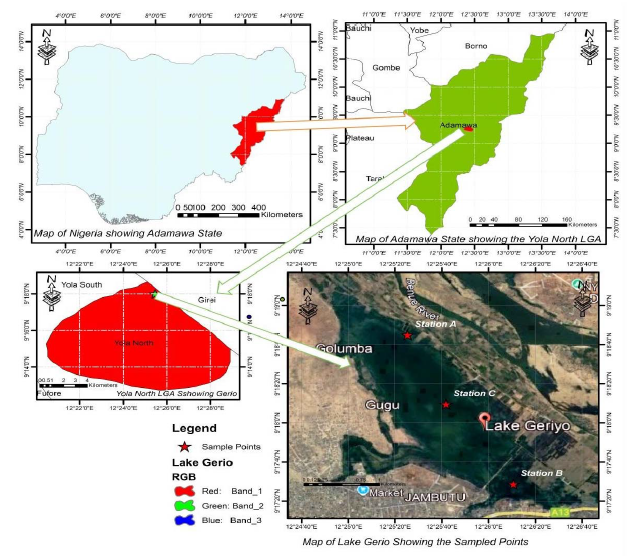
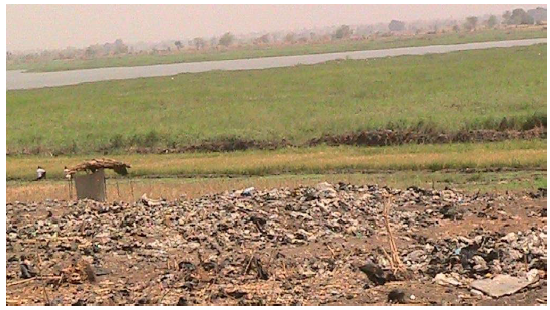
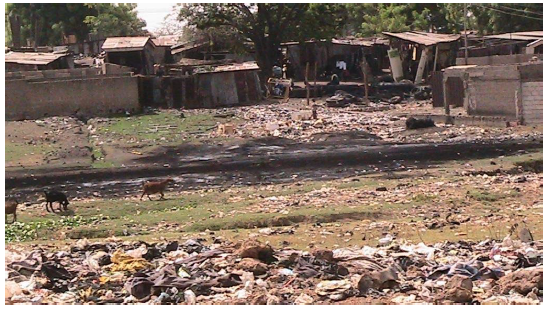
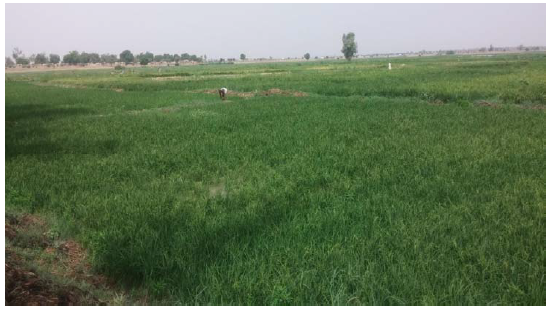
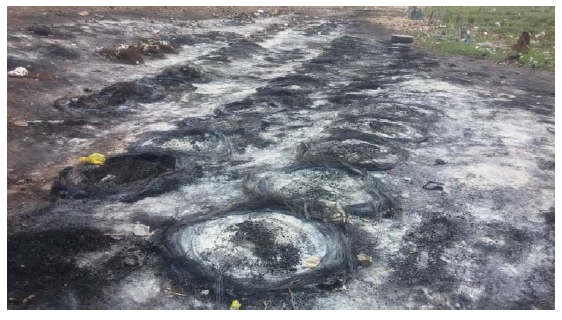
Study area: The study was conducted between January 2022 and June 2023 (18 months). Lake Geriyo (12°25 E, 9°7 N) lies on the outskirts of Jimeta-Yola, Adamawa State. Figure 1 shows the sampling stations across the lake. Figure 2-3 illustrate waste dump sites, Fig. 4 highlights intensive agricultural activities, and Fig. 5 shows tyre-burning locations, all of which represent major anthropogenic sources of heavy metal input. It covers about 750 ha and receives water from rainfall and the Benue River. Surrounding communities depend heavily on fishing, farming, and domestic water use. The lake experiences two main seasons, rainy (May-October) and dry (November-April), with temperatures ranging from 20°C to 40°C5. Anthropogenic activities include agriculture, waste disposal, and tyre burning, contributing to heavy metal pollution.
Sample collection: Blood samples were obtained from 100 adult volunteers (aged 18-66) living near the lake. Samples were collected in EDTA bottles and stored under refrigeration until analysis.
Ethical clearance was granted by the Modibbo Adama University Research Ethics Committee and the Adamawa State Ministry of Health, Nigeria.
Sample digestion and metal determination: Samples were digested following standard protocols6,7. Heavy metal concentrations were determined using Flame Atomic Absorption Spectrophotometry (Shimadzu AA- 6800). Triplicate determinations were conducted for quality assurance.
Statistical analysis: Data were analyzed using descriptive analysis. Results were presented as mean±standard deviation. Statistical tests were performed at a 95% confidence level (p<0.05).
|
|
RESULTS
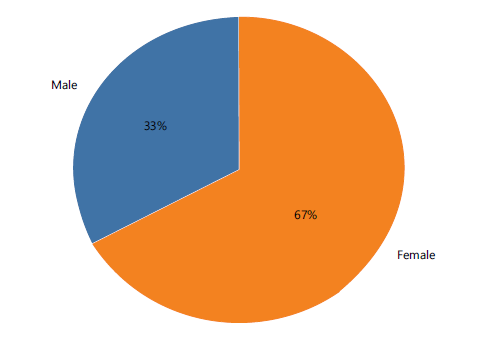
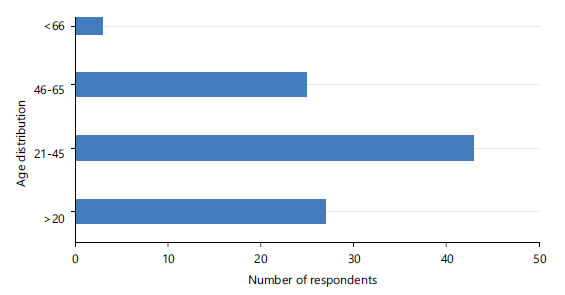
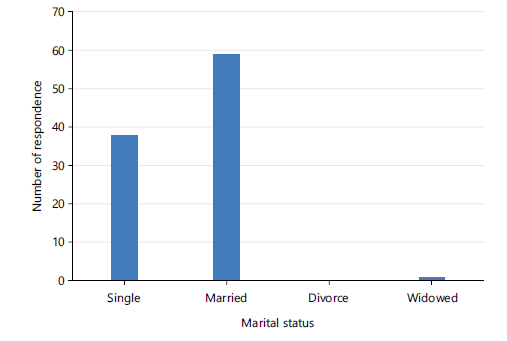
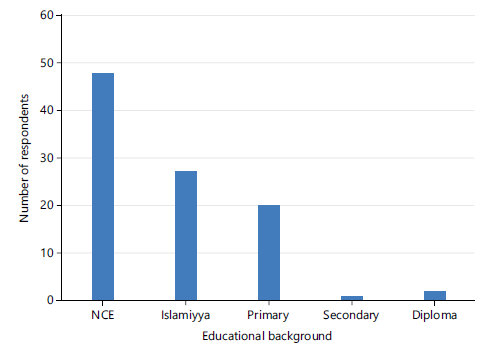
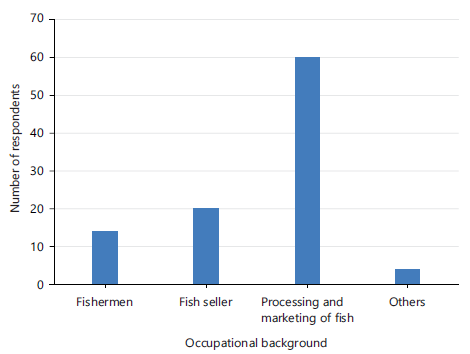
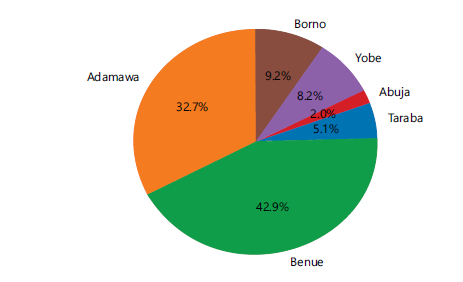
Demographic characteristics: Figure 6 shows gender distribution, indicating predominance of females (67%). Figure 7 illustrates the age distribution, with most respondents between 21-45 years. Figure 8 represents marital status, showing 60% married. Figure 9 shows educational background, while Fig. 10 illustrates occupational distribution, with marketers/processors forming the largest group. Figure 11 shows state of origin of respondents. Most fish consumers were female (67%), aged 21-45 years (44%), and married (60%). The majority were engaged in fish marketing and processing (61%), followed by fishermen (14%). Educationally, 49% had NCE, while 28% had Islamic education (Fig. 9).
|
|
|
|
|
|
|
|
|
| Table 1: | Heavy metal concentrations by gender | |||
| Metal | Male (Mean±SD) | Female (Mean±SD) | p-value |
| Cadmium (Cd) | Not detected | Not detected | - |
| Lead (Pb) | Not detected | Not detected | - |
| Iron (Fe) | 7.64±3.21 mg/L | 7.17±3.40 mg/L | >0.05 |
| Manganese (Mn) | 0.62±0.27 mg/L | 0.50±0.28 mg/L | 0.05 |
| Copper (Cu) | Within safe limits | Within safe limits | >0.05 |
| Zinc (Zn) | Within safe limits | Within safe limits | >0.05 |
| Table 2: | Heavy metal concentrations by age group | |||
| Metal | Age group comparison | Mean trend | p-value |
| Zinc (Zn) | No significant variation | Stable across groups | >0.05 |
| Iron (Fe) | No significant variation | Stable across groups | >0.05 |
| Manganese (Mn) | Slight increase in >66 years | 0.67 mg/L (highest) | >0.05 |
| Copper (Cu) | No significant variation | Stable across groups | >0.05 |
| Cadmium (Cd) | Not detected | - | - |
| Lead (Pb) | Not detected | - | - |
| Table 3: | Heavy metal concentrations by occupation | |||
| Occupation group | Fe (Mean±SD) | Mn (Mean±SD) | Cd | Pb |
| Fishermen | 7.52±3.21 mg/L | 0.59±0.30 mg/L | Not detected | Not detected |
| Marketers | Comparable (lower than fishermen) | Comparable | Not detected | Not detected |
| Sellers/other groups | Lower levels | Lower levels | Not detected | Not detected |
Cadmium and lead were not detected in any blood samples. Iron (Fe) exhibited the highest mean concentrations in males (7.64±3.21 mg/L) and females (7.17±3.40 mg/L). Manganese (Mn) levels were significantly higher in males (0.62±0.27mg/L) than females (0.50±0.28mg/L; p = 0.05). Copper (Cu) and zinc (Zn) concentrations were within safe limits shown in Table 1.
No significant variations were found in Zn, Fe, Mn, or Cu concentrations among different age groups (p>0.05). However, older consumers (>66 years) showed slightly elevated Mn levels (0.67 mg/L), suggesting cumulative exposure shown in Table 2.
Fishermen recorded the highest mean Fe (7.52±3.21 mg/L) and Mn (0.59±0.30 mg/L) levels, likely due to prolonged exposure to contaminated water and fish. Other occupational groups, such as marketers and sellers, had lower but comparable levels. All Cd and Pb concentrations were below detection limits shown in Table 3.
DISCUSSION
This study found that iron (Fe) and manganese (Mn) were present at elevated levels in the blood of fish consumers around Lake Geriyo, while cadmium (Cd) and lead (Pb) remained below detection limits. Heitland and Köster8 stated that human biomonitoring provides critical insight into population exposure to environmental pollutants. The findings of this study reveal elevated concentrations of Fe and Mn in the blood of fish consumers around Lake Geriyo, suggesting chronic exposure through fish consumption and occupational contact. Excessive iron can lead to hemosiderosis and other metabolic disorders9, while manganese accumulation has been associated with neurotoxicity and cognitive impairment10. The significantly higher Mn levels among males may relate to their direct occupational exposure during fishing activities11. The absence of detectable Cd and Pb suggests limited industrial contamination, aligning with previous reports2.
The study demonstrates that local fish consumers carry a substantial body burden of certain metals, primarily Fe and Mn, exceeding WHO reference limits4. This highlights the need for environmental management, periodic health assessments, and public health interventions targeting fisheries-dependent communities.
CONCLUSION
This study confirms that fish consumers around Lake Geriyo are exposed to elevated iron and manganese levels, with variations linked to gender and occupation. Although cadmium and lead were undetectable, iron and manganese pose significant health risks. Continuous environmental monitoring, improved waste management, and public awareness campaigns are vital to mitigate further contamination and protect public health.
SIGNIFICANCE STATEMENT
Fish remains a vital source of animal protein for millions of Nigerians, particularly those living near inland water bodies such as Lake Geriyo in Yola, Adamawa State. However, anthropogenic activities, industrial discharge, agricultural runoff, and waste dumping have contributed to the accumulation of toxic heavy metals in aquatic ecosystems. This study evaluates the demographic characteristics of fish consumers around Lake Geriyo and the concentrations of selected heavy metals in their blood. The findings reveal that although cadmium and lead were undetectable, iron and manganese concentrations in the blood samples exceeded recommended limits, posing potential health risks. These results underscore the importance of regular environmental monitoring, improved waste management, and public health awareness to safeguard communities dependent on Lake Geriyo’s fish resources.
ACKNOWLEDGMENT
The authors appreciate the Department of Life Sciences, ModibboAdama University Research Ethics Committee, and Adamawa State Ministryof Health for approving the study. Special thanks to Lake Geriyo community members for their cooperation during sample collection.
REFERENCES
- Laoye, B., P. Olagbemide, T.A. Ogunnusi and O.B. Akpor, 2025. Heavy metal contamination: Sources, health impacts, and sustainable mitigation strategies with insights from Nigerian case studies. F1000Research, 14.
- Ehiemere, V.C., J.N. Ihedioha, N.R. Ekere, C.N. Ibeto and H.O. Abugu, 2022. Pollution and risk assessment of heavy metals in water, sediment and fish (Clarias gariepinus) in a fish farm cluster in Niger Delta Region, Nigeria. J. Water Health, 20: 927-945.
- Opasola, O.A., A.T. Adeolu, A.Y. Iyanda, S.O. Adewoye and S.A. Olawale, 2019. Bioaccumulation of heavy metals by Clarias gariepinus (African Catfish) in Asa River, Ilorin, Kwara State. J. Health Pollut., 9.
- WHO, 2011. Guidelines for Drinking-Water Quality. 4th Edn., World Health Organization, Geneva, Switzerland, ISBN-13: 9789241548151, Pages: 564.
- Eyankware, M.O., C.G. Aleke, A.O.I. Selemo and P.N. Nnabo, 2020. Hydrogeochemical studies and suitability assessment of groundwater quality for irrigation at Warri and environs., Niger Delta Basin, Nigeria. Groundwater Sustainable Dev., 10.
- AOAC., 1995. Official Methods of Analysis of AOAC International. 16th Edn., AOAC International, Rockville, Maryland, USA.
- Kim, H.J., H.S. Lim, K.R. Lee, M.H. Choi and N.M. Kang et al., 2017. Determination of trace metal levels in the general population of Korea. Int. J. Environ. Res. Public Health, 14.
- Heitland, P. and H.D. Köster, 2021. Human biomonitoring of 73 elements in blood, serum, erythrocytes and urine. J. Trace Elem. Med. Biol., 64.
- Fernández-Real, J.M. and M. Manco, 2014. Effects of iron overload on chronic metabolic diseases. Lancet Diabetes Endocrinol., 2: 513-526.
- Dobson, A.W., K.M. Erikson and M. Aschner, 2004. Manganese neurotoxicity. Ann. N. Y. Acad. Sci., 1012: 115-128.
- Martin, K.V., D. Edmondson, K.M. Cecil, C. Bezi, M.L. Vance, D. McBride and E.N. Haynes, 2020. Manganese exposure and neurologic outcomes in adult populations. Neurol. Clin., 38: 913-936.
How to Cite this paper?
APA-7 Style
Ahmed,
N., Kotos,
A., Ekundayo,
T.M., Garba,
T.H. (2026). Assessment of Heavy Metal Contamination and Demographic Characteristics of Fish Consumers around Lake Geriyo, Adamawa State, Nigeria. Trends in Biological Sciences, 2(3), 246-254. https://doi.org/10.21124/tbs.2026.246.254
ACS Style
Ahmed,
N.; Kotos,
A.; Ekundayo,
T.M.; Garba,
T.H. Assessment of Heavy Metal Contamination and Demographic Characteristics of Fish Consumers around Lake Geriyo, Adamawa State, Nigeria. Trends Biol. Sci 2026, 2, 246-254. https://doi.org/10.21124/tbs.2026.246.254
AMA Style
Ahmed
N, Kotos
A, Ekundayo
TM, Garba
TH. Assessment of Heavy Metal Contamination and Demographic Characteristics of Fish Consumers around Lake Geriyo, Adamawa State, Nigeria. Trends in Biological Sciences. 2026; 2(3): 246-254. https://doi.org/10.21124/tbs.2026.246.254
Chicago/Turabian Style
Ahmed, Nasir, Abubakar Kotos, Taiye Michael Ekundayo, and T. H. Garba.
2026. "Assessment of Heavy Metal Contamination and Demographic Characteristics of Fish Consumers around Lake Geriyo, Adamawa State, Nigeria" Trends in Biological Sciences 2, no. 3: 246-254. https://doi.org/10.21124/tbs.2026.246.254

This work is licensed under a Creative Commons Attribution 4.0 International License.