
Health Promoting Effects of Bioactive Compounds in Mushrooms
-
Victor Olusegun Oyetayo


Department of Microbiology, Federal University of Technology, Akure, Nigeria
Folake Lucy OyetayoDepartment of Microbiology, Federal University of Technology, Akure, Nigeria
| Received 23 Apr, 2025 |
Accepted 15 Jun, 2025 |
Published 30 Jun, 2025 |
Mushrooms are known to be pharmacologically active; hence, they are important in food and medicine. The bioactive compounds present have been reported to exhibit pharmacological activities. During growth, mushrooms acquire various compounds from the substrates, and can also synthesize valuable secondary metabolites that are adjudged to be safe. The nutritional composition of mushrooms is of benefit to human health, coupled with the secondary metabolites synthesized. The nutritional and health potentials of mushrooms have made them a suitable raw material for producing new drugs and functional foods that could be of benefit to mankind. Hence, mushrooms and their products are of immense value in nutraceutical, cosmeceutical, and pharmaceutical industries. This review examines bioactive compounds present in some mushrooms and their benefits to humans.
| Copyright © 2025 Oyetayo and Oyetayo. This is an open-access article distributed under the Creative Commons Attribution License, which permits unrestricted use, distribution, and reproduction in any medium, provided the original work is properly cited. |
INTRODUCTION
Man has made use of mushrooms as food and medicine from time immemorial. Their use as food is based on their protein and mineral contents1. Various evidence-based research has established the pharmacological potential of mushrooms2-4. The pharmacological properties of these mushrooms have been associated with the presence of dietary fibres, polysaccharides, terpenes, and other yet to be identified bioactive substances2,5,6.
These groups of compounds help the body to fight infection and diseases and are called biological response modifiers (BRM). Human needs these compounds to complement insufficient one produced by the body in order to maintain good health. The fruit bodies and the mycelium of mushrooms are rich in these compounds that can positively modulate the body7,8. Lentinan isolated from Lentinus edodes is a good example of a mushroom bioactive that can strengthen the immune system9.
Reports have shown that only 10% of the mushrooms on earth are known10. However, most of these mushrooms are still in the wild. Presently, there are few or no records of their identities, nutraceutical properties, and bioactives in these wild mushrooms. Earlier studies also revealed that macrofungi such as Lenzites, Coriolopsis, Trametes, Ganoderma, Termitomyces, and Pleurotus species collected from Nigeria possess antioxidant, antimicrobial, antiinflammatory, and anticancer properties11. Preliminary molecular identification of sequences obtained from some macrofungi collected in Nigeria shows that they are not 100% homologous with similar macrofungi collected from other parts of the world12-14. The implication of the genetic difference(s) is that mushrooms collected from different parts of the world contain different bioactive compounds that can be used to solve some health challenges we face as humans. This review aims to highlight the health-promoting properties of bioactive compounds found in mushrooms and their potential therapeutic applications.
MUSHROOMS AND THEIR MEDICINAL PROPERTIES
Edible and medicinal mushrooms are known worldwide to possess several health-promoting properties. In most cases, information on ethnomedicinal uses is not documented but orally passed across from one generation to another15. Oso16 reported that local mushroom merchants and the elderly are the reservoirs of the ethnomedicinal uses of mushrooms in Nigeria. The possibility of losing this useful information is very high. For instance, in Nigeria, various researchers have documented the local use of mushrooms in medicine15,17.
Mushrooms are known to be a source of natural antibiotics18. There have been several reports on the antimicrobial property of several mushrooms such as Lycoperdon pusilum, Pleurotus tuberregium, Pleurotus ostreatus, Ganoderma lucidum, Coriolopsis species, Rigidoporus ulmarius, Rigidoporus microporus, Trametes spp., Trametes elegans, Trametes lactinea, and Lenzites quercina sourced from Nigeria19-25. The cholesterol-lowering ability of mushrooms in rats had been reported. In a study, a diet compounded with mushrooms was found to significantly lower (p<0.05) bad cholesterol in rats26. Mohammed et al.27 also reported the potential of aqueous extract of Ganoderma lucidum to lower blood sugar in rats.
There have been several reports on the antioxidant properties of mushrooms collected in Nigeria. The following mushrooms, Coriolopsis polyzona, Lenzites species, Trametes species, and Pleurotus species have been reported to possess significant antioxidant effect4,11,28-32. Multimechanistic antioxidant assays revealed that these mushrooms possess good antioxidant properties, and their activities are concentration-dependent. The anticancer, anti-inflammatory, and ability to reduce metal toxicity of some mushrooms have been documented3,33,34.
BIOACTIVE COMPOUNDS PRESENT IN MUSHROOMS
Mushrooms produce various secondary metabolites35, and these compounds are good candidates for the development of novel biopharmaceutical agents36. These natural compounds are known to have minimal side effects and are inexpensive. Researchers in Nigeria have screened some mushrooms and their extracts qualitatively and quantitatively for mycochemical compounds. It has been reported that the major mycochemicals in mushrooms are polyphenols, alkaloids, oxalate, flavonoids, tannins, and saponins. Quantitatively, the amount of these mycochemicals varies from one species of mushroom to the other. In a study, Ogbomida et al.34 reported the qualitative and quantitative (in percentage) mycochemicals in Pleurotus tuberregium as follows: Polyphenols (2.58%), alkaloid (2.46%), oxalate (4.25%), flavonoid (1.68%), tannin (0.38%), and Saponin (trace). Falade et al.37 also reported these mycochemicals in the extract of a nonedible mushroom, Rigidoporus microcopus. Table 1 shows the qualitative mycochemical compositions of some mushrooms collected in Nigeria.
The above mycochemicals have been reported to have various effects on animal physiology. For instance, alkaloids are stimulants that act by prolonging the action of several hormones. Flavonoids possess anticancer and antimicrobial effects, while tannins and saponins are known to be effective antifungal, anticancer, and generally as anti-infective agent38,39. The taste and aroma of these mushrooms is also affected by these mycochemicals.
| Table 1: | Mycochemical composition of some mushrooms collected in Nigeria | |||
| Mushrooms | Tanin | Saponin | Flavonoids | Steroids | Terpenoids | Alkaloids | Phlobatanin | Anthroquinone | Cg | References |
| Rigidoporus microporus | +ve | +ve | +ve | +ve | -ve | -ve | -ve | -ve | +ve | Falade et al.37 |
| Rigidoporus ulmarius | +ve | +ve | +ve | +ve | +ve | +ve/-ve | -ve | -ve | +ve | Ogidi and Oyetayo24 |
| Lenzites quercina | +ve | +ve | +ve | +ve | +ve | +ve/-ve | -ve | +ve/-ve | +ve | Ogidi and Oyetayo31 |
| Trametes lactinea | +ve | +ve | +ve | +ve | +ve | -ve | -ve | -ve | +ve | Awala and Oyetayo29 |
| Trametes elegans | +ve | +ve | +ve | +ve | +ve | +ve | -ve | -ve | +ve | Awala and Oyetayo30 |
| Ganoderma lucidium | +ve | +ve | +ve | +ve | +ve | +ve | +ve/-ve | +ve/-ve | +ve | Ogidi and Oyetayo24 |
| Pleurotus ostreatus | +ve | +ve | +ve | ND | +ve | +ve | ND | ND | ND | Fasoranti et al.25 |
| -ve: Absent, +ve: Present, -ve/-ve: Present in some extracts of the mushroom, Cg: Cardiac glycosides and ND: Not Determined | ||||||||||
The presence of the following functional groups, viz, hydroxyl (OH), alkyl (CH3), alkene (-CH2), alkane (-CH), aromatic (CH), amide (NH), carbonyl (C=O), and carboxylic (COOH) has been reported in Coriolopsis polyzona and Lenzites querzina as revealed by FT-IR spectroscopic analysis24,33. These functional groups have also been reported in Agaricus placomyces, A. pseudopratensis, Grifola frondosa40. They are the major constituents of polysaccharides, fatty acids, amino acids, sugars, alcohols, terpenoids, phenols, ligands, and flavonoids found in mushrooms41. Secondary metabolites containing these functional groups are potentially useful mycochemicals that exhibit antimicrobial, antioxidant, anticancer, and anti-inflammatory properties42,43.
The bioactive compounds present in mushrooms that have been found to possess bioactivity are polysaccharides, proteins, terpenes, phenolic compounds, and unsaturated fatty acids44. Polysaccharides and polyphenols isolated from eight genera of wild mushrooms collected from two locations in Lagos, Nigeria, were reported to have significant anti-cancer properties45. These compounds had earlier been reported to have inhibitory effects against yeast cell proliferation in a dose-dependent manner46.
Mycopolysaccharides possess good immunoceutical properties. Lentinan, a polysaccharide obtained from Lentinus edodes, was found to possess good immunoceutical properties, which are effective against viral hepatitis and diseases associated with low immunity9. According to Wasser and Weis6 mushroom polysaccharides act as anticancer by activating different immune responses in the host. An earlier report on the potential anticancer properties of mushrooms collected in Nigeria was demonstrated by Adewusi et al.47. Two common edible mushrooms, Termitomyces robustus and T. striatus, indigenous, were reported to possess anticancer properties. Furthermore, the anticancer effects of three wild macrofungi, collected in Nigeria were had been reported by Unekwu et al.11. The extracts from these wild macrofungi were able to inhibit the proliferation of several human cancer cell lines.
Mushrooms collected in Nigeria are also rich in healthy fatty acids and their derivatives Table 2. Adeoye-Isijola et al.48 reported the presence of 9,12-Octadecanoic acid ethyl ester (37.39%) and Hexadecanoic acid ethyl ester (14.49%) as the two most occurring bioactive compounds in the ethanolic extract of Lentinus squarrosulus Mont. In another study, Mensah-Agyei et al.49 reported that four compounds were dominant in acetone extract of Daedalea elegans accounting for 83.58% [9,12-octadecadienoic acid (44.64%), n-hexadecanoic acid (23.59%), 9(11)-dehydroergosteryl benzoate (8.37%), octadecanoic acid (6.98%)] Ogidi et al.33 had earlier reported the presence of these groups of fatty acids in extracts obtained from Lenzites quercina. Most of these bioactive compounds are used in the formulation of cosmetics, pharmaceuticals, and nutraceuticals50,51. Generally, GC-MS analysis of extracts revealed the presence of fatty acids. Proteins and peptides in mushrooms are also very important. About 19 to 35% dry weight of mushrooms is made up of protein. They possess health-enhancing properties such as enhancement of the digestion and absorption of exogenous nutritional ingredients, the modulation of the immune function to help the host in the defense against invasion by pathogens, and the inhibition of some enzymes52. Lectins, fungal immunomodulatory proteins (FIPs), ribosome inactivating proteins (RIPs), ribonucleases, and laccases are examples of proteins and peptides with health-promoting promoting-properties44.
| Table 2: | GC-MS profiling of acetone extract of Daedalea elegans | |||
| Peak number | R. Time | Name | Area (%) |
| 1 | 7.154 | Benzoic acid | 0.4 |
| 2 | 8.449 | Nonanoic acid | 0.14 |
| 3 | 8.734 | Oxetane, 2,2,4-trimethyl- | 0.28 |
| 4 | 9.714 | n-Decanoic acid | 0.09 |
| 5 | 12.551 | Phthalimide | 0.44 |
| 6 | 12.72 | Dodecanoic acid | 0.24 |
| 7 | 14.057 | E-2-Hexenyl benzoate | 0.21 |
| 8 | 14.267 | 2,4-Difluorobenzene, 1-benzyloxy- | 0.16 |
| 9 | 15.067 | Tetratetracontane | 0.55 |
| 10 | 15.141 | lso Propylphosphonic acid, fluoroanhydride | 0.28 |
| 11 | 15.453 | Benzene, (1-methylundecyl)- | 0.21 |
| 12 | 15.628 | Tetradecanoic acid | 0.76 |
| 13 | 15.868 | Cyclohexanepropanol, .alpha.,2,2,6-tetramethyl | 0.56 |
| 14 | 16.464 | Pentadecanoic acid | 0.71 |
| 15 | 16.703 | E-2-Hexenyl benzoate | 0.32 |
| 16 | 16.845 | Pentadecanoic acid | 0.97 |
| 17 | 17.435 | 1-Decanol, 2-hexyl- | 0.46 |
| 18 | 17.764 | 9-Tetradecenal, (Z)- | 1.67 |
| 19 | 18.045 | n-Hexadecanoic acid | 23.59 |
| 20 | 18.837 | Phthalic acid, butyl undecyl ester | 1.08 |
| 21 | 18.972 | Eicosanoic acid | 0.79 |
| 22 | 19.801 | 9,12-Octadecadienoic acid (Z,Z)- | 44.64 |
| 23 | 19.97 | Octadecanoic acid | 6.98 |
| 24 | 23.641 | Bis(2-ethylhexyl) phthalate | 2.64 |
| 25 | 24.302 | 2,2,4-Trimethyl-3-(3,8,12,16-tetramethyl-he | 1.95 |
| 26 | 26.423 | 9(11)-Dehydroergosteryl Benzoate | 8.37 |
| 27 | 26.694 | 9(11)-Dehydroergosterol Tosylate | 1.28 |
| 28 | 26.948 | 4,6-Decadienal,8-ethyl-10-[4-hydroxy-8-(2 | 0.22 |
| 100.00 | |||
| Source: Mensah-Agyei et al.49 | |||
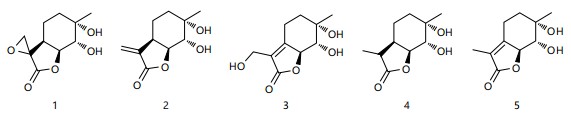
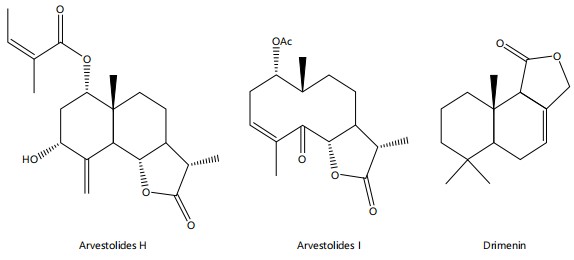
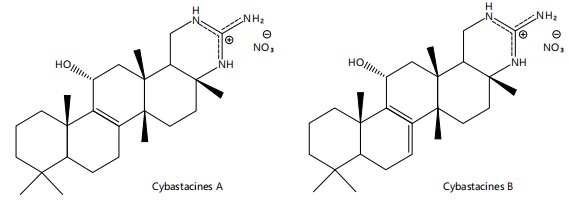
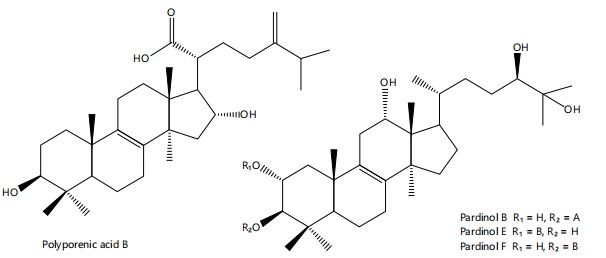
Other bioactive compounds found in abundance in mushrooms are the terpenes. They are volatile, unsaturated hydrocarbons. They are among the largest classes of secondary metabolites produced by fungi and plants. They are made up of five carbon isoprene units, which can be arranged in thousands of ways. This made them structurally diverse. Terpenoids are a modified class of terpenes with different functional groups and an oxidized methyl group moved or removed at various positions53. Terpenoids are biologically active and are known to possess a wide range of health benefits such as antioxidant, antiviral, anticancer, anti-inflammatory, antimalarial, and anticholinesterase activities44. Terpenoids have therefore found application in the field of foods, drugs, cosmetics, hormones, vitamins, and so on53. They are classified into monoterpenoids, sesquiterpenoids, diterpenoids, sesterpenoids, and triterpenoids (Fig.1-5) depending on the number of carbon units they possess53,54.
Mushrooms can absorb mineral elements and bioaccumulate them as functional organic compounds. Some of these essential elements are selenium, iron, zinc, and so on. For instance, selenium is required for the biosynthesis of selenoenzymes and selenoproteins, which are important in normal physiological processes. Maximum uptake of selenium plays a prominent role in preventing various types of cancer and diseases like diabetes, age-related immunosuppression, and even problems related to fertility55. Iron, on its own, is essentially involved in the synthesis of adenine triphosphate (ATP), transport of oxygen, Deoxyribonucleic Acid (DNA), and electron transport56. It is also a component of hemoglobin and myoglobin, and when it is low in supply, it leads to a deficiency disease called iron deficiency anemia (IDA). In a study, Pleurotus spp., enriched with selenium was found to significantly enhance the antioxidant and antimicrobial properties than non-selenium fortified Pleurotus spp.57.
|
|

|
|
Mushrooms can therefore be used as a vehicle to supply mineral elements that are not in an adequate amount in our diet. This will be a definite strategy to solve the problem of mineral elements malnutrition. Therefore, artificial cultivation of mushrooms on rationally prepared growth medium rich in mineral elements may help to produce novel bioactive compounds that can help in solving the present problem of ineffectiveness of currently known synthetic pharmaceutical compounds.
|
CONCLUSION
Currently, mushrooms in Nigeria are mainly underutilized as food, while their pharmacological potential has not been well exploited. The two major constraints militating against the sustainable exploitation of mushrooms are the seasonal nature of mushrooms and the difficulty in distinguishing edible from poisonous species. Practical steps can be employed in solving the problem of the seasonal nature of mushrooms, while a combination of morphological and molecular procedures can be used to solve the problem of identification. Moreover, aggressive enlightenment on their health-promoting properties has to be made known to both the poor and rich in Nigeria. Presently, a lot of people in Nigeria may be looking at mushrooms as a poor man’s food.
SIGNIFICANCE STATEMENT
This study discovered the immense potential of mushrooms as natural sources of bioactive compounds that can be beneficial for the development of affordable, safe, and effective products in the nutraceutical, cosmeceutical, and pharmaceutical industries. These compounds include polysaccharides, phenolics, terpenoids, and proteins, which exhibit antioxidant, antimicrobial, anti-inflammatory, and anticancer activities. The study also highlights the socioeconomic implications of mushroom bioactives, particularly in their capacity to generate employment through bioindustry development. This study will help researchers to uncover the critical areas of mushroom biotechnology and industrial applications that many researchers were not able to explore. Thus, a new theory on the sustainable utilization of fungal bioresources for global health and economic development may be arrived at.
REFERENCES
- Oyetayo, F.L., A.A. Akindahunsi and V.O. Oyetayo, 2007. Chemical profile and amino acids composition of edible mushrooms Pleurotus sajor-caju. Nutr. Health, 18: 383-389.
- Mizuno, T., 1999. The extraction and development of antitumor-active polysaccharides from medicinal mushrooms in Japan (Review). Int. J. Med. Mushrooms, 1: 9-29.
- Oyetayo, V.O., A. Nieto-Camacho, B.E. Rodriguez and M. Jimenez, 2012. Assessment of anti-inflammatory, lipid peroxidation and acute toxicity of extracts obtained from wild higher basidiomycetes mushrooms collected from Akure (Southwest Nigeria). Int. J. Med. Mushrooms, 14: 575-580.
- Oyetayo, O.V., A. Nieto-Camacho, T.M. Ramırez-Apana, R.E. Baldomero and M. Jimenez, 2013. Total phenol, antioxidant and cytotoxic properties of wild macrofungi collected from Akure Southwest Nigeria. Jordan J. Biol. Sci., 6: 105-110.
- Lorenzen, K. and T. Anke, 1998. Basidiomycetes as a source for new bioactive natural products. Curr. Org. Chem., 2: 329-364.
- Wasser, S.P. and A.L. Weis, 1999. Therapeutic effects of substances occurring in higher basidiomycetes mushrooms: A modern perspective. Crit. Rev. Immunol., 19: 65-96.
- Wasser, S., 2002. Medicinal mushrooms as a source of antitumor and immunomodulating polysaccharides. Appl. Microbiol. Biotechnol., 60: 258-274.
- Barros, L., R.C. Calhelha, J.A. Vaz, I.C.F.R. Ferreira, P. Baptista and L.M. Estevinho, 2007. Antimicrobial activity and bioactive compounds of Portuguese wild edible mushrooms methanolic extracts. Eur. Food Res. Technol., 225: 151-156.
- Bohn, J.A. and J.N. BeMiller, 1995. (1→3)-β-D-glucans as biological response modifiers: A review of structure-functional activity relationships. Carbohydr. Polym., 28: 3-14.
- Hawksworth, D.L., 2001. The magnitude of fungal diversity: The 1.5 million species estimate revisited. Mycol. Res., 105: 1422-1432.
- Unekwu, H.R., J.A. Audu, M.H. Makun and E.E. Chidi, 2014. Phytochemical screening and antioxidant activity of methanolic extract of selected wild edible Nigerian mushrooms. Asian Pac. J. Trop. Dis., 4: S153-S157.
- Gbolagade, J.S., T.W. Timipanipiri, O.J. Olawuyi and O.O. Oluranti, 2024. Characterization and diversity studies of wild Ganoderma species. From selected agro ecological zones in Nigeria. GSAR J. Appl. Med. Sci., 1: 21-36.
- Udeh, A.S., C.U. Ezebialu, E.A. Eze and G.A. Engwa, 2021. Antibacterial and antioxidant activity of different extracts of some wild medicinal mushrooms from Nigeria. Int. J. Med. Mushrooms, 23: 83-95.
- Oyetayo, O.V., 2017. Morphological Characteristics and Molecular Study of Trametes Species. LAP LAMBERT Academic Publishing, Saarbrücken, Germany, ISBN: 9783659640568, Pages: 52.
- Akpaja, E.O., O.S. Isikhuemhen and J.A. Okhuoya, 2003. Ethnomycology and usage of edible and medicinal mushrooms among the Igbo people of Nigeria. Int. J. Med. Mushrooms, 5: 313-319.
- Oso, B.A., 1975. Mushrooms and the Yoruba people of Nigeria. Mycologia, 67: 311-319.
- Oso, B.A., 1977. Mushrooms in Yoruba mythology and medicinal practices. Econ. Bot., 31: 367-371.
- Lindequist, U., T.H. Niedermeyer and W.D. Julich, 2005. The pharmacological potential of mushrooms. Evidence-Based Complementary. Altern. Med., 2: 285-299.
- Udu-Ibiam, O.E., O. Ogbu, O. Nworie, U.A. Ibiam and M.V. Agah et al., 2014. Antimicrobial activities of some selected edible mushrooms and spices against clinical isolates from Federal University Teaching Hospital Abakaliki (FETHA), Ebonyi State, Nigeria. Int. J. Sci. Technol. Res., 3: 251-255.
- Ezeronye, O.U., D.A.S. Okwujiako and I.C.I.A. Onumajuru, 2005. Antibacterial effect of crude polysaccharide extracts from sclerotium and fruitbody (Sporophore) of Pleurotus tuber-regium (Fried) Singer on some clinical isolates. Int. J. Mol. Med. Adv. Sci., 1: 202-205.
- Ofodile, L.N., M.S.J. Simmons, R.J. Grayer and N.U. Uma, 2008. Antimicrobial activity of two species of the genus Trametes Fr. (Aphyllophoromycetideae) from Nigeria Int. J. Med. Mushrooms, 10: 265-268.
- Oyetayo, V.O. and M.U. Oghumah, 2013. Antagonistic potential of Coriolopsis species extracts on Escherichia coli isolated from well water in Akure, Nigeria. Res. Rev. BioSci., 7: 333-337.
- Abubakar, Z., O.C. Ogidi and V.O. Oyetayo, 2016. Assessment of antistaphylococcal activity of ethanolic extract of Lenzites quercina (L) P. Karsten against clinical Staphylococcus species. Clin. Phytosci., 2.
- Ogidi, O.C. and V.O. Oyetayo, 2016. Phytochemical property and assessment of antidermatophytic activity of some selected wild macrofungi against pathogenic dermatophytes. Mycology, 7: 9-14.
- Fasoranti, O.F., C.O. Ogidi and V.O. Oyetayo, 2018. Phytochemical constituents and antimicrobial evaluation of ethanolic extracts from Pleurotus spp. cultivated on substrate fortified with selenium. Microb. Biosyst. J., 3: 29-39.
- Oyetayo, F.L., 2006. Responses of plasma lipids to edible mushroom diets in albino rats. Afr. J. Biotechnol., 5: 1263-1266.
- Mohammed, A., A.B. Adelaiye, M.S. Abubakar and E.M. Abdurahman, 2007. Effects of aqueous extract of Ganoderma lucidum on blood glucose levels of normoglycemic and alloxan-induced diabetic Wistar rats. J. Med. Plants Res., 1: 34-37.
- Fagbohungbe, Y.D. and V.O. Oyetayo, 2014. Phytochemical and antioxidant properties of Trametes species collected three districts of Ondo State, Nigeria. Res. Rev. BioSci., 9: 345-350.
- Awala, S.I. and V.O. Oyetayo, 2015. Molecular identity and antimicrobial profile of Trametes species collected from the teaching and research farm of the Federal University of Technology, Akure, Nigeria. J. Adv. Med. Pharm. Sci., 4.
- Awala, S.I. and V.O. Oyetayo, 2015. The phytochemical and antimicrobial properties of the extracts obtained from Trametes elegans collected from Osengere in Ibadan, Nigeria. Jordan J. Biol. Sci., 8: 289-299.
- Ogidi, C.O. and V.O. Oyetayo, 2015. Antifungal effect of Coriolopsis polyzona (Pers) on fungi isolated from remnant foods and wastewater from restaurants in Akure metropolis, Nigeria. Afr. J. Microbiol. Res., 9: 527-533.
- Ogidi, C.O., O.V. Oyetayo and B.J. Akinyele, 2018. Estimation of total phenolic, flavonoid contents and free radical scavenging activity of a wild macrofungus, Lenzites quercina (L.) P. Karsten. Curr. Res. Environ. Appl. Mycol., 8: 425-437.
- Ogidi, O.C., V.O. Oyetayo, B.J. Akinyele, O.O. Ogbole, J.A. Adeniji and B.B. Oluremi, 2017. Molecular identity and cytotoxicity of Lenzites quercina macrofungus extracts toward cancer cell lines. J. Biotechnol. Comput. Biol. Bionanotechnol., 98: 25-32.
- Ogbomida, E.T., K. Omofonmwan, I. Aganmwonyi, I.P. Fasipe, A. Enuneku and L.I.N. Ezemonye, 2018. Bioactive profiling and therapeutic potential of mushroom (Pleurotus tuberregium) extract on Wistar albino rats (Ratus norvegicus) exposed to arsenic and chromium toxicity. Toxicol. Rep., 5: 401-410.
- Liu, J.K., 2007. Secondary metabolites from higher fungi in China and their biological activity. Drug Discoveries Ther., 1: 94-103.
- Wang, H. and T.B. Ng, 2001. Isolation and characterization of velutin, a novel low-molecular-weight ribosome-inactivating protein from winter mushroom (Flammulina velutipes) fruiting bodies. Life Sci., 68: 2151-2158.
- Falade, O.E., V.O. Oyetayo and S.I. Awala, 2017. Evaluation of the mycochemical composition and antimicrobial potency of wild macrofungus, Rigidoporus microporus (Sw). J. Phytopharmacol., 6: 115-125.
- Bidwell, R.S.G., 1979. Plant Physiology. 2nd Edn., Macmillan Publishing, London, ISBN: 978-0023094309, Pages: 643.
- Haslam, E., 1996. Natural polyphenols (vegetable tannins) as drugs: Possible modes of action. J. Nat. Prod., 59: 205-215.
- Gan, C.H., B. Nurul Amira and R. Asmah, 2013. Antioxidant analysis of different types of edible mushrooms (Agaricus bisporous and Agaricus brasiliensis). Int. Food Res. J., 20: 1095-1102.
- Petrova, A., K. Alipieva, E. Kostadinova, D. Antonova and M. Lacheva et al., 2007. GC-MS studies of the chemical composition of two inedible mushrooms of the genus Agaricus. Chem. Cent. J., 1.
- Saxena, M., J. Saxena, R. Nema, D. Singh and A. Gupta, 2013. Phytochemistry of medicinal plants. J. Pharmacogn. Phytochem., 1: 168-182.
- Yahia, E.M., F. Gutiérrez-Orozco and M.A. Moreno-Pérez, 2017. Identification of phenolic compounds by liquid chromatography-mass spectrometry in seventeen species of wild mushrooms in Central Mexico and determination of their antioxidant activity and bioactive compounds. Food Chem., 226: 14-22.
- Ma, G., W. Yang, L. Zhao, F. Pei, D. Fang and Q. Hu, 2018. A critical review on the health promoting effects of mushrooms nutraceuticals. Food Sci. Hum. Wellness, 7: 125-133.
- Adongbede, E.M. and A.I. Temitope, 2019. Evaluation of compounds extracted from eight genera of wild mushrooms from Nigeria for anti-cell proliferation activity in vitro. Iraqi J. Sci., 60: 952-960.
- Patel, S. and A. Goyal, 2012. Recent developments in mushrooms as anti-cancer therapeutics: A review. 3 Biotech, 2: 1-15.
- Adewusi, S.R.A., F.V. Alofe, O. Odeyemi, A.O. Afolabi and O.L. Oke, 1993. Studies on some edible wild mushrooms from Nigeria 1: Nutritional, teratogenic and toxic considerations. Plant Foods Human Nutr., 43: 115-121.
- Adeoye-Isijola, M.O., O.O. Olajuyigbe, S.G. Jonathan and R.M. Coopoosamy, 2018. Bioactive compounds in ethanol extract of lentinus squarrosulus mont-A Nigerian medicinal macrofungus. Afr. J. Tradit. Complementary Altern. Med., 15: 42-50.
- Mensah-Agyei, G.O., K.I. Ayeni and C.O. Ezeamagu, 2020. GC-MS analysis of bioactive compounds and evaluation of antimicrobial activity of the extracts of Daedalea elegans: A Nigerian mushroom. Afr. J. Microbiol. Res., 14: 204-210.
- Mohamed, E.M. and F.A. Farghaly, 2014. Bioactive compounds of fresh and dried Pleurotus ostreatus mushroom. Int. J. Biotechnol. Wellness Ind., 3: 4-14.
- Wu, Y., M.H. Choi, J. Li, H. Yang and H.J. Shin, 2016. Mushroom cosmetics: The present and future. Cosmetics, 3.
- Valverde, M.E., T. Hernández-Pérez and O. Paredes-López, 2015. Edible mushrooms: Improving human health and promoting quality life. Int. J. Microbiol., 2015.
- Perveen, S., 2018. Introductory Chapter: Terpenes and Terpenoids. In: Terpenes and Terpenoids, Perveen, S. and A. Al-Taweel (Eds.), IntechOpen, London, United Kingdom, ISBN: 978-1-83881-529-5 Pages: 152.
- Duru, M.E. and G.T. Çayan, 2015. Biologically active terpenoids from mushroom origin: A review. Rec. Nat. Prod., 9: 456-483.
- Rocourt, C.R.B. and W.H. Cheng, 2013. Selenium supranutrition: Are the potential benefits of chemoprevention outweighed by the promotion of diabetes and insulin resistance? Nutrients, 5: 1349-1365.
- Abbaspour, N., R. Hurrell and R. Kelishadi, 2014. Review on iron and its importance for human health. J. Res. Med. Sci., 19: 164-174.
- Fasoranti, O.F., C.O. Ogidi and V.O. Oyetayo, 2019. Nutrient contents and antioxidant properties of Pleurotus spp. cultivated on substrate fortified with selenium. Curr. Res. Environ. Appl. Mycol., 9: 66-76.
How to Cite this paper?
APA-7 Style
Oyetayo,
V.O., Oyetayo,
F.L. (2025). Health Promoting Effects of Bioactive Compounds in Mushrooms. Trends in Biological Sciences, 1(1), 3-11. https://doi.org/10.21124/tbs.2025.3.11
ACS Style
Oyetayo,
V.O.; Oyetayo,
F.L. Health Promoting Effects of Bioactive Compounds in Mushrooms. Trends Biol. Sci 2025, 1, 3-11. https://doi.org/10.21124/tbs.2025.3.11
AMA Style
Oyetayo
VO, Oyetayo
FL. Health Promoting Effects of Bioactive Compounds in Mushrooms. Trends in Biological Sciences. 2025; 1(1): 3-11. https://doi.org/10.21124/tbs.2025.3.11
Chicago/Turabian Style
Oyetayo, Victor, Olusegun, and Folake Lucy Oyetayo.
2025. "Health Promoting Effects of Bioactive Compounds in Mushrooms" Trends in Biological Sciences 1, no. 1: 3-11. https://doi.org/10.21124/tbs.2025.3.11

This work is licensed under a Creative Commons Attribution 4.0 International License.