
Cardiovascular Risk from Altered Lipid Profile and Atherogenic Indices in Children with Uncomplicated Plasmodium falciparum Malaria in Owo, Nigeria
-
Mathias A. Emokpae


Department of Medical Laboratory Science, School of Basic Medical Sciences, University of Benin, Benin, Nigeria
Delight A. IbiloyeDepartment of Clinical Chemistry, Faculty of Medical Laboratory Science, Achievers University, Owo, Nigeria
Loveth A. EmokpaeDepartment of Medical Laboratory Science, School of Basic Medical Sciences, University of Benin, Benin, Nigeria
Zainab OmoruyiDepartment of Medical Laboratory Science, School of Basic Medical Sciences, University of Benin, Benin, Nigeria
| Received 20 Oct, 2025 |
Accepted 24 Jan, 2026 |
Published 31 Mar, 2026 |
Background and Objective: Malaria, a leading cause of morbidity and mortality among children in sub-Saharan Africa, has been shown to impact various biochemical parameters, including lipid metabolism.Plasmodium falciparum, the most virulent species, has been implicated in altering lipid profiles, which may transiently increase cardiovascular risk. This study aimed to evaluate the lipid profile and atherogenic indices in children with uncomplicatedP. falciparum infection.Materials and Methods: A total of 183 children aged 6 months to 12 years were enrolled, comprising 133 malaria-infected and 50 uninfected subjects. Venous blood samples were collected and analyzed for lipid profile parameters, including total cholesterol (TC), triglycerides (TG), high-density lipoprotein (HDL), and low-Density Lipoprotein (LDL) using the Spectrophotometric method. Atherogenic indices: Atherogenic index of plasma (AIP), Castelli risk index I & II (CRI-I, CRI-II), and atherogenic coefficient (AC) were calculated. Data were analyzed using SPSS Version 26, with significance set at p<0.05. Results: Malaria-infected children had significantly lower (p<0.05) mean values of total cholesterol and HDLC. AIP, CRI-II, and AC were significantly higher in malaria-infected children than in uninfected subjects. The LDL level showed no significant increase, while CRI-I remained statistically insignificant. Conclusion: Uncomplicated P. falciparum infection in children is associated with significant alterations in lipid metabolism, particularly reduced HDL and increased atherogenic indices. The risk may resolve upon successful treatment of the infection, but the significantly adverse shift in these indices during the acute phase suggests a profound, although temporary, elevation of cardiovascular risk, even in children. Routine lipid monitoring should be incorporated into malaria management protocols in children with malaria infection.
| Copyright © 2026 Emokpae et al. This is an open-access article distributed under the Creative Commons Attribution License, which permits unrestricted use, distribution, and reproduction in any medium, provided the original work is properly cited. |
INTRODUCTION
Malaria remains a significant global health challenge, particularly in Sub-Saharan Africa, where it disproportionately affects children under the age of five. Despite various control measures, Plasmodium falciparum, the most virulent species of the malaria parasite, continues to cause severe morbidity and mortality in endemic regions1. The pathophysiology of malaria is highly complex, involving inflammatory responses, endothelial dysfunction, metabolic disturbances, and multi-organ damage2. Moreover, recent studies have highlighted the role of malaria in altering lipid metabolism and cardiovascular risk markers, particularly atherogenic indices, which serve as key indicators of lipid-related metabolic disturbances3,4. These metabolic alterations are gaining increasing attention, as they may not only influence disease progression but also contribute to long-term cardiovascular risks in affected individuals. Hence, a thorough understanding of these lipid changes in malaria-infected individuals, particularly children, is crucial in assessing disease severity and potential health consequences.
Lipid metabolism plays a vital role in maintaining physiological homeostasis, as lipids serve as essential sources of energy, structural components of cell membranes, and precursors for bioactive molecules5. However, infections such as malaria can significantly disrupt lipid profiles, leading to altered levels3. Furthermore, these lipid abnormalities have been linked to impaired immune responses and disease progression in malaria patients. Specifically, LDL-C reduction, which is often observed in malaria-infected individuals, may compromise immune defense mechanisms, while elevated triglycerides are associated with increased inflammatory responses6. Importantly, the balance between LDL-C and HDL-C is a key determinant of cardiovascular health7, but this imbalance is not easily observed among Africans because the levels might not be significantly when compared with subjects with obvious CVDs8.
The use of Atherogenic indices, which are mathematical ratios derived from lipid parameters, have been widely recognized as a reliable predictors of cardiovascular risk or better predict the risk for CVD and ischemic stroke than traditional lipid profile parameters9-12. These indices include the atherogenic index of plasma (AIP), castelli’s risk index (CRI-I and CRI-II), and the atherogenic coefficient (AC)13. Furthermore, given that early-life metabolic disturbances can have long-term consequences, assessing these indices in malaria-infected children is essential for identifying potential risk factors and implementing preventive strategies. Additionally, atherogenic indices may serve as potential biomarkers for malaria severity, as severe cases are associated with more pronounced lipid alterations, reflecting greater metabolic disturbances and systemic inflammation14. Hence, understanding these associations could provide valuable insights into malaria pathophysiology and aid in the development of targeted therapeutic interventions.
Given that cardiovascular diseases are increasingly being recognized as a public health concern in low- and middle-income countries, early identification of lipid profile changes and atherogenic risk factors in malaria-infected children is essential for long-term health monitoring and intervention strategies15. This study aimed to evaluate the lipid profile and atherogenic indices in children with uncomplicated Plasmodium falciparum infection in order to determine the effect of malaria infection on the cardiovascular system.
MATERIALS AND METHODS
Study design and population: This study is a cross-sectional analysis involving children diagnosed with malaria at Federal Medical Centre, Owo, and Health Centre between 16th December, 2024 and 12th June, 2025 in Owo Local Government Area, Ondo State. The sample comprises 133 children (80 males and 53 females) who are infected with malaria, alongside 50 control children (25 males and 25 females) who are not infected. They were aged between 6 months and 12 years. The study population was enrolled from the paediatric outpatient clinics and diagnostic centers, Federal Medical Center, Owo, Ondo State, Nigeria. The control group was selected from children who visited the same healthcare facility for routine medical check-ups or immunization appointments, ensuring that they were free of malaria infection. To maintain the accuracy of the study, only children who were confirmed through laboratory diagnosis to have uncomplicated Plasmodium falciparum infection were included in the case group.
Inclusion and exclusion criteria: Children between the ages of six months and 12 years who were receiving care at the hospital and had a malaria diagnosis confirmed by microscopy were recruited into the study. Those excluded were children presenting with significant coexisting medical conditions, such as upper and lower respiratory tract infections, septicaemia, or meningitis. Those suspected of having septicaemia or meningitis, based on clinical history or physical examination, underwent blood culture or cerebrospinal fluid analysis. Also, children who had completed a full course of artemisinin-based combination therapy (ACT) for the current illness or were receiving malaria prophylaxis were also excluded from the study.
Ethical consideration: Ethical clearance for the study was obtained from the Owo Local Government Ethics Review Committee (Ref OWLG/13A/V/377, issued on 25th February 2025), ensuring compliance with the Helsinki Declaration (2013) on human research ethics16. Parents/guardians were provided with detailed information about the study and their rights, and written informed consent was obtained before recruitment. Participants were assigned unique identification numbers to maintain confidentiality.
Sample size determination: The sample size for this study was determined using the sample size determination formula for health studies17. A prevalence of 8.6% of malaria among Children in the Niger Delta Region of Nigeria18 was used for this study.
 |
where:
| N | = | Required sample size | |
| z | = | Confidence level interval 95% (standard value of 1.96) | |
| p | = | 8.6%; prevalence of malaria among children in the Niger Delta Region of Nigeria18 | |
| d | = | Margin of error at 5% (standard value of 0.05) |
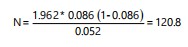 |
| N | = | 120.8 |
Using this formula, the calculated sample size was 121, but after the addition of 10% attrition (12), a total of 133 subjects and 50 age-matched controls were recruited for this study.
Case definition: Malaria cases were identified as individuals exhibiting fever, either measured or reported within the last 24 hrs, along with any degree of parasitemia caused by Plasmodium species. Uncomplicated malaria was characterized as a patient showing symptoms and a positive result on a parasitological test (microscopy) without any indications of severe malaria. According to the World Health Organization (WHO) definition, there were no instances of severe malaria19. Control subjects were age-matched children without symptoms and a history of fever, and tested negative for malaria parasite (microscopy). Malaria thick and thin smears were prepared in accordance with standard protocols. The thick smears were evaluated by highly trained laboratory personnel and independently by a clinical researcher, following the Lambaréné method20.
Laboratory Investigations: A total of 2 mL of venous blood was obtained from the children using ethylenediaminetetraacetic acid (EDTA) bottles. The microscopy and assessment of malarial parasite density were conducted, after which the samples were centrifuged at 3000 rpm for 10 min, and the plasma was preserved for the measurement of biochemical analyses. The plasma samples intended for lipid profile were kept frozen at -20°C until further analysis.
Staining of thin and thick blood smears: Four clean slides, each with frosted ends and measuring 72×25 mm in size and 1 mm in thickness, were utilized for the procedure. Two slides were designated for the preparation of thin blood films, while the remaining two were allocated for thick blood films. To estimate the density of malaria parasites, Plasmodium parasites were counted against 200 white blood cells (WBC) in the thick film. In instances where fewer than nine parasites were detected, the count was extended to 500 WBC. For the thin blood film, the counting was performed against 2000 red blood cells. Upon completion of the counting process, the parasite density was calculated based on the patient’s actual white blood cell count using the following formula: Parasites/μL blood = Number of parasites counted×Actual white blood cell count divided by the number of white blood cells counted. Thin films were examined to confirm the species identification on the thick film. The malaria parasites were counted and reported as follows: Low parasitaemia, 1-10(+), moderate parasitaemia, 11-29(++) and high parasitaemia, >30(+++)/×100 high power field.
Biochemical investigation: Serum Lipid profile comprising triglyceride, total cholesterol, and HDLC was determined by spectrophotometric method using reagents supplied by Randox Laboratories, UK. The analytes were determined according to methods described by the manufacturer. Control sera were included to ensure accuracy and precision of the assay. The Friedewald formula was used to determine the plasma LDLC21. Atherogenic indices (CRI-I, CRI-II, AC and AIP) were calculated.
Data analysis: The SPSS (Statistical Package for Social Sciences) software version 26.0 was used for statistical analysis. Values obtained are expressed as Mean±Standard Deviation and were compared using the Student’s t-test. The level of significance used was set at <0.05
RESULTS
The findings are organized into tables and descriptive charts, highlighting comparisons between malaria-infected children and uninfected controls. The socio-demographic characteristics, malaria parasite densities, lipid parameters, and atherogenic indices are analyzed and interpreted. These results provide insights into the metabolic alterations associated with malaria infection in children.
Table 1 presents the socio-demographic characteristics and malaria parasite density of the study participants. Among the 183 children enrolled, 133 were malaria-infected, while 50 served as controls. The age distribution showed that the majority of children in both groups fell within the 5-9 years age bracket (38.3%), followed by 10-12 years (31.7%) and 6 months 4 years (30.1%). Gender distribution revealed a higher proportion of males (57.4%) compared to females (42.6%) across both groups, with more males among the malaria-infected children (60.2%). Analysis of malaria parasite density among the infected group indicated that 45.1% had moderate parasitemia (++), 30.8% had high parasitemia (+++), while 24.1% had low parasitemia (+). These findings suggest that uncomplicated Plasmodium falciparum infection was more prevalent among school-aged children and male participants, with a considerable proportion presenting with moderate to high parasite loads.
Table 2 compares the lipid profile and atherogenic indices between children infected with Plasmodium falciparum and uninfected controls. The results show that total cholesterol and HDLC levels were significantly lower in malaria-infected children compared to uninfected controls (p<0.05). Similarly, the Atherogenic index of plasma (AIP) was significantly elevated in infected children compared to the controls (p = 0.005), indicating a shift towards a more atherogenic lipid profile. Although triglyceride levels were lower in the infected group than in the controls, the difference was marginally significant (p = 0.05). The LDL levels and castelli risk indices (CRI-I and CRI-II), as well as the atherogenic coefficient (AC), were higher in the infected group, but these differences were not statistically significant (p>0.05).
| Table 1: | Socio-demographic characteristics and malaria parasite density of study participants | |||
| Variable | Malaria-infected children (n = 133) | Control subjects (n = 50) | Total (n = 183) |
| Age bracket (years) | |||
| 6 months 4 years | 40 (30.1%) | 15 (30.0%) | 55 (30.1%) |
| 5-9 years | 50 (37.6%) | 20 (40.0%) | 70 (38.3%) |
| 10-12 years | 43 (32.3%) | 15 (30.0%) | 58 (31.7%) |
| Total | 133 (100%) | 50 (100%) | 183 (100%) |
| Gender | |||
| Male | 80 (60.2%) | 25 (50.0%) | 105 (57.4%) |
| Female | 53 (39.8%) | 25 (50.0%) | 78 (42.6%) |
| Total | 133 (100%) | 50 (100%) | 183 (100%) |
| Malaria parasite density | |||
| + (Low) | 32 (24.1%) | – | 32 (24.1%) |
| ++ (Moderate) | 60 (45.1%) | – | 60 (45.1%) |
| +++ (High) | 41 (30.8%) | – | 41 (30.8%) |
| Total | 133 (100%) | – | 133 (100%) |
| Table 2: | Comparison of lipid profile and atherogenic indices between malaria-infected and uninfected children | |||
| Parameter | Infected children (n = 133) |
Uninfected children (n = 50) |
p-value | Significance |
| Triglycerides (mmoL/L) | 1.02±0.03 | 1.22±0.04 | 0.05 | Significant |
| Total cholesterol (mmoL/L) | 2.32±0.01 | 2.89±0.02 | 0.02 | Significant |
| High-density lipoprotein (HDL) (mmoL/L) | 0.70±0.01 | 0.92±0.02 | 0.005 | Significant |
| Low-density lipoprotein (LDL) (mmoL/L) | 1.20±0.04 | 1.35±0.03 | 0.08 | Not significant |
| Castelli risk index I (CRI-I) | 3.30±0.01 | 3.14±0.02 | 0.06 | Not significant |
| Castelli risk index II (CRI-II) | 1.71±0.01 | 1.46±0.02 | 0.05 | Significant |
| Atherogenic coefficient (AC) | 2.31±0.01 | 2.14±0.01 | 0.05 | Significant |
| Atherogenic index of plasma (AIP) | 0.16±0.01 | 0.12±0.01 | 0.005 | Significant |
| Values are expressed as Mean±Standard Error of mean (SEM) | ||||
DISCUSSION
The current study investigated the lipid profile and atherogenic indices among children aged 6 months to 12 years with uncomplicated P. falciparum infection. Overall, the findings suggest that uncomplicated P. falciparum infection in children is associated with significant alterations in lipid metabolism, particularly reductions in protective HDL levels and elevations in AIP, which may imply a transient but notable derangement in lipid metabolism that points toward an increased short-term cardiovascular risk profile during the acute phase of the infection.
Out of the 183 children enrolled in the study, 133 (72.7%) were malaria-infected while 50 (27.3%) served as apparently healthy controls. The highest infection rate was observed in the 5-9 years age group (37.6%), followed by 10-12 years (32.3%), and 6 months 4 years (30.1%). This pattern is consistent with reports by Okiring et al.22, suggesting that school-aged children are more likely to be exposed to mosquito bites due to increased outdoor activity. Moreover, male children represented a greater proportion (60.2%) of the infected group, which aligns with findings by Quaresinma et al.23, possibly due to behavioral exposure differences.
Regarding parasitemia, 24.1% had low parasite density (+), 45.1% moderate (++), and 30.8% high (+++). This distribution suggests that most children in this population carried a significant parasite burden, even in uncomplicated malaria. Similar parasite density profiles have been observed by Adetunji24 in endemic Nigerian settings.
This study revealed a significant reduction in total cholesterol and HDLC levels among malaria-infected children compared to controls (p<0.05). These findings align with previous literature that described malaria-induced hypocholesterolemia, largely due to increased cholesterol utilization by the parasite for membrane synthesis and replication25,26.
The HDL is known for its protective cardiovascular properties and plays a key role in reverse cholesterol transport and anti-inflammatory processes. Its significant depletion during malaria may increase oxidative stress and inflammation, further complicating the infection27. The observed decrease in total cholesterol is consistent with studies conducted in other African malaria-endemic regions28,29.
Triglyceride levels were also reduced in the infected group compared to controls, with marginal significance (p = 0.05). Although some studies report elevated triglyceride levels in severe malaria30, the present findings align with others suggesting reduced triglycerides in uncomplicated cases, likely due to altered hepatic metabolism and increased catabolism during infection31.
The LDL cholesterol was slightly lower in infected children compared to controls, though not statistically significant (p>0.05). This supports observations by Oluba et al.32 that LDL levels may not always show significant change in uncomplicated malaria, possibly due to its relatively lower turnover compared to HDL during acute infections.
Significant increases were observed in several atherogenic indices among infected children. The Atherogenic index of plasma (AIP) was significantly higher compared to controls (p = 0.005), suggesting a shift toward a more atherogenic lipid environment. The AIP is a strong predictor of cardiovascular risk and has been validated across different populations13.
Castelli risk index II (CRI-II), calculated as LDL/HDL, was significantly elevated in infected children (p<0.050). Similarly, the atherogenic coefficient (AC) was higher in the infected group compared to controls (p<0.05). These ratios provide insights into the balance between protective and harmful lipoproteins. A disturbed ratio favors atherosclerosis and endothelial dysfunction33. Castelli risk index I (CRI-I), although higher in infected children, did not reach statistical significance. These findings, although subtle, highlight that even uncomplicated malaria can trigger temporary metabolic disruptions that may predispose individuals to future cardiovascular challenges if left unchecked.
The observed lipid changes can be attributed to both the direct effects of P. falciparum and the host’s immune response. The parasite relies on host-derived cholesterol for schizont development and erythrocyte invasion34. Additionally, the pro-inflammatory cytokines released during infection, such as TNF-α and IL-6, are known to reduce hepatic synthesis of lipoproteins and increase lipid peroxidation35.
Reduced HDL levels may also reflect oxidative damage and altered apolipoprotein synthesis, while elevated AIP could indicate increased small dense LDL particles, which are more atherogenic. These metabolic shifts, even if temporary, warrant attention in children who may experience recurrent infections and nutritional deficiencies that compound lipid abnormalities36.
Furthermore, the results of this study are consistent with several recent findings28-37. A study in Ghana by Nwobodo et al.38 found similar lipid disruptions in paediatric malaria patients. Conversely, no significant lipid changes, possibly due to differences in parasite density, host nutrition, or inclusion of asymptomatic carriers, were also reported39. While uncomplicated malaria-associated dyslipidemia is generally transient and resolves upon successful treatment of the infection, the significantly adverse shift in these indices during the acute phase suggests a profound, albeit temporary, elevation of cardiovascular risk, even in children. In a non-malarial context, such an index pattern would signal a state predisposing to endothelial dysfunction and subclinical plaque formation.
CONCLUSION
This study has demonstrated that uncomplicated Plasmodium falciparum infection in children is associated with significant alterations in lipid metabolism, particularly marked reductions in total cholesterol and high-density lipoprotein (HDL), alongside elevated atherogenic indices such as the atherogenic index of plasma (AIP) and castelli risk index II (CRI-II). These findings suggest a temporary shift toward a more atherogenic lipid profile during malaria infection, which may have implications for cardiovascular health if recurrent. The results highlight the importance of monitoring lipid parameters in paediatric malaria patients and highlight the need for integrated clinical management that addresses both infectious and metabolic health.
ACKNOWLEDGMENT
The contributions of all staff of the Central Hospital Benin City, Edo State, Nigeria are highly appreciated. We are grateful to the Medical Laboratory Scientists for their technical support.
REFERENCES
- Mbishi, J.V., S. Chombo, P. Luoga, H.J. Omary, H.A. Paulo, J. Andrew and I.Y. Addo, 2024. Malaria in under-five children: Prevalence and multi-factor analysis of high-risk African countries. BMC Public Health, 24.
- Ashley, E.A., A.P. Phyo and C.J. Woodrow, 2018. Malaria. Lancet, 391: 1608-1621.
- Megabiaw, F., T. Eshetu, Z. Kassahun and M. Aemero, 2022. Liver enzymes and lipid profile of malaria patients before and after antimalarial drug treatment at Dembia Primary Hospital and Teda Health Center, Northwest, Ethiopia. Res. Rep. Trop. Med., 13: 11-23.
- Vekic, J., K. Stromsnes, S. Mazzalai, A. Zeljkovic, M. Rizzo and J. Gambini, 2023. Oxidative stress, atherogenic dyslipidemia, and cardiovascular risk. Biomedicines, 11.
- Huang, J.K. and H.C. Lee, 2022. Emerging evidence of pathological roles of very-low-density lipoprotein (VLDL). Int. J. Mol. Sci., 23.
- Adderley, J. and G.E. Grau, 2023. Host-directed therapies for malaria: Possible applications and lessons from other indications. Curr. Opin. Microbiol., 71.
- Aguilar-Ballester, M., A. Herrero-Cervera, Á. Vinué, S. Martínez-Hervás and H. González-Navarro, 2020. Impact of cholesterol metabolism in immune cell function and atherosclerosis. Nutrients, 12.
- Emokpae, M.A. and L.B. Akpologun, 2017. The use of atherogenic index of plasma in assessing the potential cardiovascular risk among ABO blood groups in sickle cell disease patients. Malays. J. Med. Biol. Res., 4: 91-96.
- Barzi, F., A. Patel, M. Woodward, C.M.M. Lawes and T. Ohkubo et al., 2005. A comparison of lipid variables as predictors of cardiovascular disease in the Asia Pacific Region. Ann. Epidemiol., 15: 405-413.
- Fernández-Macías, J.C., A.C. Ochoa-Martínez, J.A. Varela-Silva and I.N. Pérez-Maldonado, 2019. Atherogenic index of plasma: Novel predictive biomarker for cardiovascular illnesses. Arch. Med. Res., 50: 285-294.
- Gaggini, M., F. Gorini and C. Vassalle, 2023. Lipids in atherosclerosis: Pathophysiology and the role of calculated lipid indices in assessing cardiovascular risk in patients with hyperlipidemia. Int. J. Mol. Sci., 24.
- Emokpae, M.A., H.O. Uwumarongie and J.E. Olaniyan, 2024. Use of atherogenic indices in evaluating the potential cardio-protective effect of soybean phytoestrogen-rich extract in 4-vinyl cyclohexane diepoxide-induced menopause in Wistar rats. Open J. Clin. Med. Case Rep., 10.
- Dobiás̆ová, M. and J. Frohlich, 2001. The plasma parameter log (TG/HDL-C) as an atherogenic index: Correlation with lipoprotein particle size and esterification rate inapob-lipoprotein-depleted plasma (FERHDL). Clin. Biochem., 34: 583-588.
- Chaudhary, A., P. Kataria, N. Surela and J. Das, 2022. Pathophysiology of cerebral malaria: Implications of MSCs as a regenerative medicinal tool. Bioengineering, 9.
- Obasohan, P.E., S.J. Walters, R. Jacques and K. Khatab, 2021. A scoping review of selected studies on predictor variables associated with the malaria status among children under five years in Sub-Saharan Africa. Int. J. Environ. Res. Public Health, 18.
- World Medical Association, 2013. World Medical Association Declaration of Helsinki: Ethical principles for medical research involving human subjects. J. Am. Med. Assoc., 310: 2191-2194.
- Lwanga, S.K., S. Lemeshow and WHO, 1991. Sample Size Determination in Health Studies: A Practical Manual. World Health Organization, Geneva, Switzerland, ISBN-13: 9789241544054, Pages: 80.
- Oboro, I.L., M. Bob-Manuel, I.N. Chijioke-Nwauche, O. Maduka and T. Kasso et al., 2021. Prevalence of malaria among children under five years in the Niger Delta Region of Nigeria. Asian J. Pediatr. Res., 5: 10-17.
- WHO, 2013. Management of Severe Malaria: A Practical Handbook. 3rd Edn., World Health Organization, Geneva, Switzerland, ISBN: 9789241548526, Pages: 92.
- Planche, T., S. Krishna, M. Kombila, K. Engel, J.F. Faucher, E. Ngou-Milama and P.G. Kremsner, 2001. Comparison of methods for the rapid laboratory assessment of children with malaria. Am. J. Trop. Med. Hyg., 65: 599-602.
- Friedewald, W.T., R.I. Levy and D.S. Fredrickson, 1972. Estimation of the concentration of low-density lipoprotein cholesterol in plasma, without use of the preparative ultracentrifuge. Clin. Chem., 18: 499-502.
- Okiring, J., A. Epstein, J.F. Namuganga, E.V. Kamya and I. Nabende et al., 2022. Gender difference in the incidence of malaria diagnosed at public health facilities in Uganda. Malar. J., 21.
- Quaresima, V., T. Agbenyega, B. Oppong, J.A.D.A. Awunyo and P.A. Adomah et al., 2021. Are malaria risk factors based on gender? A mixed-methods survey in an urban setting in Ghana. Trop. Med. Infect. Dis., 6.
- Adetunji, O.O., 2024. Association between malaria parasite density and hematological profile in malaria infected children at a Nigerian private hospital. J. Vector Borne Dis., 61: 364-368.
- Gayoso-Cantero, D., M.D. Corbacho-Loarte, C. Crespillo-Andújar, S. Chamorro-Tojeiro and F. Norman et al., 2025. Changes in lipid profile secondary to asymptomatic malaria in migrants from Sub-Saharan Africa: A retrospective analysis of a 2010-2022 cohort. Trop. Med. Infect. Dis., 10.
- Visser, B.J., S.G. de Vries, R. Vingerling, M. Gritter and D. Kroon et al., 2017. Serum lipids and lipoproteins during uncomplicated malaria: A cohort study in Lambaréné, Gabon. Am. J. Trop. Med. Hyg., 96: 1205-1214.
- Bhattacharjee, S., D. Ghosh, R. Saha, R. Sarkar, S. Kumar, M. Khokhar and R.K. Pandey, 2023. Mechanism of immune evasion in mosquito-borne diseases. Pathogens, 12.
- Dungdung, A., V.M. Jalawadi and U.P. Yadav, 2018. Study of serum lipid profile in Plasmodium falciparum malaria. Int. J. Res. Med. Sci., 6: 3673-3677.
- Neves, F.A.R., A.M.R.S. Ventura, M.G.S. Filho and R.M.F. Libonati, 2013. Lipid parameters in a hyperendemic area for malaria. Lipids Health Dis., 12.
- Bansal, D., H.S. Bhatti and R. Sehgal, 2005. Role of cholesterol in parasitic infections. Lipids Health Dis., 4.
- Jacob, E.A., 2014. Assessment of altered plasma lipid pattern in Plasmodium falciparum malaria infected and non infected individuals. Int. J. Hematological Disord., 1: 27-30.
- Oluba, O.M., A.O. Olusola, G.O. Eidangbe, L.J. Babatola and E.C. Onyeneke, 2012. Modulation of lipoprotein cholesterol levels in Plasmodium berghei malarial infection by crude aqueous extract of Ganoderma lucidum. Cholesterol, 2012.
- Henson, S.E. and E.M. Urbina, 2024. Use of lipid ratios to predict vascular target organ damage in youth. J. Clin. Lipidol., 18: E444-E451.
- Kilian, N., J.Y. Choi, D.R. Voelker and Choukri Ben Mamoun, 2018. Role of phospholipid synthesis in the development and differentiation of malaria parasites in the blood. J. Biol. Chem., 293: 17308-17316.
- Khovidhunkit, W., M.S. Kim, R.A. Memon, J.K. Shigenaga, A.H. Moser, K.R. Feingold and C. Grunfeld, 2004. Thematic review series: The Pathogenesis of Atherosclerosis. Effects of infection and inflammation on lipid and lipoprotein metabolism mechanisms and consequences to the host. J. Lipid Res., 45: 1169-1196.
- Orimadegun, A.E. and B.E. Orimadegun, 2015. Serum apolipoprotein-A1 and cholesterol levels in Nigerian children with Plasmodium falciparum infection. Med. Princ. Pract., 24: 318-324.
- malERA Consultative Group on Drugs, 2011. A research agenda for malaria eradication: Drugs. PLoS Med., 8.
- Nwobodo, N.N., P.O. Okonkwo and S.A. Igwe, 2011. Lipid metabolism in plasmodium: Implication as possible target for chemotherapy. Biomed. Pharmacol. J., 4: 21-28.
- Babalola, B.J., M.S. Sani, D.M. Mustapha, O.C. Bernard, M. Hafizu, S. Abubakar and G.J. Sow, 2022. Effect of malaria infection on biomarker of lipid peroxidation (malondialdehyde) and lipid profile in pregnant women. Sci. World J., 17: 138-142.
How to Cite this paper?
APA-7 Style
Emokpae,
M.A., Ibiloye,
D.A., Emokpae,
L.A., Omoruyi,
Z. (2026). Cardiovascular Risk from Altered Lipid Profile and Atherogenic Indices in Children with Uncomplicated Plasmodium falciparum Malaria in Owo, Nigeria. Trends in Biological Sciences, 2(1), 108-116. https://doi.org/10.21124/tbs.2026.108.116
ACS Style
Emokpae,
M.A.; Ibiloye,
D.A.; Emokpae,
L.A.; Omoruyi,
Z. Cardiovascular Risk from Altered Lipid Profile and Atherogenic Indices in Children with Uncomplicated Plasmodium falciparum Malaria in Owo, Nigeria. Trends Biol. Sci 2026, 2, 108-116. https://doi.org/10.21124/tbs.2026.108.116
AMA Style
Emokpae
MA, Ibiloye
DA, Emokpae
LA, Omoruyi
Z. Cardiovascular Risk from Altered Lipid Profile and Atherogenic Indices in Children with Uncomplicated Plasmodium falciparum Malaria in Owo, Nigeria. Trends in Biological Sciences. 2026; 2(1): 108-116. https://doi.org/10.21124/tbs.2026.108.116
Chicago/Turabian Style
Emokpae, Mathias, A., Delight A. Ibiloye, Loveth A. Emokpae, and Zainab Omoruyi.
2026. "Cardiovascular Risk from Altered Lipid Profile and Atherogenic Indices in Children with Uncomplicated Plasmodium falciparum Malaria in Owo, Nigeria" Trends in Biological Sciences 2, no. 1: 108-116. https://doi.org/10.21124/tbs.2026.108.116

This work is licensed under a Creative Commons Attribution 4.0 International License.