
Artificial Ripening Practices and Demographic Characteristics of Fruit Sellers in Birnin Kebbi, Northwest Nigeria
-
Yahaya Tajudeen Olanrewaju


Department of Biological Sciences, Federal University, Birnin Kebbi, PMB 1157, Kebbi State, Nigeria
Sani Abdulrahman KalgoDepartment of Biological Sciences, Federal University, Birnin Kebbi, PMB 1157, Kebbi State, Nigeria
Mohammed Umar FarukDepartment of Pure and Industrial Chemistry, Federal University, Birnin Kebbi, PMB 1157, Kebbi State, Nigeria
| Received 18 Apr, 2025 |
Accepted 29 Jun, 2025 |
Published 30 Jun, 2025 |
Background and Objective: Artificial ripening agents are increasingly common in commercial fruit distribution worldwide. However, concerns persist regarding their safety, particularly in developing countries where low-cost, substandard agents are often employed. This study surveyed the demographic characteristics of fruit sellers and investigated food ripening practices in Birnin Kebbi, Nigeria. Materials and Methods: The study employed a cross-sectional survey design. A semi-structured questionnaire was administered to 100 consenting fruit vendors to collect data on their demographic characteristics and artificial fruit ripening practices. Descriptive statistics were used to analyze the data, with results presented as frequencies and percentages. Results: The findings revealed that males constituted the majority (60%) of fruit sellers. The largest age group was 26-35 years (35%), followed by 36-45 years (25%). In terms of educational attainment, 40% of participants reported completing primary education, while 30% had secondary education. Ethnically, the Hausa group formed the largest proportion (40%), followed by Fulani (25%) and Yoruba (15%). A significant majority (75%) were aware of the use of artificial ripening agents, whereas 25% were unfamiliar with such practices. Bananas were identified as the most frequently ripened fruit (60%), followed by mangoes (50%), tomatoes (35%), and plantains (30%). Calcium carbide was reported as the most commonly used ripening agent (65%), followed by ethylene gas (45%) and ethephon (20%). Alarmingly, 96% of respondents lacked adequate knowledge regarding the proper application of these agents. Conclusion: These findings underscore the potential health risks posed to consumers due to the improper use of ripening agents. Educational initiatives are urgently needed to raise awareness among fruit sellers and the general public about the hazards associated with unsafe ripening practices and to promote the use of safer, regulated alternatives.
| Copyright © 2025 Olanrewaju et al. This is an open-access article distributed under the Creative Commons Attribution License, which permits unrestricted use, distribution, and reproduction in any medium, provided the original work is properly cited. |
INTRODUCTION
Fruits are a vital component of a balanced diet, providing numerous essential nutrients. They are rich in phytochemicals, dietary fiber, proteins, carbohydrates, vitamins, carotenoids, flavonoids, and other bioactive compounds1. Additionally, dry fruits are a concentrated source of energy, antioxidants, vitamins, and essential minerals, contributing significantly to human metabolic activities and overall well-being2.
Recognizing the importance of fruit consumption, the World Health Organization (WHO) recommends a daily intake of at least 400 g of fruits and vegetables (approximately five servings) to help prevent noncommunicable diseases3. Alarmingly, low fruit intake ranks as the third leading dietary risk factor globally, accounting for over 2 million deaths and 65 million disability-adjusted life years annually4. Diets low in fruits have been linked to higher mortality rates compared to those high in trans fats, sugar-sweetened beverages, and processed meats. They are recognized as significant contributors to cardiovascular diseases, type 2 diabetes, and cancers5.
Fruits are predominantly consumed in their raw, ripe form. Ripening is a critical phase in the fruit lifecycle, transforming fruits from immature to mature stages through complex physiological and biochemical changes. This process enhances palatability and consumer appeal, involving the breakdown of complex carbohydrates into simpler sugars, softening of the flesh, color changes, and the development of distinctive flavors and aromas6. These transformations are regulated by various endogenous and environmental factors, including hormones, temperature, and humidity7. Ethylene, a plant hormone, plays a pivotal role in regulating ripening in climacteric fruits such as tomatoes, bananas, and apples, which experience a surge in ethylene production and respiration rates during ripening. This triggers the biochemical pathways responsible for these changes8. Conversely, non-climacteric fruits like strawberries, grapes, and citrus do not exhibit a similar ethylene surge, though they may respond to exogenous ethylene application9.
The growing demand for fruits, driven by their health benefits, has led to the widespread use of artificial ripening agents such as calcium carbide, ethephon, and ethylene gas to meet market needs10. Calcium carbide, upon exposure to moisture, produces acetylene gas, mimicking ethylene in its ripening effects11. These synthetic agents have revolutionized fruit distribution by enabling controlled ripening, particularly in regions with suboptimal natural conditions or for synchronizing large-scale ripening12. However, in developing countries like Nigeria, where approximately 70-80% of fruits are artificially ripened, concerns about food safety, nutritional quality, and environmental impacts have arisen13. The use of calcium carbide, for instance, poses health risks due to impurities like arsenic and phosphorus, which can be toxic when ingested14. Ethephon exposure has been associated with symptoms such as excessive salivation, lacrimation, diarrhea, abdominal cramps, and reduced appetite, alongside inhibition of plasma cholinesterase activity15. Artificially ripened fruits have also been linked to allergic reactions, including itching, rashes, angioedema, and anaphylaxis, some requiring hospitalization16. Additionally, synthetic ripening agents may compromise nutritional quality, reducing levels of key vitamins and antioxidants17. From an environmental perspective, improper disposal and overuse of these chemicals can lead to soil and water contamination, adversely affecting soil health and the broader ecosystem18.
To address these issues, stringent regulatory frameworks and oversight mechanisms have been established in many regions of the world to prevent the misuse of synthetic ripening agents. However, such frameworks are notably absent in Birnin Kebbi, North-western Nigeria. This study aims to bridge this gap by conducting a comprehensive survey of the ripening agents used in the region, alongside an analysis of the demographic characteristics of fruit sellers. By identifying patterns and practices, this research seeks to inform policy recommendations and promote safer fruit ripening practices, ensuring consumer safety and environmental sustainability.
MATERIALS AND METHODS
Study area: The study was conducted in Birnin Kebbi, Northwestern Nigeria, between October and November, 2024.
Study design: This research employed a descriptive, cross-sectional survey design.
Study population and data collection: The study enrolled 100 fruit sellers operating in prominent fruit markets across the city, including the Central Market, Stadium, and Gbadangbaji. Participants were selected based on their availability and willingness to participate. Before data collection, informed consent was obtained from each respondent. They were briefed on the study's objectives and assured of confidentiality to encourage accurate and honest responses. Participants were provided with a structured questionnaire designed to gather demographic information such as gender, age, and educational attainment. The questionnaire also included items related to artificial fruit ripening practices, such as participants' knowledge, use of ripening agents, and perceptions of the effects of such practices on health and fruit quality. Questions were a combination of multiple-choice and open-ended formats, facilitating the collection of both quantitative data for statistical analysis and qualitative insights for an in-depth understanding. The survey was conducted over 15 days, ensuring adequate time to capture representative responses across the study locations.
Eligibility criteria: Participants were included if they met the following criteria:
| • | They had been selling fruits for at least two years | |
| • | They provided informed consent to participate in the study |
Ethical approval and consent to participate: Ethical approval for this research was obtained from the Ethics Committee of the Federal University, Birnin Kebbi, Nigeria. The study was conducted in compliance with the ethical guidelines outlined for research involving human participants. Written informed consent was obtained from all participants before the commencement of the study. Confidentiality and anonymity were rigorously maintained, ensuring that all collected data were securely handled and used solely for research purposes. This study adhered to the ethical principles of the Declaration of Helsinki, originally adopted in 1964 and most recently amended in October, 2024, which outlines standards for conducting medical research involving human subjects.
Data analysis: Descriptive statistics were employed to summarize the data, with results expressed as frequencies and percentages. Data visualization, including charts, was generated using Minitab software (version 21).
RESULTS
Demographic information: Table 1 summarizes the demographic characteristics of the respondents. Male participants constituted the majority, accounting for 60% of the sample. The largest age group was 26-35 years, representing 35% of the respondents, followed by the 36-45 years age group at 25%. In terms of educational attainment, the majority of participants (40%) reported having completed primary education, while 30% had secondary education. Regarding ethnicity, the Hausa ethnic group formed the largest proportion at 40%, followed by Fulani at 25% and Yoruba at 15%.
Fruit ripening experience of the respondents: Table 2 presents the distribution of respondents based on their experience in fruit-related activities. The largest proportion of participants (40%) reported having 5-10 years of experience, followed by 35% with less than 5 years of experience. A smaller group, comprising 25% of respondents, indicated having more than 10 years of experience in fruit-related activities.
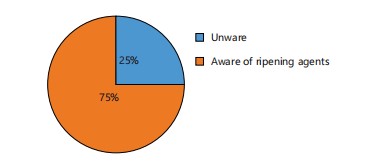
Fruit-ripening awareness by the respondents: Figure 1 illustrates the respondents awareness of artificial ripening agents used on fruits. A substantial majority (75%) reported being aware of the use of these agents, while the remaining 25% indicated a lack of familiarity.
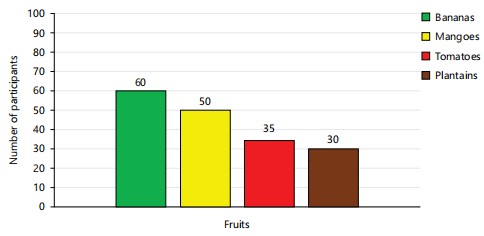
Common fruits artificially ripened: Figure 2 highlights the types of fruits commonly ripened in Birnin Kebbi. Bananas are the most frequently ripened fruit, accounting for 60% of the total, followed by mangoes at 50%. Tomatoes and plantains are also commonly ripened, with 35 and 30%, respectively.
|
| Table 1: | Demographic characteristics of the respondents | |||
| Demographic characteristic | Categories | Frequency | Percentage |
| Gender | Male | 60 | 60 |
| Female | 40 | 40 | |
| Total | 100 | 100 | |
| Age | 18-25 | 20 | 20 |
| 26-35 | 35 | 35 | |
| 36-45 | 25 | 25 | |
| 46-55 | 20 | 20 | |
| Total | 100 | 100 | |
| Level of education | Primary school | 40 | 40 |
| Secondary school | 30 | 30 | |
| University/polytechnic | 15 | 15 | |
| No formal education | 15 | 15 | |
| Total | 100 | 100 | |
| Ethnicity | Hausa | 40 | 40 |
| Fulani | 25 | 25 | |
| Yoruba | 15 | 15 | |
| ther (e.g., Nupe) | 20 | 20 | |
| Total | 100 | 100 |
| Table 2: | Experience of respondents on fruit-related activities | |||
| Experience | Frequency | Percentage |
| Less than 5 years | 35 | 35 |
| 5-10 years | 40 | 40 |
| More than 10 years | 25 | 25 |
| Total | 100 | 100 |
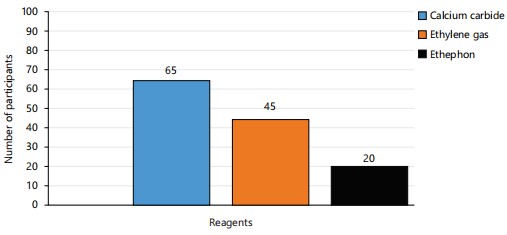
Ripening agents often used: Figure 3 illustrates the ripening agents commonly utilized in Birnin Kebbi. Calcium carbide emerged as the most frequently used agent, reported by 65% of respondents. Ethylene gas was the second most popular choice, used by 45% of respondents, while ethephon was used less frequently, with 20% indicating its use.
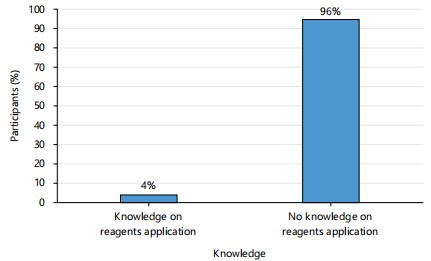
Knowledge of ripening agent application: Figure 4 shows the percentage of participants regarding the knowledge of ripening agents. The majority (96%) have no knowledge of ripening agent application, whereas only few (4%) participants have knowledge of ripening agent application.
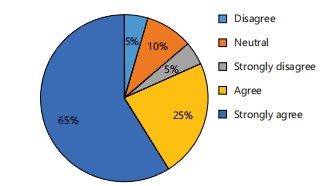
Perception about the health risks of ripening agents: Figure 5 illustrates the participants perceptions regarding the health risks associated with artificial ripening agents. A significant majority (65%) strongly agreed that artificially ripened fruits pose health risks, while an additional 20% agreed. In contrast, 5% of respondents disagreed with this notion, and 10% remained neutral.
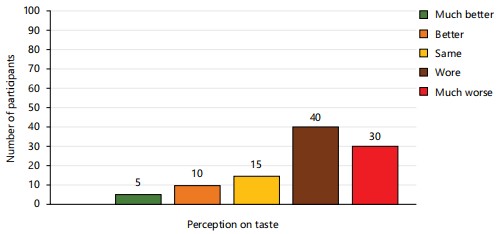
Perception of respondents about the taste and quality of ripened fruits: Figure 6 illustrates respondents perceptions of the taste and quality of artificially ripened fruits compared to naturally ripened ones. A combined 70% of respondents, categorizing their responses as “Worse” or “Much worse,” expressed the belief that artificially ripened fruits are of inferior taste and quality. Conversely, only 5% of participants considered the quality of artificially ripened fruits to be better.
|
|
|
DISCUSSION
This study examines the demographic characteristics of fruit sellers in Birnin Kebbi and gathers critical information about artificial fruit ripening practices in the city. The research is significant as no prior study has addressed this issue in the region. Its findings will contribute to improving food safety and reducing potential health risks associated with the consumption of artificially ripened fruits.
|
|
The demographic analysis revealed that the majority of participants were male, predominantly aged 26-35 and 36-45 years, with primary and secondary education, and belonging to the Hausa and Fulani ethnic groups. Male dominance reflects the local cultural norms, where women primarily engage in domestic activities while men undertake economic responsibilities outside the home. The prominence of the Hausa and Fulani ethnic groups aligns with the native demographics of the region. The age distribution, concentrated in the 26-45 years range, represents the most active and economically productive workforce globally. The low educational attainment among fruit sellers suggests that this trade does not demand advanced education or technical expertise, making it accessible to individuals with limited formal education. Similar findings have been reported in other regions of Northern Nigeria. For example, Abdullahi et al.19 and Danladi et al.20 observed male dominance, primary education levels, and youthful age groups (31-50 years) among apple sellers in Adamawa and Borno States, respectively. Conversely, studies in Lagos, Southwest Nigeria21.
Olayemi et al.21 and Yahaya et al.22, found a higher proportion of female fruit sellers, reflecting the reduced gender disparity in that region. However, both studies similarly reported the dominance of individuals with primary and secondary education and an average age range of 30-49 years. Notably, Yahaya et al.22 also highlighted the prevalence of Hausa individuals in the fruit trade in Lagos, suggesting a stronger inclination toward this occupation among the ethnic group.
Most respondents in this study had over five years of experience in fruit selling, which may explain their substantial awareness of artificial ripening agents. Bananas, mangoes, tomatoes, and plantains were identified as the most frequently ripened fruits in the region. These climacteric fruits require induced ripening to ensure marketability by enhancing flavor, texture, and uniform peel color, as noted by Maduwanthi and Marapana23 and Ugbeni and Alagbaoso24 Similarly, Orok et al.25 reported that mangoes, bananas, papaya, and tomatoes are among the fruits commonly subjected to artificial ripening.
The survey also identified calcium carbide, ethylene gas, and ethephon as the primary ripening agents used by fruit sellers in Birnin Kebbi. Comparable findings were reported by Ekanem et al.26 in Uyo, Nigeria, and Islam et al.27, both of which documented the widespread use of these agents. However, the improper application of these chemicals can pose significant health risks to consumers. For instance, calcium carbide, when misused, can irritate gastric tissues and increase the risk of cancer, kidney damage, cardiovascular dysfunction, and diabetes28. Ethylene gas exposure can impair oxygen supply to the brain, leading to prolonged hypoxia and potential kidney failure29. Ethephon is associated with hepatotoxic effects and can cause severe skin and eye irritation15.
A majority of respondents acknowledged that artificially ripened fruits could pose health risks. They also expressed concerns about the impact of these chemicals on the taste and nutritional quality of fruits. These findings emphasize the need for regulatory interventions and public education to ensure the safe application of ripening agents and protect consumer health.
To address the challenges associated with artificial fruit ripening, several key recommendations are proposed. Firstly, government agencies and regulatory bodies should enforce strict guidelines on the use of artificial ripening agents through regular inspections and penalties to ensure public safety. Secondly, public awareness campaigns are essential to educate both fruit sellers and consumers about the health risks of improper ripening practices, while promoting safer alternatives. Training programs and workshops should be organized for fruit vendors to enhance their understanding of safe handling techniques. Moreover, the adoption of natural or non-chemical ripening methods, such as ethylene generators, should be encouraged due to their safety and sustainability. Collaboration with health authorities is also crucial for monitoring the public health implications of artificial ripening and implementing timely interventions. Lastly, further research is needed to investigate the socioeconomic factors driving these practices and to develop safer, cost-effective alternatives suitable for local conditions.
CONCLUSION
This study has provided critical insights into the demographic characteristics of fruit sellers in Birnin Kebbi and the practices associated with artificial fruit ripening in the city. The findings revealed that the majority of fruit sellers are male, aged 26-45 years, with primary or secondary education, and predominantly of Hausa and Fulani ethnic backgrounds. The study also highlighted the widespread use of artificial ripening agents such as calcium carbide, ethylene gas, and ethephon. While these agents are commonly used to enhance the commercial appeal of climacteric fruits like bananas, mangoes, tomatoes, and plantains, their improper application poses significant health risks, including gastrointestinal irritation, cancer, kidney damage, and other severe medical conditions. Furthermore, the perception of the majority of respondents that artificially ripened fruits compromise taste and nutritional quality underscores the need for safer and more sustainable ripening methods. This research has filled a critical knowledge gap by addressing a previously unexplored issue in Birnin Kebbi, providing data that can inform strategies to improve food safety and reduce health hazards associated with artificial fruit ripening practices.
SIGNIFICANCE STATEMENT
This study discovered the widespread use of artificial ripening agents, particularly calcium carbide, among fruit vendors in Birnin Kebbi, Nigeria, which can be beneficial for understanding public exposure risks and guiding food safety interventions. The findings revealed that most vendors had limited education and awareness regarding the safe use of ripening chemicals, highlighting a critical gap in knowledge and regulation. This insight is valuable for public health authorities aiming to develop effective policies to control harmful fruit ripening practices and promote safer alternatives. This study will help the researchers to uncover the critical areas of informal market practices and chemical usage that many researchers were not able to explore. Thus, a new theory on unregulated food handling and consumer risk may be arrived at.
REFERENCES
- Mizanur Rahaman, M., R. Hossain, J. Herrera-Bravo, M. Torequl Islam and O. Atolani et al., 2023. Natural antioxidants from some fruits, seeds, foods, natural products, and associated health benefits: An update. Food Sci. Nutr., 11: 1657-1670.
- Abobatta, W.F., 2021. Nutritional and healthy benefits of fruits. Biomed. J. Sci. Tech. Res., 40: 31979-31983.
- Frank, S.M., J. Webster, B. McKenzie, P. Geldsetzer and J. Manne-Goehler et al., 2019. Consumption of fruits and vegetables among individuals 15 years and older in 28 low- and middle-income countries. J. Nutr., 149: 1252-1259.
- Harris, J., B. de Steenhuijsen Piters, S. McMullin, B. Bajwa, I. de Jager and I.D. Brouwer, 2023. Fruits and Vegetables for Healthy Diets: Priorities for Food System Research and Action. In: Science and Innovations for Food Systems Transformation. von Braun, J., K. Afsana, L.O. Fresco and M.H.A. Hassan (Eds.), Springer, Cham, Switzerland, ISBN: 978-3-031-15703-5, pp: 87-104.
- Jayawardena, R. and P. Sooriyaarachchi, 2021. The inside story of fruits; exploring the truth behind conventional theories. Diabetes Metab. Syndr.: Clin. Res. Rev., 15.
- Alexander, L. and D. Grierson, 2002. Ethylene biosynthesis and action in tomato: A model for climacteric fruit ripening. J. Exp. Bot., 53: 2039-2055.
- Giovannoni, J.J., 2004. Genetic regulation of fruit development and ripening. Plant Cell, 16: S170-S180.
- Bapat, V.A., P.K. Trivedi, A. Ghosh, V.A. Sane, T.R. Ganapathi and P. Nath, 2010. Ripening of fleshy fruit: Molecular insight and the role of ethylene. Biotechnol. Adv., 28: 94-107.
- Alonso-Salinas, R., S. López-Miranda, A.J. Pérez-López and J.R. Acosta-Motos, 2024. Strategies to delay ethylene-mediated ripening in climacteric fruits: Implications for shelf life extension and postharvest quality. Horticulturae, 10.
- Obadiah, C.D., T.O. Yahaya, A.A. Aliero and M. Abdulkareem, 2024. Comparative evaluation of the proximate and cytogenotoxicity of ash and rice chips used as mango fruit artificial ripening agents in Birnin Kebbi, Nigeria. Bull. Nat. Appl. Sci., 1: 132-140.
- Deshi, V.V., M.W. Siddiqui, F. Homa, D. Lata and D.R. Singh, 2024. CaC2-induced ripening: Unveiling the bitter truth behind sweet fruit. Food Chem., 455.
- Paul, V. and R. Pandey, 2014. Role of internal atmosphere on fruit ripening and storability-A review. J. Food Sci. Technol., 51: 1223-1250.
- Nasir, U., A. Ismail, M. Riaz, K. Razzaq and S. Ali et al., 2024. Exploring fruit ripening methods: Conventional, artificial, and novel approaches for quality and health. Food Control, 165.
- Barry, C.S. and J.J. Giovannoni, 2007. Ethylene and fruit ripening. J. Plant Growth Regul., 26: 143-159.
- Bhadoria, P., M. Nagar, V. Bharihoke and A.S. Bhadoria, 2018. Ethephon, an organophosphorous, a fruit and vegetable ripener: Has potential hepatotoxic effects? J. Fam. Med. Primary Care, 7: 179-183.
- Ahsan, M., F. Ahmad, F. Usman, S. Habib, I. Shahid, S. Abbas and S. Munir, 2024. Artificial fruit ripening agents and their impact on health of the university students in Lahore. J. Bioresour. Manage., 11: 1-8.
- Sojinu, O.S., N.T. Biliaminu, A.M. Mosaku, K.O. Makinde, T.H. Adeniji and B.M. Adeboye, 2021. The implications of ripening agents on chemical compositions of plantain (Musa paradisiaca). Heliyon, 7.
- Kader, A.A., 2008. Flavor quality of fruits and vegetables. J. Sci. Food Agric., 88: 1863-1868.
- Abdullahi, A., M.R. Ja’afar-Furo and H. Yahya, 2017. Analysis of socio-economic determinants of apple fruits (Chrysophyllum albidum) demand among consumers in Mubi Metropolis, Adamawa State, Nigeria. Int. J. Social Sci. Educ. Stud., 3: 61-71.
- Danladi, H., I.M. Waziri, I.N. Ghamba and S.M. Kauji, 2023. Analysis of profitability and socioeconomic factors in marketing of African star apple (Chrysophyllum albidum) in Maiduguri Metropolis of Borno State, Nigeria. Niger. Agric. J., 54: 99-105.
- Olayemi, F.F., J.A. Adegbola, E.I. Bamishaiye and E.F. Awagu, 2012. Assessment of post harvest losses of some selected crops in eight local government areas of Rivers State, Nigeria. Asian J. Rural Dev., 2: 13-23.
- Yahaya, T., A. Ukeoma, M. Musa, L. Abdullahi, A. Muhammad and E. John, 2023. Demographics and chemical preservatives used by vegetable and fruit retailers selected across markets in Lagos, Southwestern Nigeria. Trop. Environ. Biol. Technol., 1: 76-85.
- Maduwanthi, S.D.T. and R.A.U.J. Marapana, 2019. Induced ripening agents and their effect on fruit quality of banana. Int. J. Food Sci., 2019.
- Ugbeni, O.C. and C.A. Alagbaoso, 2023. Calcium carbide-ripened plantain induced alterations in plasma electrolytes concentration and kidney function in rats. Braz. J. Nephrol., 45: 393-400.
- Orok, E., U. Okeke, T. Williams, F. Adeniyi, F. Ikpe and M. Femi-Oyewo, 2024. Survey of knowledge on calcium carbide use in fruit ripening and associated health risks among fruit sellers and consumers in Ado-Ekiti Nigeria. Discover Public Health, 21.
- Ekanem, A.M., W.N. Sylvanus, Q.E. Asanana, I.O.I. Akpabio and E.I. Clement et al., 2021. Fruit ripening methods and knowledge of health effect of use of calcium carbide in ripening fruits among fruit sellers in Uyo, Nigeria. J. Adv. Med. Med. Res., 33: 72-83.
- Nazibul Islam, M., M.Y. Imtiaz, S.S. Alam, F. Nowshad, S.A. Shadman and M.S. Khan, 2018. Artificial ripening on banana (Musa Spp.) samples: Analyzing ripening agents and change in nutritional parameters. Cogent Food Agric., 4.
- Okeke, E.S., I.U. Okagu, C.O. Okoye and T.P.C. Ezeorba, 2022. The use of calcium carbide in food and fruit ripening: Potential mechanisms of toxicity to humans and future prospects. Toxicology, 468.
- Nazibul Islam, M., M. Mursalat and M.S. Khan, 2016. A review on the legislative aspect of artificial fruit ripening. Agric. Food Secur., 5.
How to Cite this paper?
APA-7 Style
Olanrewaju,
Y.T., Kalgo,
S.A., Faruk,
M.U. (2025). Artificial Ripening Practices and Demographic Characteristics of Fruit Sellers in Birnin Kebbi, Northwest Nigeria. Trends in Biological Sciences, 1(1), 60-68. https://doi.org/10.21124/tbs.2025.60.68
ACS Style
Olanrewaju,
Y.T.; Kalgo,
S.A.; Faruk,
M.U. Artificial Ripening Practices and Demographic Characteristics of Fruit Sellers in Birnin Kebbi, Northwest Nigeria. Trends Biol. Sci 2025, 1, 60-68. https://doi.org/10.21124/tbs.2025.60.68
AMA Style
Olanrewaju
YT, Kalgo
SA, Faruk
MU. Artificial Ripening Practices and Demographic Characteristics of Fruit Sellers in Birnin Kebbi, Northwest Nigeria. Trends in Biological Sciences. 2025; 1(1): 60-68. https://doi.org/10.21124/tbs.2025.60.68
Chicago/Turabian Style
Olanrewaju, Yahaya, Tajudeen, Sani Abdulrahman Kalgo, and Mohammed Umar Faruk.
2025. "Artificial Ripening Practices and Demographic Characteristics of Fruit Sellers in Birnin Kebbi, Northwest Nigeria" Trends in Biological Sciences 1, no. 1: 60-68. https://doi.org/10.21124/tbs.2025.60.68

This work is licensed under a Creative Commons Attribution 4.0 International License.