
Synergistic Effects of Nanoparticles Under Various Abiotic Stresses for Higher Performance of Agricultural Crops
-
Al-Kazafy Hassan Sabry


Department of Pests and Plant Protection, National Research Centre, Cairo, Egypt
Zakaria Abdelhalim AttiaDepartment of Pests and Plant Protection, National Research Centre, Cairo, Egypt
| Received 04 May, 2025 |
Accepted 29 Jun, 2025 |
Published 30 Jun, 2025 |
Nanotechnology is the backbone of the modern renaissance in all fields. Agriculture, as one of the most important of these fields, has received a large share. Agricultural crops can be affected by many abiotic factors such as temperature, humidity, drought, salinity, and light. Nanoparticles can reduce the negative efficacy of abiotic factors by making synergistic action to the phytohormones and thus increase the crop yields. Nanoparticles such as silver nanoparticles, zinc oxide nanoparticles, selenium nanoparticles, and silicon dioxide can regulate the protective responses of plant by inducing of synergistic action against different abiotic factors. This study aim to clarify the role of nanoparticle elements in reducing the harmful effects of abiotic stress.
| Copyright © 2025 Sabry and Attia. This is an open-access article distributed under the Creative Commons Attribution License, which permits unrestricted use, distribution, and reproduction in any medium, provided the original work is properly cited. |
INTRODUCTION
Abiotic factors are considered one of the most important agents affecting crop production. Abiotic factors are defined as natural components that reduce agricultural production. These factors include heat, humidity, salinity, elevated carbon dioxide levels, and drought etc1. Abiotic factors can reduce crop production and reduce the quality of crops2. Plant hormones (phytohormones) can reduce their efficacy by reducing the stress of abiotic factors. So, plant hormones are vital compounds regulating critical aspects of plant development, environmental stress response and plant growth3.
Nanotechnology can contribute to reducing abiotic factor stress by regulating the phytohormone signaling4. Nanoparticles can regulate the synergistic or antagonistic action of phytohormones in plants5. This chapter studied the synergistic action of nanoparticles and plant hormones under different abiotic factors such as heat, salinity, humidity, etc. Khan et al.6 found that great interaction between the nanoparticles and phytohormones. The results found that the silicon nanoparticles (40, 60, and 80 mg/L) and indole acetic acid hormone improve the plant biomass and plant growth of Oryza sativa7. Zinc oxide nanoparticles (50 mg/L) and 24-epibrassinolide hormone improve the photosynthetic activity, plant growth, and antioxidant enzyme activities in Solanum lycopersicum8. Calcium nanoparticles (100 mg/L) and abscisic acid reduced the negative effects of drought in Brassica napus and induced the chlorophyll content9. Titanium oxide nanoparticles and nitric oxide increase total soluble proteins and reduced the drought stress in Triticum aestivum10.
Synergistic action of nanoparticles under heat stress: Heat stress is defined as an increase of temperature with up normal limits11. The climatic changes play an important role in heat stress. Heat stress has a direct effect on photosynthetic processes12. The low temperature also has diverse effects on plants such as root architecture, photosynthesis, shoots growth etc.13. Using of nanoparticles can be reduced the side effects of high temperature.
Effect of selenium nanoparticles on heat stress: Selenium (SN) is a metallic element existed in earth’s crust at concentrations ranging from 0.1 to 10 μg/g14. This element recommended by World Health Organization (WHO) by dose 40 μg Se/L in drinking water15. Heat stress effects on the most of critical operation in plants. It is effects on protein and lipids contents. Heat stress causes many damages to plant such as necrosis, flower sterility, growth inhibition, and loss of photosynthetic pigments16. Nanotechnology can resolve this problem. Some nanoparticle metals can activate the plant hormone and reduce the harm effects of heat stress. Selenium nanoparticles have protective action against heat stress17. Djanaguiraman et al.18 found that the use of selenium nanoparticles reduced the effect of heat stress on sorghum plants. Selenium nanoparticles protected the pollen germination and increased the crop yield by activating the antioxidant defense system in sorghum plants. Gudkov et al.19 found that the use of selenium nanoparticles on eggplants increased the heat tolerance. Iqbal et al.20 summarize the mechanism of selenium nanoparticles’ action to reduce the heat stress by increasing heat shock proteins (HSP) in plants, improvements nutrient uptake and pathways, activation of photosynthesis, and activation of vital metabolites process. Omar et al.21 found that selenium nanoparticles were very effective in heat stress suppression when used as a foliar application on wheat, Triticum aestivum L. The results showed that selenium nanoparticles increase plant growth and shoots. So, selenium nanoparticles are not only used to reduce the heat stress but also used as a fertilizer. The results also showed selenium nanoparticles decrease the heat stress by increasing the activity of antioxidant enzymes such as superoxide dismutase, ascorbate peroxidase, and catalase. El-Saadony et al.22 found that using selenium nanoparticles by 100 μg/mL as a foliar application on wheat improves the wheat tolerance against heat stress and plant growth compared with selenium normal particles. Khan et al.6 reported that selenium nanoparticles have many advantages on plants such as reducing abiotic factors and increasing of crop yield. Seliem et al.23 used selenium nanoparticles with particle sizes ranged between 50 and 100 nm improves the biochemical and physiological properties of Francofone and Sensuous under heat stress by increasing antioxidant enzyme activity. Hussein et al.24 used selenium nanoparticles as a seed dressing before sowing by dipping of the plant seeds in selenium nanoparticles solution or used it as a foliar application to improve the stress tolerance. Selenium nanoparticles also have great role in increasing antioxidant enzymes such as peroxidase and catalase. Seliem et al.23 used sequence concentration of selenium nanoparticles (50, 100, 150 and 200 mg nano-Se/L) with the foliar treatment on Chrysanthemum morifolium. The results showed that selenium nanoparticles increase of the heat tolerance by activation of antioxidant enzymes. Shalaby et al.25 treated selenium nanoparticles on cucumber plants to reduce the efficacy of heat stress.
Effect of silver nanoparticles on heat stress: Silver nanoparticles are considered one of the most technologically advanced agents used in the nanotechnology field. Silver nanoparticles used in agriculture, medical, industrial, etc. The global market of silver nanoparticles is expected to increase from $1.5 billion in 2020 to $6.6 billion in 203026. Green silver nanoparticles were prepared by many plants, such as Eugenia roxburghii27. Jonapá-Hernández et al.28 found that silver nanoparticles with a concentration of 250 ppm have a significant role in increasing gibberellin (very important phytohormone) content in Annona muricata leaves. Iqbal et al.29 used silver nanoparticles on wheat plants. The results showed that silver nanoparticles are very effective in reducing heat stress by reducing the side effects of hydrogen peroxide and malondialdehyde concentration. Iqbal et al.30 synthesized silver nanoparticles from Moringa oleifera leaves. Sequence concentrations of silver nanoparticles (25, 50, 75, and 100 mg/L) were used on wheat leaves to examine the efficacy of heat stress on wheat after silver nanoparticle treatment. The results found that using silver nanoparticles on wheat increased plant fresh mass from 1.2% without silver nanoparticles treatment to 2.0% after silver nanoparticles treatment. The plant dry weight was increased from 0.6 to 0.60%, root length from 2.5 to 5.4%, root number from 1.8 to 5.7%, shoot length from 6.2 to 26.1%, leaf area from 21.1 to 33.8%, and leaf number from 2 to 4.8%. The results also found that silver nanoparticles provide complete protection to the wheat plant against heat stress. Pociecha et al.31 found that silver nanoparticles accelerate of wheat flowering, compared with ionized silver. The acceleration of flowering due to changes in phytohormone balance in wheat plants.
Effect of silicon dioxide nanoparticles on heat stress: Silicon dioxide is a very important material for reducing the effect of heat stress due to its low toxicity, stability, and biodegradability32. In agriculture, silicon dioxide is a promising element in sustainable agriculture. The main use of silicon dioxide nanoparticles is to protect plants against pests and abiotic factors33. Found that using silicon nanoparticles as a soil treatment improves plant cellular structures caused by heat stress and increases the chlorophyll contents in plant leaves34. Younis et al.35 exposed the seedlings of wheat to high (45°C) and low (4°C) temperatures to evaluate the efficacy of heat stress on the seedlings of wheat. Silicon dioxide nanoparticles and silicon dioxide were used as a foliar application on wheat seedlings. The obtained results showed that both silicon dioxide nanoparticles and silicon dioxide significantly suppressed the heat stress. With silicon dioxide nanoparticles, photosynthetic capacity was increased in wheat leaves.
Effect of titanium dioxide nanoparticles on heat stress: Titanium dioxide is generally used in agriculture as a fertilizer. Titanium dioxide nanoparticles are used to increase the growth and crop production36. Zafar et al.37 found that titanium dioxide nanoparticles increase the ability of plant defense against heat stress. Dinler et al.38 studied the efficacy of titanium dioxide nanoparticles on heat stress in two cultivars of safflower (Balci and Dinçe). Treatment with titanium dioxide nanoparticles significantly increased fresh weights and plumula dry weight (1.9 times) in both tested cultivars under heat stress conditions. Titanium dioxide nanoparticles decreased the malondialdehyde content in both cultivars under heat stress. The results found that the use of titanium dioxide nanoparticles (200 ppm) improved the ability of safflower to tolerate the heat stress. Titanium dioxide nanoparticles can repair the cell membrane and improve some morphological structures under heat stress39. Qi et al.40 found that using titanium dioxide nanoparticles as seed dressing caused an increase in plant photosynthetic capacity, leading to a decrease in the damage from heat stress. Thakur et al.41 studied the efficacy of titanium dioxide nanoparticles on wheat under high temperature (32°C). The results showed that titanium dioxide nanoparticles improve the performance of seedling wheat.
Effect of zinc oxide nanoparticles on heat stress: Zinc oxide is an organic compound used in many fields such as medicine, industry, agriculture, etc. This compound mostly produced synthetically. Nanoparticles of zinc oxide (ZnO-NPs) are very important in many fields in agriculture such as pest control agents and fertilizers. These nanoparticles are also used to reduce the side effects of abiotic stress such as oxidative stress and heat stress42. Guo et al.43 found that zinc nanoparticles as a foliar application reduced the harmful action of heat stress on rice fields and increased the yield. The results showed that this heat tolerance was due to an improvement of nutrient uptake and photosynthesis by 74.4%. The dose used was 0.67 mg/d per plant for six days. Abdul Kareem et al.44 found that the foliar application of zinc oxide nanoparticles (90 mg/L) to alfalfa seedlings can mitigate the harmful effects of heat stress on plant cell walls, chloroplasts, and mitochondria by increasing the plant biomass by 45.5%. Abdul Kareem et al.45 used zinc oxide nanoparticles with sequence concentrations (0, 15, 30, 45, and 60 mg/L) on the leaves of mungbean, Vigna radiata L., under heat stress conditions. The obtained results showed that using zinc oxide nanoparticles increases the yield of Vigna radiate compared with the control. Azmat et al.46 evaluated the efficacy of zinc oxide nanoparticles on growth parameters in wheat under heat stress. The recommended field rate was 10 ppm. The results showed that after zinc oxide nanoparticles were treated the susceptibility of the wheat plant was decreased, and the plants were more resistant to heat stress than the control.
|
This plant resistance is due to zinc oxide nanoparticles increasing photosynthetic pigments, biomass, soluble sugars, and protein contents. Wang et al.47 found that using of zinc oxide nanoparticles improved water relations and increase of free proline in leaves in some crops such as wheat, chickpea, alfalfa and mungbean under heat stress condition. Kapoor et al.48 used green zinc nanoparticles synthesized from Lantana camara leaf to evaluate them against heat stress in wheat. The obtained results found that using zinc oxide nanoparticles at 100 ppm increases and improves the total protein content and growth parameters in wheat under heat stress conditions. The results also showed that zinc oxide nanoparticles as a foliar application on wheat reduced the side effects of heat stress on chlorophyll content, cellular membrane stability and water content. Wu and Wang49 evaluated the role of zinc oxide nanoparticles in mitigating of heat stress efficacy in Arabidopsis thaliana seedlings. The results showed that using 1 μg/mL of zinc oxide nanoparticles elevated the tolerance of A. thaliana under heat stress.
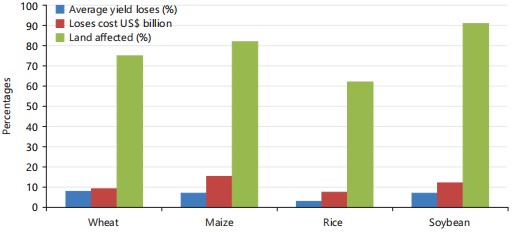
Synergism action of nanoparticles under drought stress: Drought is considered one of the most important factors affecting crop productivity. So, drought is defined as a deficiency of precipitation over an extended period of time (one season or more). Drought stress results from a decrease in water supply and causes molecular, biochemical, and physiological responses in plants and harmful effects on the growth and yield of crops50. So, some processes can be done to overcome the side effects of drought. Many crops were affected by drought stress around the world. According to Razzaq et al.51 the average yield losses of wheat, maize, rice, and soybean by drought stress were 8, 7, 3, and 7%, respectively (Fig. 1). These losses cost an estimated 9.09, 15.42, 7.66, and 12.24 US$ billion, respectively. On the other hand, the percentage of land affected by drought stress was 75, 82, 62, and 91%, respectively.
Nanotechnology one of these processes such as using of nanoparticles to overcome the negative effects of drought.
Effect of selenium nanoparticles on drought stress: A selenium nanoparticle is one of most important factor used in reducing the harm effects of drought in crop production. Asghari et al.52 evaluated selenium nanoparticles against drought stress on Ocimum basilicum L. Sequence concentrations of selenium nanoparticles were used (50, 100 mg/L, and control). The obtained results showed that selenium nanoparticles, especially the lowest concentration (50 mg/L) enhance the drought stress in O. basilicum and increase the quality and quantity of essential oil. Zeeshan et al.53 tested the efficacy of selenium nanoparticles in reducing the negative effects of drought on soybean. The results showed that selenium nanoparticles improve the relative water content in soybean plants. Furthermore, selenium nanoparticles increase the activity and contents of protective enzymes and osmolytes. Daler et al.54 evaluated different concentrations (0, 1, 10, and 100 ppm) of selenium nanoparticles on drought stress in grapevine rootstock. The results showed that 10 ppm is the best concentration in reducing of drought stress. This concentration increase of the leaf numbers shoot fresh and dry weight compared with the other concentrations. Furthermore, this concentration is improving the stomatal conductance values and relative water content. On the other hand, the highest concentration (100 ppm) had a toxic effect on the grapevine rootstock. Nasiri et al.55 compared the efficacy of both selenium and selenium nanoparticles on drought stress. The results showed that under drought conditions, the chlorophyll content decreased by 40%. After selenium nanoparticles were used (10 m/L), the total phenolic, pigment content, and total soluble protein were significantly increased under drought conditions. The obtained results confirmed that the use of selenium nanoparticles improves the physiological, growth, and biochemical characteristics of plants under drought conditions. Neysanian et al.56 tested the efficacy of selenium nanoparticles in reducing of the negative effects of drought on tomato (Fig. 2).
|
Foliar application of selenium nanoparticles was used with different concentrations. The results showed that using of selenium nanoparticles accelerated the flowering stage in tomato, increasing of growth, fruit quality and increasing of tomato yield under drought condition. These results may be due to the positive correlation between the use of selenium nanoparticles and the increase of non-protein thiols, phenylalanine ammonia-lyase, and proline rates. Ikram et al.57 evaluated the role of selenium nanoparticles as a foliar application on wheat under drought conditions. Four concentrations were used: 10, 20, 30, and 40 mg/L. Under 35% irrigation field capacity, 30%, the results showed that significant improvement in plant growth with concentration 30 mg/L. While with 40 mg/L the improving parameter was decreased. This means that the third concentration (30 mg/L) was very suitable for increasing the drought tolerance in wheat plants. Sardari et al.58 compared the efficacy of selenium and selenium nanoparticles in reducing the negative effects of drought on wheat. Two concentrations used from selenium (25 and 50 mg/L) and one-tenth of this concentration were used as nanoparticles (2 and 10 mg/L). The obtained results showed that both selenium and selenium nanoparticles were the same in improving of plant growth under drought conditions. This result may be due to the correlation relationships between selenium and antioxidant enzyme activities in wheat plants.
Effect of silver nanoparticles on drought stress: Silver nanoparticles have vital role in reducing the abiotic factors stress. So, it is called eco-friendly nanomaterial. Drought is among these abiotic factors. The main mechanisms of action by silver nanoparticles to reduce the negative effects of drought are accelerating of plant growth and improving of gas exchange rate under drought stress59. Hojjat and Kamyab60 found that silver nanoparticles protect the lentil under drought stress by improving the seedling growth and plant weight. Şener and Sayğı61 evaluated the efficacy of silver nanoparticles on boysenberry, Rubus ursinus, under drought stress conditions. In control, drought stress reduces the growth of root and shoot. Two concentrations of silver nanoparticles were used: 0.1 and 0.2 mg/L. The results showed that silver nanoparticles significantly increase plant growth under drought stress. This plant growth is due to silver nanoparticles increasing the activity of catalase and superoxide dismutase and decreasing malondialdehyde in boysenberry plants under drought stress. The results also showed that 0.1 mg/L is more effective than 0.2 mg/L. Sarwar et al.62 use of silver nanoparticles (60 ppm) as a protective agent against drought stress, especially during the tillering phase of wheat, Triticum aestivum. Different water levels were used (100, 75, 50, and 25% field capacity). The results showed that under 50 and 25% field capacities treated by silver nanoparticles, the wheat yield was increased by 22 and 17%, respectively. This means that the silver nanoparticles have an active role in suppressing the drought side effects. Alabdallah et al.63 synthesized silver nanoparticles from Albizia lebbeck leaf extracts and used them to reduce the negative effects of drought on eggplant seedlings. After using different concentrations of silver nanoparticles, the antioxidant enzymes increase and improving the plant growth under drought stress. The silver nanoparticles have many roles in mitigating drought stress efficacy on plants, such as making fundamental changes in abscisic acid, gibberellin, and ethylene concentrations in rice plants64.
Effect of silicon dioxide nanoparticles on drought stress: Silicon dioxide nanoparticles are mainly used against the harmful environmental conditions65. Foliar application of silicon dioxide nanoparticles increases the crop yield and improves the plant tolerance against abiotic factors. Ebrahimi et al.66 evaluated the efficacy of silicon dioxide nanoparticles in the tomato field to reduce the harmful effects of drought. Different irrigation rates were used (100, 85, and 70%) and different concentrations of silicon dioxide nanoparticles (0, 50 and 100 ppm). The obtained results showed that the highest crop yield was obtained with 70% irrigation capacity and 50 ppm silicon dioxide nanoparticles. These results confirmed that silicon dioxide nanoparticles are very effective in reducing the negative effects of drought. Sharf-Eldin et al.67 used silicon dioxide nanoparticles to overcome drought stress in maize fields. Silicon dioxide nanoparticles (0.25 mg/L) were used as foliar application under drought stress condition. After application many positive changes in maize plants were occurred such as increase of chlorophylls content, antioxidant enzymes, leaf water content and proline content. These results confirmed that silicon dioxide nanoparticles can improve plant healthy under drought stress. Alabdallah et al.68 used different concentrations of silicon dioxide nanoparticles (10 and 20 mg/L) under different water capacity (75, 50, and 25%) in barley, Hordeum vulgare. The results showed that silicon dioxide nanoparticles improve the metabolic activities and some biochemical processes by mitigating the oxidative stress in barley plants. The growth hormones such as tZR, tZ, and cZ sharply increased. Verma et al.69 used silica nanoparticles as soil and foliage treatments to regulate both the physiological and biochemical processes in plants and reduce the reactive oxygen species produced by drought stress. Liu et al.70 evaluated the silicon nanoparticles on Cunninghamia lanceolata seedlings (some growth parameter) under drought stress. The obtained results showed that after silicon dioxide nanoparticles treatment increasing of root volume, total root length, the numbers of root tips, stomatal conductance, photosynthetic contents, antioxidant enzymes and intercellular CO2 concentration. So, the results concluded that silicon dioxide nanoparticles improve plant activities under drought stress. Sulaiman et al.71 used silicon dioxide nanoparticles (soil and foliage treatments) to improve the tolerance to drought in rice and wheat. After using of sequence concentrations of silicon dioxide nanoparticles on both rice and wheat, the results clear that using of silicon dioxide nanoparticles improve water and nutrient absorption and improve the water balance in rice and wheat plants. On the other hand, silicon dioxide nanoparticles decrease the water loss in green leaves by enhancing stomatal closure and also decrease the oxidative stress by increasing of antioxidant enzymes. El-Naggar and Osman72 developed silicon dioxide nanoparticles to reduce the negative effects of drought on Mentha pulegium.
Three concentrations of silicon dioxide nanoparticles were used; 100, 50 and 25 ppm and another control (free of silicon dioxide nanoparticles). The results showed that 50 ppm was the best concentration in reducing of the side effects of drought on M. pulegium. This concentration improves the drought tolerance by increasing of accumulating some osmolytes and biosynthesis. Raza et al.73 found that silicon oxide nanoparticles increase the crop production of wheat under drought stress by increase of grains per spike, the spike length and plant height compared with the untreated plants. Furthermore, silicon oxide nanoparticles enhance of the leaf gas and chlorophyll content by decreasing of oxidative stress. Abdo et al.74 used green silicon dioxide and silicon dioxide nanoparticles extracted from rice husk to reduce the negative effects of drought in wheat fields. Different water capacities; 40, 60 and 100% and two concentrations (100 and 200 mg/L) were used. The results clears that the silicon dioxide whether normal or nanoparticles improve the physiological characterizations of wheat plant such as the plant growth, photosynthetic pigments, leaves area and root length. The silicon nanoparticles not only improve the tolerant of drought but also very safety on nontarget organisms. Zadegan et al.75 found that using silicon nanoparticles as a foliar application on cowpea, Vigna unguiculata can mitigate the negative efficacy of drought. Chen et al.76 evaluated the efficacy of silicon dioxide nanoparticles on reducing the harmful acts of drought on Ehretia macrophylla. The obtained results showed that using of silicon nanoparticles concentration; 100 mg/L reduced the hydrogen peroxide content and increase of the antioxidant enzymes activity, under drought stress. The silicon dioxide nanoparticles increase the metabolism of α-linolenic acid and fatty acid that may be play vital role in increasing of drought tolerance.
Effect of titanium dioxide nanoparticles on drought stress: Titanium dioxide nanoparticles have a vital role in mitigating of harm effects of drought. These efficacies depend on two factors; the method of treatment and the concentration. Javan et al.77 evaluated the role of titanium dioxide nanoparticles in reducing of the drought stress on strawberry, Fragaria×ananassa. Different water capacities (sustained deficit irrigation (SDI), partial root zone drying (PRD), full irrigation (FI), and concentrations (0, 10, 20, and 30 mg/L) were used. Using of foliar application of titanium dioxide nanoparticles under partial root zone drying increased the carbohydrate content in strawberry fruits and fruits color. The results showed also using of titanium dioxide nanoparticles enhanced of the productivity of plants under drought stress. This study recommended that use of titanium dioxide nanoparticles enhanced many physicochemical parameters in strawberry under drought stress. Cevik78 used titanium dioxide nanoparticles (100 ppm) on tomatoes plants under drought stress. The results showed that titanium dioxide nanoparticles increase the value of photosynthesis-related proteins. The final results found that titanium dioxide nanoparticles elevated the tolerance of drought in tomatoes plants. Mustafa et al.79 evaluated the efficacy of titanium dioxide nanoparticles on wheat under drought stress. After using of titanium dioxide nanoparticles (40 ppm) the wheat plants sharply grow. The shoot length, root length, dry weight and fresh weight were increased by 53, 33, 44 and 48%, respectively, compared with control. The results also, showed that using of titanium dioxide nanoparticles improve the nutrients uptake. Moreover, drought can cause many damages to medicinal plants. Razavizadeh et al.80 found that drought causes reduce of many vital processes in Melissa officinalis such as reduce of protein synthesis, photosynthesis and nutrient uptake. Using two concentrations of titanium dioxide nanoparticles may help in reducing of the negative effects of drought stress. The results found that titanium dioxide nanoparticles increased essential oil content in M. officinalis such as alpha-pinene, γ-3-carene, citral, limonene and myrcene. Moreover, using titanium dioxide nanoparticles increased the tolerance of drought in M. officinalis due to increasing of antioxidant systems and photosynthetic pigments. Kamalizadeh et al.81 found that using titanium dioxide nanoparticles with 30 ppm on the Moldavian dragonhead plant, Dracocephalum moldavica under drought stress reduce the negative effects of drought. Titanium dioxide nanoparticles not only reduce the harmful effect of drought but also increased the essential oil content, chlorogenic acid and rosmarinic acid in D. moldavica. These results clear that the use of titanium dioxide nanoparticles can be used a new strategy to overcome drought stress. The main mechanism for titanium dioxide nanoparticles to reduce the side effects of drought is improving nutrient absorption in plants82. Improving nutrient uptake and absorption increase the plant growth and plant tolerance to drought. The titanium dioxide nanoparticles increase the antioxidant enzymes content which increases the plant tolerance against drought stress.
Effect of zinc oxide nanoparticles on drought stress: Zinc oxide plant an important role as a fertilizer to many crops. Zinc oxide reduces drought stress in many crops by increasing of reactive oxygen scavenging substances and photosynthesis pigment83. The physiological and biochemical performance were improved in wheat, T. aestivum after using of zinc oxide nanoparticles under drought stress. These results may be due to zinc oxide nanoparticles prevent chlorophyll degradation resulted from drought stress. Zinc oxide nanoparticles activated the antioxidant enzymes84. Rukhsar-Ul-Haq et al.85 used different applications of zinc oxide nanoparticles (water only, without any treatments, 50, 100 and 150 ppm) as foliar application on wheat under different drought levels. The results showed that 100 and 150 ppm were significantly reduced the harmful effects of drought stress by increasing the chlorophyll contents in plants. Karimian and Samiei86 compared between the efficacy of zinc oxide nanoparticle and zinc sulfate in reducing the negative impacts of drought stress in Dracocephalum kotschyi. The results showed that both zinc oxide nanoparticle and zinc sulfate significantly improving the physiological and biochemical processes in D. kotschyi such as sugar and proline content under drought condition. The results showed also zinc oxide nanoparticle was more effective on drought than zinc sulfate. On the other hand, Shirvani-Naghani et al.87 used different concentrations of zinc oxide nanoparticles (200 mg/L) as a foliar application on soybean, Glycine max. Zinc oxide nanoparticles greatly enhanced the drought tolerance and increased the yield in soybean by increasing of proline contents and antioxidant activities. The crop yield was increase to 79.4% compared with untreated crop. Ajmal et al.88 evaluated the zinc oxide nanoparticles in reducing of drought stress on Vigna radiate. The results demonstrated that zinc oxide nanoparticles (200 μg/ml) was very effective in reducing the negative effect of drought on V. radiate by increasing of proteins, soluble sugars, and proline. Zinc oxide nanoparticles have a great role in increasing of total protein, soluble sugars, carotenoid contents, chlorophyll, antioxidant enzymes activities and proline accumulation in wheat crop under drought stress89. The results also showed that zinc oxide nanoparticles (1 g/L) induced the expression of the genes that regulate catalase activity, proline biosynthesis and dehydration-responsive genes which are known as drought-tolerance parameters. Due to these advantages, zinc oxide nanoparticles increase the yield of grain in wheat crops. Zinc oxide nanoparticles inhibit the degradation of chlorophyll in Maringa peregrine leaves which results by drought stress90. Pooja et al.91 found that zinc oxide nanoparticles play a great role in controlling the closing and opening of stomata pores and also controlling stomatal conductance, the process of photosynthesis and transpiration. Sedghi et al.92 used zinc oxide nanoparticles to mitigate the side effects of drought stress in soybean crop.
Effect of copper nanoparticles on drought stress: Copper has many advantages as a fertilizer. So, using nanoparticles of copper can increase the surface area of this material and become very effective in mitigating of drought. There are many compounds of copper such as Copper Oxide (CuO), Copper Sulfate (CuSO4) and Copper Sulfide (CuS). Zhou et al.93 used different compounds of Copper Oxide (CuO), Copper Sulfate (CuSO4) and Copper Sulfide (CuS) nanoparticles on soybean crop, Glycine max as a foliar treatment (10 mg/L) for 1 week with 1 day interval under drought stress condition. The results cleared that copper sulfide was the most effective nanoparticles among all tested nanoparticles. Raza et al.94 used different concentrations (300 mg/L, T2: 700 mg/L, and T3: 950 mg/L) of copper nanoparticles on wheat crop to overcome the negative impacts of drought stress. The obtained results showed that copper nanoparticles improved all physiological traits in wheat crop such as increase of plant growth, plant height, spike length, leaf chlorophyll content and grain yield. Liu et al.95 evaluated that copper nanoparticles (CuNPs) against drought stress in strawberry. Many parameters were evaluated such as plant growth, yield production and fruits quality. The results found that using copper nanoparticles improved fruit quality and quantity compared with untreated under drought stress. The tolerance of drought was increased after using foliar application of copper nanoparticles. This increase may be due to the activity of copper nanoparticles in drought stress suppression by increasing activities of antioxidant enzymes catalase. Singh et al.96 used copper oxide nanoparticles (300 ppm) as seed dressing with pearl millet seeds to reduce the negative effect of drought stress. The results found that copper oxide nanoparticles greatly improved the plant morphology and chlorophyll content. The production was increased after copper oxide nanoparticles used on pearl millet.
Effect of iron dioxide nanoparticles on drought stress: Generally, iron is a very important micronutrient for plants and some crops are susceptible to iron deficiency, such as rice. The availability of this element is very low for plants due to the alkaline nature of soil. So, using nanoparticles of iron oxide may reduce the iron toxicity in plants and improve the plant uptake of iron. Ramkumar et al.97 synthized iron oxide nanoparticles from the green leaves of Trigonella foenumgraecum by using 5 g dried leaves powder mixed with 100 mL distilled water. This mixture was boiled at 60°C. After that the obtained mixture was filtered and stored at 4°C. About 10 mL of filtered mixture added to 1.5 mL of 0.1 M ferric chloride solution and stirred for 5 hrs. After 24 hrs of storage, the color of obtained solution was converted from transparent yellow to intense black color. This means that iron oxide was obtained. The solution centrifuged at 5000 rpm for 20 min. the obtained iron oxide nanoparticles can be used. Sreelakshmi et al.98 used green iron oxide synthesized from a marine algae Chaetomorpha antennina to evaluate it against drought stress. To types of iron nanoparticles were obtained, bare iron nanoparticles and citrate coated iron nanoparticles. The two types were used on Setaria italica plants to overcome the drought stress. The results showed that the iron oxide nanoparticles act as nano-nutrient for the plant and also mitigate the harmful effects of drought stress. This means that iron nanoparticles have positive effects on mitigating drought stress. Bidabadi et al.99 used iron oxide nanoparticles on seedless grape, Vitis vinifera to overcome drought stress. After 30 days of iron oxide nanoparticles (10 μM) application, physiological and biochemical parameters in leaves were determined. The results showed that increasing of chlorophyll content under drought stress. Iron oxide nanoparticles reduce malondialdehyde and hydrogen peroxide that responsible of the oxidative stress and increase of antioxidant enzymes. It was known that drought has many negative effects of crops such as reducing of chlorophyll content of leaves, fresh petiole weight and oil content in soybean seeds. Dola et al.100 used different concentrations (0, 100, and 200 ppm) of Iron Oxide Nanoparticles (Fe3O4) as a foliar application on soybean under drought stress condition. The results found that iron oxide nanoparticles increase the soybean seeds yield by 40.12% compared with the untreated plants under drought stress. The oil content of soybean seeds also was increase by 10.14% compared with the untreated plants. This means that iron oxide nanoparticles very effective in reducing of the negative impacts of drought stress. Hematite ((αFe2O3) nanoparticles were synthized from Aspalathus linearis to use it on Sorghum bicolor under drought stress101. Sorghum seeds were treated with different concentrations (5, 10, and 15 mg/L) of hematite nanoparticles. After fourteen days of treatment the plant growth were improved and increased. The chlorophyll content and plant height were increased to 104 and 70%, respectively, compared with control (untreated). Singh et al.102 synthized green iron oxide nanoparticles from Prosopis cineraria and evaluate it on wheat to overcome drought stress. Five concentrations were used 100, 75, 50, 25 and 12.5 ppm with three treatments. These treatments occurred during two stages, seedling development stage and tillering stage. All treatment was tested under drought stress. The obtained results found that the highest concentration of iron oxide nanoparticles (100 ppm) greatly induced the wheat growth parameters compared with untreated. Rezayian et al.103 tested different concentrations of iron oxide nanoparticles on canola plants under drought stress. The results showed that iron oxide nanoparticles able to control of osmotic potential by enhanced of sugar content, proline and protein. The iron oxide nanoparticles not also activated the physiological process in canola plants but also activated the system defense of treated plants. Iron oxide nanoparticles were used with maize plants under drought stress. Aliyeva et al.104 used iron oxide nanoparticles as seed dressing to maize seed. After 15 days of treatment, the plant growth parameters were increased compared with untreated.
Synergism action of nanoparticles under salinity stress: Salinity means the total salt concentration and is expressed as parts per thousand (ppt). Salinity stress can reduce crop production by 50%105. Sodium, magnesium, calcium chlorides and sulphates are commonly associated with the development of soil salinity106. Seed germination is affected by the salinity soil. This is due to of salinity decreased gibberellic acid levels and water absorption in seeds, and at the same time, increasing abscisic acid levels107. About 20% of cultivated land around the world is afflicted by salinity stress, which is increasing year by year108. So, salinity must be reduced in the soil or water to increase the crop production. Nanotechnology may play an important role in this problem.
Effect of selenium nanoparticles on salinity stress: Selenium nanoparticles were used as a vital factor in reducing the negative effects of salinity in Coriandrum sativum109. Two levels of water salinity were used; 3.12 and 6.25 dS/m and another were irrigated by tap water as a control. The results found that selenium nanoparticles at 50 ppm (foliar application) decreased the negative effects of water salinity in C. sativum plants. Badawy et al.110 evaluate the efficacy of selenium nanoparticles on reducing of salinity hazard in two varieties of rice (salt-sensitive variety Giza 177 and salt- tolerant variety Giza 178) cultivated in saline soil. The results found that using selenium nanoparticles improves salinity stress tolerance in Giza 177 by increasing its ion selectivity and increasing the crop yield. Kiumarzi et al.111 estimated the ability of selenium nanoparticles (foliar application) on reducing the harmful effects of salinity stress in pineapple mint, Mentha suaveolens. Different selenium nanoparticle concentrations (10 and 20 mg/L) were used in different levels of salinity (30, 60 and 90 mM NaCl). The obtained results showed that selenium nanoparticles especially 20 mg/L improve the essential oil content in pineapple mint under salinity stress. The physiological characterizations of treated plants were improved compared with untreated plants. On the other hand, using selenium nanoparticles increases the organic acids and sugars contents in strawberry fruits112. El-Badri et al.113 found that selenium nanoparticles have a positive effects on mitigating salinity stress in rapeseed by increasing antioxidant enzyme activity, germination percentage and seed microstructure. Nagdalian et al.114 used selenium nanoparticles as a seed dressing on barley seeds, Hordéum vulgáre to mitigate the salinity stress damages. After application morphofunctional parameters were observed. Using selenium nanoparticles on barley seeds improves the morphological parameters such as the root length and plant height. The crop production was significantly increased compared with the control. Zafar et al.115 evaluated selenium nanoparticles on wheat under salinity stress. Green selenium nanoparticles were prepared by using lemon leaves extract. The results found that using 1% selenium nanoparticles significantly increased the tolerance of salinity in wheat plants. Some morphological parameters were improved compared with the control such as chlorophyll content, biomass per plant and grain yield. Rady et al.116 evaluated the efficacy of selenium nanoparticles on salinity stress levels in common bean, Phaseolus vulgaris. Different salinity (7.55-7.61 dS/m) was used with different concentrations (0.5, 1.0, or 1.5 mM) of selenium nanoparticles. After 20, 30, and 40 days from seedling three foliar applications were done. The results showed that 1.0 mM was the most effective concentration in reducing the salinity effects on the tested plants and salinity was mitigated significantly.
Effect of silver nanoparticles on salinity stress: Silver nanoparticles play a vital role in mitigating the harmful effects of salinity on some crops. Nejatzadeh117 evaluated the efficacy of silver nanoparticles in mitigating salinity stress on Satureja hortensis. Three concentrations of silver nanoparticles were used; 40, 60 and 80 ppm with four different salinity levels; 30, 60, 90, and 120 mM/L. The results showed that silver nanoparticles increase the salinity tolerance in S. hortensis. Wahid et al.118 used silver nanoparticles as a foliar application on wheat, T. aestivum. After application the silver nanoparticles reduce the negative effects of salinity on wheat. The silver nanoparticles improve the plant health by increasing the chlorophyll content in leaves. Bsoul et al.119 tested the silver nanoparticles on spinach, Spinacia oleracea to reduce the side effects of salinity. Some physiological parameters were observed after treatment. The results showed that using 20 ppm of silver nanoparticles improve the plant health under salinity stress. Pirzada et al.120 found that green silver nanoparticles were very effective in reducing the negative effects of salinity stress on wheat. The chlorophyll content was increased after using of green silver nanoparticles under salinity stress.
Effect of silicon dioxide nanoparticles on salinity stress: Silicon dioxide nanoparticles have a great role in mitigating salinity in water or soil. Silicon dioxide is used mainly as a fertilizer in agriculture. Siddiqui et al.121 evaluate silicon dioxide nanoparticles to reduce the negative effects of salinity in Cucurbita pepo. The C. pepo seeds treated with sodium chloride and physiological parameters were observed. The plant length, germination percentage, number of shoots and roots were affected by salinity stress. After treating silicon dioxide nanoparticles the plant health was greatly improved. The results showed that the mechanism of silicon dioxide nanoparticles mitigates the salinity stress by increasing of antioxidant enzymes content and chlorophyll content in treated plants. Avestan et al.122 used silicon dioxide nanoparticles as a foliar application on strawberry plants to overcome the salinity stress. The results found that silicon dioxide nanoparticles increase the salinity tolerance by changing the thickness of the epicuticular wax layer. So, silicon dioxide nanoparticles reduce the adverse effects of salinity stress. Gerbera plants were also treated by different concentrations of silicon dioxide nanoparticles (0, 25 and 50 mg/L) in different salt concentrations (0, 5, 10, 20 and 30 mM). After plants application, biochemical and physiological traits were improved in gerbera plants such as an increase of stem thickness. Also, the antioxidant enzyme activities were increased to 3.4-fold compared with untreated plants and 6-fold for guaiacol peroxidase123.
Effect of titanium dioxide nanoparticles on salinity stress: It is known that salinity has adverse effects on crop production. So, it’s badly needed to reduce or mitigate this phenomenon. Nanotechnology has a long hand in reducing the negative effects of salinity stress by using nanoparticle metals such as titanium dioxide. Badshah et al.124 used green titanium dioxide nanoparticles (TiO2 NPs) to overcome the salinity stress on the wheat crop. Four concentrations of titanium dioxide nanoparticles were used; 5, 50, 75, and 100 μg/mL and with three levels of alt solutions; 0, 100, and 150 mM. The results showed that 50 μg/mL was the best concentrations in mitigating salinity stress. On the other hand, Shah et al.125 found that 60 ppm of titanium dioxide nanoparticles was very effective in reducing the salinity injury in maize. Khalid et al.126 used two concentrations of titanium dioxide nanoparticles (200 and 400 ppm) on eggplant, Solanum melongena under moderate (75 mM) and high levels (150 mM) of salinity. The results showed that 200 ppm was the best concentration to reduce the injury effects of salinity stress on eggplant. Gohari et al.127 found that using 100 mg/L of titanium dioxide nanoparticles sharply decreased the negative effects of salinity stress on Moldavian balm. Salinity stress was also tested against faba bean plants128. Two concentrations used; 5 and 10 ppm in two different salinity levels (40 and 80 mM NaCl). The obtained results showed that both used concentrations greatly decreased the adverse effects of salinity stress on faba beans.
Effect of zinc oxide nanoparticles on salinity stress: Salt stress is a principal abiotic stress that challenges global food security by adversely impacting agriculture and food production. Recently, zinc oxide nanoparticles have been considered one of the most effective agents in reducing the salinity stress in many cultivated lands. There is a great relationship between zinc oxide nanoparticles and DNA polymerase129. Using zinc oxide nanoparticles in the early stages of crop growth can decrease the negative effects of salinity stress. Singh et al.130 used zinc oxide nanoparticles as a foliar application on two varieties of rice to mitigate the harmful effects of salinity. After application of zinc oxide nanoparticles, the antioxidant enzymes were greatly increased in rice plants and the salinity stress decreased. These results also showed that with many crops such as Hordeum vulgare and Vicia faba L.131. Seleiman et al.132 found that zinc oxide nanoparticles have many advantages against salinity stress. The main mechanism of zinc oxide nanoparticles to reduce the salinity stress is the increase of physiological and metabolic activity in plants. Zinc oxide nanoparticles can increase the resistance of tomatoes against salinity stress133. The results showed that using of 150 150 mg/L of silicon nanoparticles on tomato leaves increases the chlorophyll content in plant leaves and reduces the side effects of salinity. This reduction of salinity may be due to an increase of mineral absorption.
Effect of copper nanoparticles on salinity stress: Copper is one of eight essential elements that contribute to the synthesis of metalloproteins. So, copper can be considered an enzyme regulator in plants. Shafiq et al.134 used copper nanoparticles as a foliar application on maize to reduce the adverse effects of salinity stress. The obtained results showed that copper nanoparticles were very effective in mitigating the salinity stress in maize fields. The same results were also found with fenugreek, Trigonella foenum-graecum L. by Fouda et al.135.
CONCLUSION
Nanotechnology plays a vital role in overcoming abiotic factors by synthesizing some vital elements in the form of nanoparticles. These elements include titanium oxide, zinc dioxide, selenium, silver, silicon dioxide, copper oxide and iron oxide. All these nanoparticles contributed to reducing the negative effects of some abiotic factors such as heat, drought, and salinity by affecting the physiological, metabolic, and morphological activity in treated crops, such as an increase of the antioxidant enzymes and chlorophyll content in plant leaves. These nanoparticles are not only used as abiotic inhibitors but also act as fertilizers. The crop production was increased by using these nanoparticles. The plant phytohormone was also activated by using the tested nanoparticles. The obtained results found that nanoparticles greatly decreased the adverse effects of abiotic factors.
SIGNIFICANCE STATEMENT
This study highlights the potential of nanoparticles elements to enhance the crop yield under abiotic stress such as heat, salinity and drought. The results also include the role of some nanoparticles elements such as selenium, silver, zinc and iron in improving the tolerance and resistant to the abiotic factors and increasing the yield production.
REFERENCES
- Kopecká, R., M. Kameniarová, M. Černý, B. Brzobohatý and J. Novák, 2023. Abiotic stress in crop production. Int. J. Mol. Sci., 24.
- Bashir, K., A. Matsui, S. Rasheed and M. Seki, 2019. Recent advances in the characterization of plant transcriptomes in response to drought, salinity, heat, and cold stress. F1000Research, 8.
- Waadt, R., C.A. Seller, P.K. Hsu, Y. Takahashi, S. Munemasa and J.I. Schroeder, 2022. Plant hormone regulation of abiotic stress responses. Nat. Rev. Mol. Cell. Biol., 23: 680-694.
- Tripathi, D., M. Singh and S. Pandey-Rai, 2022. Crosstalk of nanoparticles and phytohormones regulate plant growth and metabolism under abiotic and biotic stress. Plant Stress, 6.
- Verma, K.K., X.P. Song, M. Singh, H.R. Huang and R. Bhatt et al., 2022. Influence of nanosilicon on drought tolerance in plants: An overview. Front. Plant Sci., 13.
- Khan, Z., T.C. Thounaojam, D. Chowdhury and H. Upadhyaya, 2023. The role of selenium and nano selenium on physiological responses in plant: A review. Plant Growth Regul., 100: 409-433.
- Sharma, A., K. Vishwakarma, N.K. Singh, V. Prakash and N. Ramawat et al., 2022. Synergistic action of silicon nanoparticles and indole acetic acid in alleviation of chromium (CrVI) toxicity in Oryza sativa seedlings. J. Biotechnol., 343: 71-82.
- Faizan, M., J.A. Bhat, A. Noureldeen, P. Ahmad and F. Yu, 2021. Zinc oxide nanoparticles and 24-epibrassinolide alleviates Cu toxicity in tomato by regulating ROS scavenging, stomatal movement and photosynthesis. Ecotoxicol. Environ. Saf., 218.
- Ayyaz, A., Y. Zhou, I. Batool, F. Hannan and Q. Huang et al., 2024. Calcium nanoparticles and abscisic acid improve drought tolerance, mineral nutrients uptake and inhibitor-mediated photosystem II performance in Brassica napus. J. Plant Growth Regul., 43: 516-537.
- Faraji, J. and A. Sepehri, 2020. Exogenous nitric oxide improves the protective effects of TiO2 nanoparticles on growth, antioxidant system, and photosynthetic performance of wheat seedlings under drought stress. J. Soil Sci. Plant Nutr., 20: 703-714.
- dos Santos, T.B., A.F. Ribas, S.G.H. de Souza, I.G.F. Budzinski and D.S. Domingues, 2022. Physiological responses to drought, salinity, and heat stress in plants: A review. Stresses, 2: 113-135.
- Zhao, J., Z. Lu, L. Wang and B. Jin, 2021. Plant responses to heat stress: Physiology, transcription, noncoding RNAs, and epigenetics. Int. J. Mol. Sci., 22.
- Ahmad, W., L. Coffman, A.D. Weerasooriya, K. Crawford and A.L. Khan, 2024. The silicon regulates microbiome diversity and plant defenses during cold stress in Glycine max L. Front. Plant Sci., 14.
- Kieliszek, M. and S.N.S. Sandoval, 2023. The importance of selenium in food enrichment processes. A comprehensive review. J. Trace Elem. Med. Biol., 79.
- Zhang, Z., G. Chen and Y. Tang, 2018. Towards selenium recovery: Biocathode induced selenate reduction to extracellular elemental selenium nanoparticles. Chem. Eng. J., 351: 1095-1103.
- Ding, X., Y. Jiang, L. He, Q. Zhou, J. Yu, D. Hui and D. Huang, 2016. Exogenous glutathione improves high root-zone temperature tolerance by modulating photosynthesis, antioxidant and osmolytes systems in cucumber seedlings. Sci. Rep., 6.
- Sun, J., Z. Liu, J. Quan, L. Li, G. Zhao and J. Lu, 2022. Protective effects of different concentrations of selenium nanoparticles on rainbow trout (Oncorhynchus mykiss) primary hepatocytes under heat stress. Ecotoxicol. Environ. Saf., 230.
- Djanaguiraman, M., N. Belliraj, S.H. Bossmann and P.V.V. Prasad. 2018. High-temperature stress alleviation by selenium nanoparticle treatment in grain Sorghum. ACS Omega, 3: 2479-2491.
- Gudkov, S.V., G.A. Shafeev, A.P. Glinushkin, A.V. Shkirin and E.V. Barmina et al., 2020. Production and use of selenium nanoparticles as fertilizers. ACS Omega, 5: 17767-17774.
- Iqbal, M., F. Shafiq, S. Anwar, N.A. Akram and M.A. Ashraf et al., 2022. Selenium and Nano-Selenium-Mediated Heat Stress Tolerance in Plants. In: Selenium and Nano-Selenium in Environmental Stress Management and Crop Quality Improvement, Hossain, M.A., G.J. Ahammed, Z. Kolbert, H. El-Ramady, T. Islam and M. Schiavon (Eds.), Springer, Cham, Switzerland, ISBN: 978-3-031-07063-1, pp: 149-171.
- Omar, A.A., Y.M. Heikal, E.M. Zayed, S.A.M. Shamseldin and Y.E. Salama et al., 2023. Conferring of drought and heat stress tolerance in wheat (Triticum aestivum L.) genotypes and their response to selenium nanoparticles application. Nanomaterials, 13.
- El-Saadony, M.T., E.S.M. Desoky, A.M. Saad, R.S.M. Eid, E. Selem and A.S. Elrys, 2021. Biological silicon nanoparticles improve Phaseolus vulgaris L. yield and minimize its contaminant contents on a heavy metals-contaminated saline soil. J. Environ. Sci., 106: 1-14.
- Seliem, M.K., Y.M. Hafez and H.R. El-Ramady, 2020. Using of nano-selenium in reducing the negative effects of high temperature stress on Chrysanthemum morifolium Ramat. J. Sustainable Agric. Sci., 46: 47-59.
- Hussein, H.A.A., O.M. Darwesh and B.B. Mekki, 2019. Environmentally friendly nano-selenium to improve antioxidant system and growth of groundnut cultivars under sandy soil conditions. Biocatal. Agric. Biotechnol., 18.
- Shalaby, T.A., E. Abd-Alkarim, F. El-Aidy, E.S. Hamed and M. Sharaf-Eldin et al., 2021. Nano-selenium, silicon and H2O2 boost growth and productivity of cucumber under combined salinity and heat stress. Ecotoxicol. Environ. Saf., 212.
- Abasi, F., N.I. Raja, Z.U.R. Mashwani, M.S. Amjad and M. Ehsan et al., 2022. Biogenic silver nanoparticles as a stress alleviator in plants: A mechanistic overview. Molecules, 27.
- Giri, A.K., B. Jena, B. Biswal, A.K. Pradhan, M. Arakha, S. Acharya and L. Acharya, 2022. Green synthesis and characterization of silver nanoparticles using Eugenia roxburghii DC. extract and activity against biofilm-producing bacteria. Sci. Rep., 12.
- Jonapá-Hernández, F., F. Gutiérrez-Miceli, A. Santos-Espinosa, N. Ruíz-Lau, V. Ruíz-Valdiviezo, B. Valdez-Salas and D. González-Mendoza, 2020. Foliar application of green nanoparticles in Annona muricata L. plants and their effects in physiological and biochemical parameters. Biocatal. Agric. Biotechnol., 28.
- Iqbal, M., N.I. Raja, Z.U.R. Mashwani, F.H. Wattoo, M. Hussain, M. Ejaz and H. Saira, 2019. Assessment of AgNPs exposure on physiological and biochemical changes and antioxidative defence system in wheat (Triticum aestivum L) under heat stress. IET Nanobiotechnol., 13: 230-236.
- Iqbal, M., N.I. Raja, Z.U.R. Mashwani, M. Hussain, M. Ejaz and F. Yasmeen, 2019. Effect of silver nanoparticles on growth of wheat under heat stress. Iran. J. Sci. Technol. Trans. A : Sci., 43: 387-395.
- Pociecha, E., A. Gorczyca, M. Dziurka, E. Matras and M. Oćwieja, 2021. Silver nanoparticles and silver ions differentially affect the phytohormone balance and yield in wheat. Agriculture, 11.
- Huang, Y., P. Li, R. Zhao, L. Zhao and J. Liu et al., 2022. Silica nanoparticles: Biomedical applications and toxicity. Biomed. Pharmacother., 151.
- Yan, G., Q. Huang, S. Zhao, Y. Xu and Y. He et al., 2024. Silicon nanoparticles in sustainable agriculture: Synthesis, absorption, and plant stress alleviation. Front. Plant Sci., 15.
- Okeke, E.S., E.J. Nweze, T.C. Ezike, C.O. Nwuche, T.P.C. Ezeorba and C.E.I. Nwankwo, 2023. Silicon-based nanoparticles for mitigating the effect of potentially toxic elements and plant stress in agroecosystems: A sustainable pathway towards food security. Sci. Total Environ., 898.
- Younis, A.A., H. Khattab and M.M. Emam, 2020. Impacts of silicon and silicon nanoparticles on leaf ultrastructure and TaPIP1 and TaNIP2 gene expressions in heat stressed wheat seedlings. Biol. Plant., 64: 343-352.
- Farahi, S.M.M., M.E.T. Yazdi and E. Einafshar, M. Akhondi and M. Ebadi et al., 2023. The effects of titanium dioxide (TiO2) nanoparticles on physiological, biochemical, and antioxidant properties of Vitex plant (Vitex agnus-Castus L). Heliyon, 9.
- Zafar, S., Z. Hasnain, S. Danish, M.L. Battaglia, S. Fahad, M.J. Ansari and S.A. Alharbi, 2024. Modulations of wheat growth by selenium nanoparticles under salinity stress. BMC Plant Biol., 24.
- Dinler, B.S., H. Cetinkaya, F.N. Koc, V. Gül and F. Sefaoğlu, 2024. Effects of titanium dioxide nanoparticles against salt and heat stress in safflower cultivars. Acta Botan. Brasilica. 38.
- El-Saadony, M.T., A.M. Saad, A.A. Najjar, S.O. Alzahrani and F.M. Alkhatib et al., 2021. The use of biological selenium nanoparticles to suppress Triticum aestivum L. crown and root rot diseases induced by Fusarium species and improve yield under drought and heat stress. Saudi J. Biol. Sci., 28: 4461-4471.
- Qi, M., Y. Liu and T. Li, 2013. Nano-TiO2 improve the photosynthesis of tomato leaves under mild heat stress. Biol. Trace Elem. Res., 156: 323-328.
- Thakur, S., B. Asthir, G. Kaur, A. Kalia and A. Sharma, 2022. Zinc oxide and titanium dioxide nanoparticles influence heat stress tolerance mediated by antioxidant defense system in wheat. Cereal Res. Commun., 50: 385-396.
- Sun, M., C. Zhao, H. Shang, Y. Hao and L. Han et al., 2023. ZnO quantum dots outperform nanoscale and bulk particles for enhancing tomato (Solanum lycopersicum) growth and nutritional values. Sci. Total Environ., 857.
- Guo, S., X. Hu, Z. Wang, F. Yu, X. Hou and B. Xing, 2024. Zinc oxide nanoparticles cooperate with the phyllosphere to promote grain yield and nutritional quality of rice under heatwave stress. Proc. Natl. Acad. Sci. U.S.A., 121.
- Abdul Kareem, H., Mahmood Ul Hassan, M. Zain, A. Irshad and N. Shakoor et al., 2022. Nanosized zinc oxide (n-ZnO) particles pretreatment to alfalfa seedlings alleviate heat-induced morpho-physiological and ultrastructural damages. Environ. Pollut., 303.
- Abdul Kareem, H., M.F. Saleem, S. Saleem, S.A. Rather and S.H. Wani et al., 2022. Zinc oxide nanoparticles interplay with physiological and biochemical attributes in terminal heat stress alleviation in mungbean (Vigna radiate L.). Front. Plant Sci., 13.
- Azmat, A., Y. Tanveer, H. Yasmin, M.N. Hassan, A. Shahzad, M. Reddy and A. Ahmad, 2022. Coactive role of zinc oxide nanoparticles and plant growth promoting rhizobacteria for mitigation of synchronized effects of heat and drought stress in wheat plants. Chemosphere, 297.
- Wang, Z., S. Wang, T. Ma, Y. Liang, Z. Huo and F. Yang, 2023. Synthesis of zinc oxide nanoparticles and their applications in enhancing plant stress resistance: A review. Agronomy, 13.
- Kapoor, N., A. Agrawal, P. Kumar, R. Kumar and R.S. Sengar et al., 2024. Exploring the impact of biogenic zinc oxide nanoparticles derived from Lantana camara L. on alleviating heat stress in wheat. Res. Square.
- Wu, J. and T. Wang, 2020. Synergistic effect of zinc oxide nanoparticles and heat stress on the alleviation of transcriptional gene silencing in Arabidopsis thaliana. Bull. Environ. Contam. Toxicol., 104: 49-56.
- Gelaw, T.A. and N. Sanan-Mishra, 2021. Non-coding RNAs in response to drought stress. Int. J. Mol. Sci., 22.
- Razzaq, A., S.H. Wani, F. Saleem, M. Yu, M. Zhou and S. Shabala, 2021. Rewilding crops for climate resilience: Economic analysis and de novo domestication strategies. J. Exp. Bot., 72: 6123-6139.
- Asghari, J., H. Mahdavikia, E. Rezaei-Chiyaneh, F. Banaei-Asl, M.A. Machiani and M.T. Harrison, 2023. Selenium nanoparticles improve physiological and phytochemical properties of Basil (Ocimum basilicum L.) under drought stress conditions. Land, 12.
- Zeeshan, M., X. Wang, Abdul Salam, H. Wu and S. Li et al., 2024. Selenium nanoparticles boost the drought stress response of soybean by enhancing pigment accumulation, oxidative stress management and ultrastructural integrity. Agronomy, 14.
- Daler, S., N. Korkmaz, T. Kılıç, H. Hatterman-Valenti, A. Karadağ and O. Kaya, 2024. Modulatory effects of selenium nanoparticles against drought stress in some grapevine rootstock/scion combinations. Chem. Biol. Technol. Agric., 11.
- Nasiri, Y., M. Asadi, S.M. Zahedi and A. Venditti, 2025. Selenium nanoparticles improved biochemical and physiological properties and antioxidant systems of savoury under drought stress. Nat. Prod. Res., 39: 1188-1198.
- Neysanian, M., A. Iranbakhsh, R. Ahmadvand, Z.O. Ardebili and M. Ebadi, 2024. Selenium nanoparticles conferred drought tolerance in tomato plants by altering the transcription pattern of microRNA-172 (miR-172), bZIP, and CRTISO genes, upregulating the antioxidant system, and stimulating secondary metabolism. Protoplasma, 261: 735-747.
- Ikram, M., N.I. Raja, B. Javed, Z.U.R. Mashwani and M. Hussain et al., 2020. Foliar applications of bio-fabricated selenium nanoparticles to improve the growth of wheat plants under drought stress. Green Process. Synth., 9: 706-714.
- Sardari, M., M. Rezayian and V. Niknam, 2022. Comparative study for the effect of selenium and nano-selenium on wheat plants grown under drought stress. Russ. J. Plant Physiol., 69.
- Kim, D.Y., A. Kadam, S. Shinde, R.G. Saratale, J. Patra and G. Ghodake, 2018. Recent developments in nanotechnology transforming the agricultural sector: A transition replete with opportunities. J. Sci. Food Agric., 98: 849-864.
- Hojjat, S.S. and M. Kamyab, 2017. The effect of silver nanoparticle on Fenugreek seed germination under salinity levels. Russ. Agric. Sci., 43: 61-65.
- Şener, S. and H. Sayğı, 2023. The role of silver nanoparticles in response of in vitro boysenberry plants to drought stress. Horticulturae, 9.
- Sarwar, M., M.F. Saleem, Najeeb Ullah, M.J. Khan and H. Maqsood et al., 2023. Silver nanoparticles protect tillering in drought-stressed wheat by improving leaf water relations and physiological functioning. Funct. Plant Biol., 50: 901-914.
- Alabdallah, N.M., M.M. Hasan, A.M. Salih, S.S. Roushdy, A.S. Al-Shammari, S.I. Alsanie and M. El-Zaidy 2021. Silver nanoparticles improve growth and protect against oxidative damage in eggplant seedlings under drought stress. Plant Soil Environ., 67: 617-624.
- Manickavasagam, M., G. Pavan and V. Vasudevan, 2019. A comprehensive study of the hormetic influence of biosynthesized AgNPs on regenerating rice calli of indica cv. IR64. Sci Rep., 9.
- Rajput, V.D., T. Minkina, M. Feizi, A. Kumari and M. Khan et al., 2021. Effects of silicon and silicon-based nanoparticles on rhizosphere microbiome, plant stress and growth. Biology, 10.
- Ebrahimi, H., A.S. Mohammadi, S.B. Nasab, N.A. Ansari and A. Juárez-Maldonado, 2024. Evaluation the impact of silicon nanoparticle on growth and water use efficiency of greenhouse tomato in drought stress condition. Appl. Water Sci., 14.
- Sharf-Eldin, A.A., K.M. Alwutayd, A.A. El-Yazied, H.S. El-Beltagi and B.M. Alharbi et al., 2023. Response of maize seedlings to silicon dioxide nanoparticles (SiO2NPs) under drought stress. Plants, 12.
- Alabdallah, N.M., K. Saleem, A.S. Al-Shammari, S.S. AlZahrani and A. Raza et al., 2025. Unfolding the role of silicon dioxide nanoparticles (SiO2NPs) in inducing drought stress tolerance in Hordeum vulgare through modulation of root metabolic, nutritional, and hormonal profiles. S. Afr. J. Bot., 177: 397-410.
- Verma, V., P. Ravindran and P.P. Kumar, 2016. Plant hormone-mediated regulation of stress responses. BMC Plant Biol., 16.
- Liu, C., H. Sun, Y. Xu and C. Wu, 2023. Effects of SiO2 nanoparticles on root structures, gas exchange, and antioxidant activities of Cunninghamia lanceolata seedlings under drought stress. J. Plant Nutr., 46: 3771-3793.
- Sulaiman, H.S. El-Beltagi, W.F. Shehata, A. Ahmad, M.F.N. Hassim and M.L. Hadid, 2023. Role of silica nanoparticles in enhancing drought tolerance of cereal crops. Notulae Botanicae Horti Agrobotanici Cluj-Napoca, 51.
- El-Naggar, H.M. and A.R. Osman, 2024. Enhancing growth and bioactive metabolites characteristics in Mentha pulegium L. via silicon nanoparticles during in vitro drought stress. BMC Plant Biol., 24.
- Raza, M.A.S., B. Zulfiqar, R. Iqbal, M.N. Muzamil and M.U. Aslam et al., 2023. Morpho-physiological and biochemical response of wheat to various treatments of silicon nano-particles under drought stress conditions. Sci. Rep., 13.
- Abdo, R.A., M.M. Hazem, A.E.M. El-Assar, H.S. Saudy and S.M. El-Sayed, 2024. Efficacy of nano-silicon extracted from rice husk to modulate the physio-biochemical constituents of wheat for ameliorating drought tolerance without causing cytotoxicity. Beni-Suef Univ. J. Basic Appl. Sci., 13.
- Zadegan, K., R. Monem and A. Pazoki, 2023. Silicon dioxide nanoparticles improved yield, biochemical attributes, and fatty acid profile of cowpea (Vigna unguiculata [L.] Walp) under different irrigation regimes. J. Soil Sci. Plant Nutr., 23: 3197-3208.
- Chen, M., S.Q. Jiao, L. Xie, X. Geng and S. Qi et al., 2024. Integrated physiological, transcriptomic, and metabolomic analyses of drought stress alleviation in Ehretia macrophylla Wall. seedlings by SiO2 NPs (silica nanoparticles). Front. Plant Sci., 15.
- Javan, M., Y. Selahvarzi, P. Sayyad-Amin and S. Rastegar, 2024. Potential application of TiO2 nanoparticles to improve the nutritional quality of strawberry cv. Camarosa under drought stress. Sci. Hortic., 330.
- Cevik, S., 2023. TiO2 nanoparticles alleviates the effects of drought stress in tomato seedlings. Bragantia, 82.
- Mustafa, H., N. Ilyas, N. Akhtar, N.I. Raja and T. Zainab et al., 2021. Biosynthesis and characterization of titanium dioxide nanoparticles and its effects along with calcium phosphate on physicochemical attributes of wheat under drought stress. Ecotoxicol. Environ. Saf., 223.
- Razavizadeh, R., F. Adabavazeh and Z. Mosayebi, 2023. Titanium dioxide nanoparticles improve element uptake, antioxidant properties, and essential oil productivity of Melissa officinalis L. seedlings under in vitro drought stress. Environ. Sci. Pollut. Res. 30: 98020-98033.
- Kamalizadeh, M., M. Bihamta and A. Zarei, 2019. Drought stress and TiO2 nanoparticles affect the composition of different active compounds in the Moldavian dragonhead plant. Acta Physiol. Plant., 41.
- Daler, S., O. Kaya, N. Korkmaz, T. Kılıç, A. Karadağ and H. Hatterman-Valenti, 2024. Titanium nanoparticles (TiO2-NPs) as catalysts for enhancing drought tolerance in grapevine saplings. Horticulturae, 10.
- Rai-Kalal, P., R.S. Tomar and A. Jajoo, 2021. H2O2 signaling regulates seed germination in ZnO nanoprimed wheat (Triticum aestivum L.) seeds for improving plant performance under drought stress. Environ. Exp. Bot., 189.
- Pandya, P., S. Kumar, A.A. Sakure, Rutul Rafaliya and G.B. Patil, 2023. Zinc oxide nanopriming elevates wheat drought tolerance by inducing stress-responsive genes and physio-biochemical changes. Curr. Plant Biol., 35-36.
- Rukhsar-Ul-Haq, A. Kausar, S. Hussain, T. Javed and S. Zafar et al., 2023. Zinc oxide nanoparticles as potential hallmarks for enhancing drought stress tolerance in wheat seedlings. Plant Physiol. Biochem., 195: 341-350.
- Karimian, Z. and L. Samiei, 2023. ZnO nanoparticles efficiently enhance drought tolerance in Dracocephalum kotschyi through altering physiological, biochemical and elemental contents. Front. Plant Sci., 14.
- Shirvani-Naghani, S., S. Fallah, L.R. Pokhrel and A. Rostamnejadi, 2024. Drought stress mitigation and improved yield in Glycine max through foliar application of zinc oxide nanoparticles. Sci. Rep., 14.
- Ajmal, M., Rehman Ullah, Z. Muhammad, M.N. Khan and H.A. Kakar et al., 2023. Kinetin capped zinc oxide nanoparticles improve plant growth and ameliorate resistivity to polyethylene glycol (PEG)-induced drought stress in Vigna radiata (L.) R. Wilczek (mung bean). Molecules, 28.
- Sadati, S.Y.R., S.J. Godehkahriz, A. Ebadi and M. Sedghi, 2022. Zinc oxide nanoparticles enhance drought tolerance in wheat via physio-biochemical changes and stress genes expression. Iran. J. Biotechnol., 20: 12-24.
- Foroutan, L., M. Solouki, V. Abdossi and B.A. Fakheri, 2019. The effects of zinc oxide nanoparticles on enzymatic and osmoprotectant alternations in different Moringa peregrina populations under drought stress. Int. J. Basic Sci. Med., 3: 178-187.
- Pooja, R. Munjal, J. Bhaumik and R. Kaur, 2020. Role of zinc oxide nanoparticles in mitigation of drought and salinity. Int. J. Curr. Microbiol. Appl. Sci., 9: 467-481.
- Sedghi, M., P.S. Jahed and S.G. Tolouie, 2021. Zinc oxide nano particles alleviate drought stress effects on soybean antioxidant system during germination. Iran. J. Plant Physiol., 11: 3769-3778.
- Zhou, J., Y. Wang, N. Zuverza-Mena, C.O. Dimkpa and J.C. White, 2024. Copper-based materials as an effective strategy for improving drought resistance in soybean (Glycine max) at the reproductive stage. ACS Agric. Sci. Technol., 4: 735-746.
- Raza, M.A.S., J. Amin, M. Valipour, R. Iqbal and M.U. Aslam et al., 2024. Cu-nanoparticles enhance the sustainable growth and yield of drought-subjected wheat through physiological progress. Sci. Rep., 14.
- Liu, A., W. Xiao, W. Lai, J. Wang, X. Li, H. Yu and Y. Zha, 2024. Potential application of selenium and copper nanoparticles in improving growth, quality, and physiological characteristics of strawberry under drought stress. Agriculture, 14.
- Singh, J., T. Dutta, K.H. Kim, M. Rawat, P. Samddar and P. Kumar, 2018. ‘Green’ synthesis of metals and their oxide nanoparticles: applications for environmental remediation. J. Nanobiotechnol.,
- Ramkumar, G., R. Asokan, S. Ramya and G. Gayathri, 2021. Characterization of Trigonella foenum-graecum derived iron nanoparticles and its potential pesticidal activity against Tuta absoluta (Lepidoptera). J. Cluster Sci., 32: 1185-1190.
- Sreelakshmi, B., S. Induja, P.P. Adarsh, H.L. Rahul and S.M. Arya et al., 2021. Drought stress amelioration in plants using green synthesised iron oxide nanoparticles. MaterialsToday: Proc., 41: 723-727.
- Bidabadi, S.S., P. Sabbatini and J. VanderWeide, 2023. Iron oxide (Fe2O3) nanoparticles alleviate PEG-simulated drought stress in grape (Vitis vinifera L.) plants by regulating leaf antioxidants. Sci. Hortic., 312.
- Dola, D.B., M.A. Mannan, U. Sarker, M.A. Al Mamun and T. Islam et al., 2022. Nano-iron oxide accelerates growth, yield, and quality of Glycine max seed in water deficits. Front. Plant Sci., 13.
- Ndou, N., T. Rakgotho, M. Nkuna, I.Z. Doumbia, T. Mulaudzi and R.F. Ajayi, 2023. Green synthesis of iron oxide (hematite) nanoparticles and their influence on Sorghum bicolor growth under drought stress. Plants, 12.
- Singh, A., R.S. Sengar, V.D. Rajput, T. Minkina and R.K. Singh, 2022. Zinc oxide nanoparticles improve salt tolerance in rice seedlings by improving physiological and biochemical indices. Agriculture, 12.
- Rezayian, M., V. Niknam and M. Arabloo, 2023. Iron nanoparticle regulate succinate dehydrogenase activity in canola plants under drought stress. Sci. Rep., 13.
- Aliyeva, N.Z., K.R. Tagiyeva, Z.M. Mamedov and I.V. Azizov, 2023. Effect of iron oxide nanoparticles on the growth of maize sprouts cultivated under drought stress and on the activity dynamics of NADP-ISDH enzyme. Adv. Stud. Biol., 15: 149-156.
- Okorogbona, A.O.M., L.R. Managa, P.O. Adebola, H.M. Ngobeni and T.B. Khosa, 2015. Salinity and Crop Productivity. In: Sustainable Agriculture Reviews, Lichtfouse, E., (Ed.), Springer International Publishing, Cham, Switzerland, ISBN: 978-3-319-16742-8, pp: 89-120.
- Atta, K., S. Mondal, S. Gorai, A.P. Singh and A. Kumari et al., 2023. Impacts of salinity stress on crop plants: Improving salt tolerance through genetic and molecular dissection. Front. Plant Sci., 14.
- Lee, S.C. and S. Luan, 2012. ABA signal transduction at the crossroad of biotic and abiotic stress responses. Plant Cell Environ., 35: 53-60.
- Shrivastava, P. and R. Kumar, 2015. Soil salinity: A serious environmental issue and plant growth promoting bacteria as one of the tools for its alleviation. Saudi J. Biol. Sci., 22: 123-131.
- Ghazi, D.A., 2018. The contribution of nano-selenium in alleviation of salinity adverse effects on Coriander plants. J. Soil Sci. Agric. Eng., 9: 753-760.
- Badawy, S.A., B.A. Zayed, S.M.A. Bassiouni, A.H.A. Mahdi, A. Majrashi, E.F. Ali and M.F. Seleiman, 2021. Influence of nano silicon and nano selenium on root characters, growth, ion selectivity, yield, and yield components of rice (Oryza sativa L.) under salinity conditions. Plants, 10.
- Kiumarzi, F., M.R. Morshedloo, S.M. Zahedi, H. Mumivand and F. Behtash et al., 2022. Selenium nanoparticles (Se-NPs) alleviates salinity damages and improves phytochemical characteristics of pineapple mint (Mentha suaveolens Ehrh.). Plants, 11.
- Soni, S., A.B. Jha, R.S. Dubey and P. Sharma, 2024. Nanowonders in agriculture: Unveiling the potential of nanoparticles to boost crop resilience to salinity stress. Sci. Total Environ., 925.
- El-Badri, A.M., M. Batool, C. Wang, A.M. Hashem and K.M. Tabl et al., 2021. Selenium and zinc oxide nanoparticles modulate the molecular and morpho-physiological processes during seed germination of Brassica napus under salt stress. Ecotoxicol. Environ. Saf., 225.
- Nagdalian, A.A., A.V. Blinov, S.A. Siddiqui, A.A. Gvozdenko and A.B. Golik et al., 2023. Effect of selenium nanoparticles on biological and morphofunctional parameters of barley seeds (Hordéum vulgáre L.). Sci. Rep., 13.
- Zafar, H., A. Ali, J.S. Ali, Ihsan U. Haq and M. Zia, 2016. Effect of ZnO nanoparticles on Brassica nigra seedlings and stem explants: Growth dynamics and antioxidative response. Front. Plant Sci., 7.
- Rady, M.M., E.S.M. Desoky, S.M. Ahmed, A. Majrashi, E.F. Ali, S.M.A.I. Arnaout and E. Selem, 2021. Foliar nourishment with nano-selenium dioxide promotes physiology, biochemistry, antioxidant defenses, and salt tolerance in Phaseolus vulgaris. Plants, 10.
- Nejatzadeh, F., 2021. Effect of silver nanoparticles on salt tolerance of Satureja hortensis L. during in vitro and in vivo germination tests. Heliyon, 7.
- Wahid, I., S. Kumari, R. Ahmad, S.J. Hussain, S. Alamri, M.H. Siddiqui and M.I.R. Khan, 2020. Silver nanoparticle regulates salt tolerance in wheat through changes in ABA concentration, ion homeostasis, and defense systems. Biomolecules, 10.
- Bsoul, E.Y., S.A. Othman, A.L.A. Al-Ghzawi and M.I. Massadeh, 2023. Effect of silver nanoparticles on growth and physiological responses of spinach (Spinacia oleracea L.) under salt stress. Jordan J. Biol. Sci., 16: 1-6.
- Pirzada, A.M., T. Anwar, W.A. Qureshi, H. Qureshi, E.H. Siddiqi, W. Zaman and W. Soufan, 2024. Salinity stress mitigation in wheat through synergistic application of ascorbic acid, nanoparticles and Salvadora oleoides extract. Sci. Rep., 14.
- Siddiqui, M.H., M.H. Al-Whaibi, M. Faisal and A.A. Al Sahli, 2014. Nano-silicon dioxide mitigates the adverse effects of salt stress on Cucurbita pepo L. Environ. Toxicol. Chem., 33: 2429-2437.
- Avestan, S., M. Ghasemnezhad, M. Esfahani and C.S. Byrt, 2019. Application of nano-silicon dioxide improves salt stress tolerance in strawberry plants. Agronomy, 9.
- Hajizadeh, H.S., M. Asadi, S.M. Zahedi, N. Hamzehpour, F. Rasouli, M. Helvacı and T. Alas, 2021. Silicon dioxide-nanoparticle nutrition mitigates salinity in gerbera by modulating ion accumulation and antioxidants. Folia Hortic., 33: 91-105.
- Badshah, I., N. Mustafa, R. Khan, Z.U.R. Mashwani and N.I. Raja et al., 2023. Biogenic titanium dioxide nanoparticles ameliorate the effect of salinity stress in wheat crop. Agronomy, 13.
- Shah, T., S. Latif, F. Saeed, I. Ali and Saif Ullah et al., 2021. Seed priming with titanium dioxide nanoparticles enhances seed vigor, leaf water status, and antioxidant enzyme activities in maize (Zea mays L.) under salinity stress. J. King Saud Univ. Sci., 33.
- Khalid, M.F., M.Z. Jawaid, M. Nawaz, R. Abdul Shakoor and T. Ahmed, 2024. Employing titanium dioxide nanoparticles as biostimulant against salinity: Improving antioxidative defense and reactive oxygen species balancing in eggplant seedlings. Antioxidants, 13.
- Gohari, G., A. Mohammadi, A. Akbari, S. Panahirad, M.R. Dadpour, V. Fotopoulos and S. Kimura, 2020. Titanium dioxide nanoparticles (TiO2 NPs) promote growth and ameliorate salinity stress effects on essential oil profile and biochemical attributes of Dracocephalum moldavica. Sci. Rep., 10.
- Mofreh, A., H. Maswada, M. Helaly and N. Elsheery, 2024. The physiological role of titanium dioxide nanoparticles in alleviating the effect of salinity stress on faba bean plants. J. Sustainable Agric. Environ. Sci., 3: 60-67.
- Vaghar, M.S., S. Sayfzadeh, H.R. Zakerin, S. Kobraee and S.A. Valadabadi, 2020. Foliar application of iron, zinc, and manganese nano-chelates improves physiological indicators and soybean yield under water deficit stress. J. Plant Nutr., 43: 2740-2756.
- Singh, A., N. Basnal, G. Shukla, N. Chaudhary, S. Singh and S.S. Gaurav, 2022. Evaluation of efficacy of phyto-synthesized iron oxide nanoparticles in contributing drought resilience in wheat (Triticum aestivum L.). Nanotechnology, 33.
- Mogazy, A.M., H.I. Mohamed and O.M. El-Mahdy, 2022. Calcium and iron nanoparticles: A positive modulator of innate immune responses in strawberry against Botrytis cinerea. Process Biochem., 115: 128-145.
- Seleiman, M.F., A. Ahmad, M.L. Battaglia, H.M. Bilal, B.A. Alhammad and N. Khan, 2023. Zinc oxide nanoparticles: A unique saline stress mitigator with the potential to increase future crop production. South Afr. J. Bot., 159: 208-218.
- Ahmed, M., D.A. Marrez, R. Rizk, M. Zedan and D. Abdul-Hamid et al., 2024. The influence of zinc oxide nanoparticles and salt stress on the morphological and some biochemical characteristics of Solanum lycopersicum L. plants. Plants, 13.
- Shafiq, H., M.Y. Shani, M.Y. Ashraf, F. de Mastro and C. Cocozza et al., 2024. Copper oxide nanoparticles induced growth and physio-biochemical changes in maize (Zea mays L.) in saline soil. Plants, 13.
- Fouda, H.M., E. Saied, E. S. Abdelmouty and M.S. Osman, 2024. Ameliorative role of copper nanoparticle in alleviating salt-induced oxidative stress in fenugreek (Trigonella foenum-graecum L.) plants. Biocatal. Agric. Biotechnol., 57.
How to Cite this paper?
APA-7 Style
Sabry,
A.H., Attia,
Z.A. (2025). Synergistic Effects of Nanoparticles Under Various Abiotic Stresses for Higher Performance of Agricultural Crops. Trends in Biological Sciences, 1(1), 26-45. https://doi.org/10.21124/tbs.2025.26.45
ACS Style
Sabry,
A.H.; Attia,
Z.A. Synergistic Effects of Nanoparticles Under Various Abiotic Stresses for Higher Performance of Agricultural Crops. Trends Biol. Sci 2025, 1, 26-45. https://doi.org/10.21124/tbs.2025.26.45
AMA Style
Sabry
AH, Attia
ZA. Synergistic Effects of Nanoparticles Under Various Abiotic Stresses for Higher Performance of Agricultural Crops. Trends in Biological Sciences. 2025; 1(1): 26-45. https://doi.org/10.21124/tbs.2025.26.45
Chicago/Turabian Style
Sabry, Al-Kazafy, Hassan, and Zakaria Abdelhalim Attia.
2025. "Synergistic Effects of Nanoparticles Under Various Abiotic Stresses for Higher Performance of Agricultural Crops" Trends in Biological Sciences 1, no. 1: 26-45. https://doi.org/10.21124/tbs.2025.26.45

This work is licensed under a Creative Commons Attribution 4.0 International License.