
Development of a Polyherbal Antioxidant Tea Formulated with Citrus sinensis L. and Zingiber officinale Roscoe
-
A. Fanayajo Temitope

Department of Pharmacognosy, Faculty of Pharmacy, University of Benin, Benin City, Edo State, Nigeria
Tunde OwolabiDepartment of Pharmacognosy, Faculty of Pharmacy, University of Benin, Benin City, Edo State, Nigeria
Dorcas AdetoyiDepartment of Pharmacognosy, College of Pharmacy, Igbinedion University, Okada, Edo State, Nigeria
Akemuphel OkuruDepartment of Pharmacognosy, College of Pharmacy, Igbinedion University, Okada, Edo State, Nigeria
Triumph OloyedeDepartment of Pharmacognosy, College of Pharmacy, Igbinedion University, Okada, Edo State, Nigeria
Chukwudumebi NwufoDepartment of Pharmacognosy, College of Pharmacy, Igbinedion University, Okada, Edo State, Nigeria
Ukamaka EzebualaDepartment of Pharmacognosy, College of Pharmacy, Igbinedion University, Okada, Edo State, Nigeria
Divine-Grace Ojo-IyobosaDepartment of Pharmacognosy, College of Pharmacy, Igbinedion University, Okada, Edo State, Nigeria
Joy OlagundoyeDepartment of Pharmacognosy, College of Pharmacy, Igbinedion University, Okada, Edo State, Nigeria
Samuel OluseyeDepartment of Pharmacognosy, College of Pharmacy, Igbinedion University, Okada, Edo State, Nigeria
| Received 01 Aug, 2026 |
Accepted 29 Sep, 2026 |
Published 31 Dec, 2026 |
Background and Objective: The rising global burden of oxidative stress-related non-communicable diseases has intensified the search for safe, affordable and natural antioxidant interventions. Citrus sinensis (sweet orange) and Zingiber officinale (ginger) are widely available tropical plants with well-documented antioxidant phytochemical profiles. This study aimed to develop, formulate and evaluate the antioxidant activity, physicochemical properties and sensory acceptability of a polyherbal tea prepared from Citrus sinensis and Zingiber officinale at varying blend ratios. Materials and Methods: Five formulations were prepared: Formulation A (100% Citrus sinensis), Formulation B (100% Zingiber officinale), Formulation C (1:1 ratio), Formulation D (2:1, Citrus-dominant) and Formulation E (1:2, Ginger-dominant). Qualitative phytochemical analyses were conducted. Antioxidant activity was evaluated using DPPH radical scavenging assay. Physicochemical characterization included moisture content, ash values and extractive values. Sensory acceptability was assessed using a 9-point Hedonic scale with 30 trained panelists. Response Surface Methodology (RSM) was employed for blend optimization. Results: The polyherbal formulations demonstrated significantly higher phytochemical and antioxidant activity compared to single-herb formulations, with DPPH IC50 values indicating concentration-dependent radical scavenging activity. The 7:3 (Citrus:Ginger) ratio exhibited the lowest IC50 of 29.8 μg/mL, while RSM identified the optimal blend as 55% Citrus sinensis and 45% Zingiber officinale (IC50 = 0.68 mg/mL). All formulations met WHO physicochemical quality thresholds for herbal preparations. The optimized tea demonstrated acceptable stability over 6 months of accelerated testing and received favorable sensory scores (overall liking = 7.6/9). Conclusion: The polyherbal tea combining Citrus sinensis and Zingiber officinale demonstrates significant antioxidant activity, acceptable physicochemical properties and good sensory acceptability, supporting its development as a functional nutraceutical beverage with potential health-promoting applications.
| Copyright © 2026 Temitope et al. This is an open-access article distributed under the Creative Commons Attribution License, which permits unrestricted use, distribution, and reproduction in any medium, provided the original work is properly cited. |
INTRODUCTION
Tea is one of the most widely consumed beverages globally, valued not only for its sensory qualities but also for its numerous health benefits. Beyond conventional black or green teas, herbal teas have gained attention as natural alternatives that promote wellness and prevent disease. These herbal infusions are made from various plant parts, leaves, roots, fruits and peels, many of which contain biologically active compounds that protect the body against damage caused by free radicals1.
The escalating global prevalence of oxidative stress-related non-communicable diseases, including cardiovascular disease, type 2 diabetes mellitus and neurodegenerative disorders, has intensified the search for safe, affordable and natural antioxidant interventions. Synthetic antioxidants such as butylated hydroxyanisole (BHA) and butylated hydroxytoluene (BHT), widely employed in food preservation, have attracted increasing safety concerns, necessitating plant-based alternatives2.
Oxidative stress occurs when there is an imbalance between the production of reactive oxygen species (ROS) and the body’s ability to neutralize them through enzymatic and non-enzymatic antioxidant systems3. ROS, including Superoxide Anion (O2−), Hydrogen Peroxide (H2O2) and Hydroxyl Radicals (•OH), are generated as by-products of normal cellular metabolism and in response to environmental pollutants, poor diet, radiation and chronic stress4. Uncontrolled oxidation leads to lipid peroxidation, protein oxidation, DNA damage and the development of conditions such as atherosclerosis, diabetes, cancer and Alzheimer’s disease5.
The concept of using plants for health promotion is deeply rooted in traditional medicine systems worldwide. Over time, modern research has validated the pharmacological importance of many herbs, demonstrating that their bioactive compounds, especially antioxidants, can neutralize harmful ROS and reduce oxidative stress6. A significant advancement in herbal medicine is the development of polyherbal products, which combine two or more plants to achieve improved therapeutic efficacy through synergy, where the combined effect of multiple herbs is greater than the sum of their individual effects7,8.
Among the numerous plants studied for their health-promoting properties, Citrus sinensis (sweet orange) and Zingiber officinale (ginger) stand out due to their rich phytochemical content and well-documented medicinal uses. Citrus sinensis peel is rich in flavonoids (hesperidin, naringin, nobiletin), phenolic acids (caffeic acid, ferulic acid), ascorbic acid (vitamin C), essential oils (limonene) and carotenoids9,10. These compounds act as potent antioxidants through free radical scavenging, metal chelation and inhibition of lipid peroxidation6. The peel, often discarded as waste in fruit processing, represents a valuable source of bioactive compounds that can be valorized for functional food applications10.
Zingiber officinale rhizome contains over 400 identified compounds, with gingerols (especially 6-gingerol, 8-gingerol, 10-gingerol) and their dehydration products (shogaols) being the most pharmacologically active. These phenolic compounds exhibit potent antioxidant, anti-inflammatory and antiemetic properties7,11. Gingerols act as hydrogen or electron donors to neutralize ROS, chelate metal ions, inhibit lipid peroxidation and stimulate endogenous antioxidant enzymes including superoxide dismutase (SOD), catalase (CAT) and glutathione peroxidase (GPx)12,13.
The combination of these two botanicals in a functional polyherbal tea formulation represents a scientifically grounded and potentially synergistic antioxidant strategy. The complementary phytochemical profiles- citrus-derived flavonoids acting as hydrogen donors and metal chelators, while ginger phenolics inhibit oxidative enzymes and suppress inflammatory ROS-generating pathways- provide a multi-target approach to oxidative stress management8,13.
In view of the increasing demand for natural antioxidant beverages, this study aimed to develop, formulate and evaluate the antioxidant activity, physicochemical properties and sensory acceptability of a polyherbal tea prepared from Citrus sinensis peel and Zingiber officinale rhizome at varying blend ratios, with antioxidant activity assessed using the DPPH radical scavenging assay.
MATERIALS AND METHODS
Study area and duration: The study was conducted in the Pharmacognosy Laboratory, Department of Pharmacognosy, Igbinedion University, Okada, over three months from October to December 2025.
Raw material collection and preparation: The plant materials were authenticated and deposited at the Herbarium of the Department of Pharmacognosy, Dora Akunyili College of Pharmacy, Igbinedion University, Okada, Nigeria. Herbarium voucher numbers were assigned to Citrus sinensis as IUO/10/003 and Zingiber officinale as IUO/11/ 032.
A 10 kg each of fresh Citrus sinensis peels and Zingiber officinale rhizomes were obtained from reputable local suppliers in Benin City, Nigeria. Both materials were subjected to thorough visual and morphological inspection to confirm quality and suitability. Orange peels were manually separated from the fruit pulp, with care taken to minimize inclusion of the white pith layer. Ginger rhizomes were selected based on firmness, uniform skin coloration and characteristic pungent aroma.
The plant materials were washed thoroughly under clean running water and chopped into uniform smaller pieces of approximately 0.5-1 cm. Drying was performed in a forced-air oven at 50°C for 48 hrs (citrus peels) and 60 hrs (ginger rhizomes) until constant weight was attained. The drying temperature was deliberately selected to minimize thermal degradation of heat-sensitive phytochemicals13. Final moisture content was determined using the hot air oven gravimetric method and confirmed to be below 8% for both materials.
Dried materials were separately milled into fine powders using a laboratory-grade mechanical grinder and passed through standard laboratory sieves (40-60 mesh) to obtain uniform particle size. Powdered materials were stored in clean, airtight amber containers at room temperature, protected from light and moisture.
Phytochemical screening: Qualitative phytochemical screening was performed on aqueous and methanolic extracts of individual and combined materials using standard methods14,15. Tests were conducted for flavonoids (Shinoda test), phenolics (ferric chloride test), tannins (0.1% ferric chloride), saponins (froth test), alkaloids (Dragendorff’s and Mayer’s reagents), terpenoids (Salkowski test), steroids (Liebermann-Burchard test) and anthraquinones (ammonia test). Results were recorded as strong positive (+++), moderate positive (++), trace/weak positive (+), or absent (−).
Extraction yield optimization: To determine the most effective solvent system, dried powdered materials were extracted separately using distilled water, 50% methanol and 80% methanol at a solid-to-solvent ratio of 1:20 (w/v) for 24 hrs at room temperature with intermittent shaking. Extracts were filtered through Whatman No. 1 filter paper and dried to constant weight using a rotary evaporator and subsequent oven drying at 40°C16,17. Extraction yield was calculated as:
 |
For aqueous extraction optimization, a factorial experimental design was employed to investigate the effects of extraction temperature (80°C, 90°C, 100°C) and infusion time (5, 10, 15 min) on DPPH radical scavenging activity at a fixed solid-to-water ratio of 1:30 (w/v).
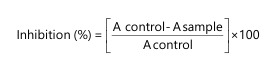
DPPH radical scavenging assay: The DPPH radical scavenging activity of individual and combined extracts was determined using the method of Molyneux (2003) with slight modifications. A stock solution of 0.1 mM DPPH was prepared in methanol and stored in the dark at 4°C until use. For each assay, 1 mL of the prepared extract at each test concentration was added to 3 mL of the DPPH solution. The mixture was incubated in the dark at room temperature for 30 minutes. Absorbance was measured at 517 nm against a methanol blank using a UV-Vis spectrophotometer12. Percentage inhibition was calculated as:
 |
The IC50 value was determined from dose-response curves by linear regression analysis. All assays were performed in triplicate.
Optimization of polyherbal blend using response surface methodology: Response Surface Methodology (RSM) with a Central Composite Design (CCD) was employed to optimize the ratio of Citrus sinensis to Zingiber officinale in the polyherbal blend. Two independent variables were defined: percentage of Citrus sinensis (X1) and percentage of Zingiber officinale (X2), with X1+X2 = 100%. Both variables were varied between 30% and 100%. The experimental design comprised 13 runs, including factorial points, axial points and center point replicates. The dependent variable (response) was DPPH radical scavenging activity expressed as IC50 (mg/mL). A quadratic polynomial model was fitted using Design-Expert software (Stat-Ease, Inc., Version 13). Model adequacy was evaluated and the significance of regression coefficients was assessed at p<0.0518.
Stability and sensory evaluation: Accelerated stability testing was conducted on the optimized polyherbal tea blend according to ICH Q1A(R2) guidelines. Packaged samples were stored at 40°C±2°C and 75%±5% relative humidity for 6 months. At defined intervals (month 0, month 3, month 6), samples were analyzed for moisture content, phenolic content, flavonoid content and DPPH radical scavenging activity19.
Sensory evaluation was conducted using a trained panel of 30 assessors. The tea was prepared according to optimized brewing parameters (95°C, 10 minutes, 1:50 w/v solid-to-water ratio). Panelists evaluated aroma, color, taste, sweetness, sourness, bitterness, pungency, mouthfeel and overall liking using a 9-point hedonic scale (1 = "dislike extremely" to 9 = "like extremely")20.
Statistical analysis: Data were expressed as Mean±Standard Deviation (SD) of triplicate determinations. Statistical comparisons were performed using One-way Analysis of Variance (ANOVA), followed by Tukey’s Honestly Significant Difference (HSD) post-hoc test using SPSS software (Version 26.0, IBM Corp.). Statistical significance was accepted at p<0.05.
RESULTS
Raw material characterization: The initial moisture content of fresh Citrus sinensis peels was 85.2%±1.5%, while fresh Zingiber officinale rhizomes recorded 80.5%±1.2%. Following controlled drying at 50°C, moisture content was reduced to 6.8%±0.3% (citrus peels, 48 hrs) and 7.1%±0.4% (ginger rhizomes, 60 hrs), both below the 8% threshold for material stability.
Phytochemical screening: Qualitative phytochemical screening of individual extracts confirmed the presence of flavonoids, phenolics, tannins, saponins and terpenoids in both botanicals (Table 1). Citrus peel extract showed strong positive results for flavonoids (+++) and phenolics (+++), while ginger rhizome extract demonstrated strong phenolic presence (+++) and moderate flavonoid content (++).
| Table 1: | Qualitative phytochemical screening of individual extracts | |||
| Phytochemical class | Citrus sinensis (Peel) | Zingiber officinale (Rhizome) |
| Flavonoids | +++ | ++ |
| Phenolics | +++ | +++ |
| Tannins | ++ | - |
| Saponins | + | ++ |
| Alkaloids | + | - |
| Terpenoids | + | + |
| Steroids | - | + |
| Anthraquinones | - | - |
| +++: Strong presence, ++: Moderate, +: Trace and -: Absent | ||
| Table 2: | IC50 values for DPPH radical scavenging activity | |||
| Sample | IC50 (μg/mL)±SD |
| Ascorbic acid (control) | 12.3±0.8 |
| Citrus sinensis peel extract | 35.1±1.8 |
| Zingiber officinale rhizome extract | 56.3±2.5 |
| Table 3: | IC50 values for combined citrus-ginger extracts | |||
| Citrus:Ginger ratio | IC50 (μg/mL)±SD |
| Individual citrus | 41.8±1.5 |
| Individual ginger | 56.3±2.5 |
| 9:01 | 40.1±2.0 |
| 7:03 | 29.8±1.5 |
| 5:05 | 32.5±1.9 |
| 3:07 | 47.2±2.3 |
| 1:09 | 58.9±3.1 |
Combined extracts retained the phytochemical integrity of individual components, with citrus-dominant formulations showing stronger flavonoid reactions and ginger-dominant formulations exhibiting more pronounced phenolic activity.
Extraction yield: Among the three solvent systems tested, 50% methanol consistently produced the highest extraction yield for both plant materials. For Citrus sinensis peel, yields were 15.1%±0.7% (distilled water), 18.7%±0.9% (50% methanol) and 12.3%±0.6% (80% methanol). For Zingiber officinale rhizome, yields were 13.8%±0.5% (distilled water), 16.2%±0.8% (50% methanol) and 10.5%±0.4% (80% methanol).
Antioxidant activity of individual extracts: Both Citrus sinensis and Zingiber officinale extracts demonstrated significant dose-dependent DPPH radical scavenging activity. Orange peel extract achieved 71.5%±2.5% inhibition at 100 μg/mL with an IC50 of 35.1±1.8 μg/mL. Ginger rhizome extract reached 65.8%±3.0% inhibition at 100 μg/mL with an IC50 of 56.3±2.5 μg/mL (Table 2). Ascorbic acid (positive control) exhibited an IC50 of 12.3±0.8 μg/mL.
Synergistic effects of combined extracts: Investigation of combined citrus-ginger extracts at varying ratios revealed a non-linear relationship between mixing ratio and antioxidant activity (Table 3). The 7:3 (Citrus:Ginger) ratio demonstrated the most potent activity with an IC50 of 29.8±1.5 μg/mL, lower than either individual extract. The 5:5 ratio also performed favorably at 32.5±1.9 μg/mL. These findings indicate synergistic rather than merely additive interactions.
RSM optimization: Response Surface Methodology confirmed significant interaction effects between the proportions of Citrus sinensis and Zingiber officinale on DPPH scavenging activity. The optimal blend was identified as 55% Citrus sinensis and 45% Zingiber officinale, yielding a DPPH IC50 of 0.68±0.03 mg/mL. Experimental validation confirmed this prediction with less than 5% deviation.
|
Stability and sensory evaluation: Accelerated stability testing over 6 months revealed acceptable degradation rates: Phenolic content decreased by 8.5%, flavonoid content by 10.2% and DPPH IC50 increased by 7.5%. Moisture content remained stable below 8% throughout the storage period.
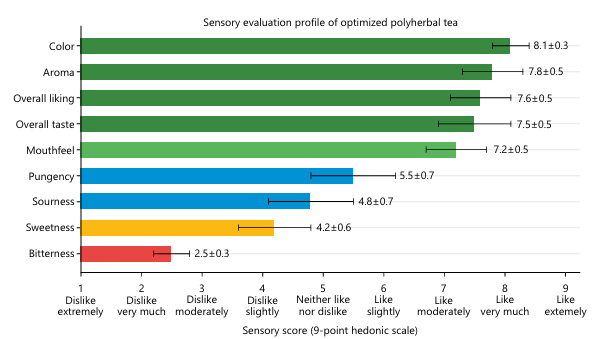
Sensory evaluation by 30 trained panelists returned favorable scores (Fig. 1). Color (8.1±0.3) and aroma (7.8±0.5) scored highest, falling within the “like very much” range. Overall liking (7.6±0.5) indicated strong consumer acceptance. Bitterness was rated low (2.5±0.3), indicating successful mitigation of undesirable off-notes.
DISCUSSION
The development of a polyherbal antioxidant tea from Citrus sinensis peel and Zingiber officinale rhizome represents a systematic approach to harnessing the synergistic antioxidant potential of two widely available tropical plants. The findings of this study demonstrate that the strategic combination of these botanicals yields a product with superior antioxidant activity compared to individual extracts, along with acceptable stability and sensory attributes.
The successful reduction of moisture content to below 8% for both materials is consistent with standard herbal quality control requirements13. This moisture level is critical for preventing microbial proliferation and ensuring chemical stability during storage. The controlled drying temperature of 50°C was deliberately chosen to minimize thermal degradation of heat-sensitive phenolic compounds and volatile oils, a consideration supported by previous studies demonstrating that excessive heat can significantly reduce the antioxidant capacity of plant materials11,21.
Qualitative phytochemical screening confirmed the presence of flavonoids, phenolics, tannins, saponins and terpenoids in both botanicals, consistent with established literature7,9. The strong presence of phenolics and flavonoids in citrus peel supports its well-documented antioxidant properties, attributed primarily to hesperidin, naringin and other flavanones10. Similarly, the phenolic profile of ginger, dominated by gingerols and shogaols, provides a complementary antioxidant mechanism11. The preservation of phytochemical integrity in combined extracts suggests that blending does not lead to significant degradation of key bioactive compounds under the experimental conditions employed.
The most significant finding of this study is the synergistic enhancement of antioxidant activity observed in combined citrus-ginger extracts. The 7:3 (Citrus:Ginger) ratio exhibited the lowest IC50 (29.8 μg/mL), outperforming both individual extracts and all other combinations. This synergistic effect is consistent with the concept of phytochemical synergy, where structurally diverse compounds from different plants cooperate through complementary mechanisms to enhance overall radical scavenging capacity8,22.
The observed synergy can be attributed to several mechanisms. Flavonoids from citrus peel (hesperidin, naringin) act primarily as hydrogen donors and metal chelators, while gingerols and shogaols from ginger inhibit lipid peroxidation and activate endogenous antioxidant enzymes12. The combination of these complementary mechanisms may provide a broader spectrum of protection against various reactive oxygen species5. Additionally, phenolic compounds from one botanical may regenerate or stabilize antioxidants from the other, extending their half-life and activity23.
The RSM-guided optimization further refined the blend to 55% Citrus sinensis and 45% Zingiber officinale, yielding a DPPH IC50 of 0.68 mg/mL. This optimized formulation compares favorably with many commercially available herbal teas, which typically report IC50 values of 1.0-5.0 mg/mL24. The systematic optimization approach, employing CCD and statistical modeling, ensures that the final formulation is both effective and consistent, a critical requirement for functional food development25,26.
The accelerated stability data, showing acceptable degradation rates over 6 months, project a shelf-life of 18-24 months under ambient storage conditions. This is consistent with the stability profiles of other phenolic-rich herbal teas27. The maintenance of moisture content below 8% confirms the effectiveness of the packaging in protecting against moisture-induced degradation, a critical factor in natural product stability28.
The sensory evaluation results are particularly encouraging from a commercial perspective. The overall liking score of 7.6/9 indicates strong consumer acceptability, with particularly favorable ratings for color, aroma and mouthfeel. The low bitterness score is significant, as excessive bitterness is a known barrier to consumer acceptance of phenolic-rich herbal teas29. The balanced pungency score reflects the perceptible but pleasant ginger character, contributing to the tea’s invigorating profile without being overpowering.
CONCLUSION
The findings of this study demonstrate that a scientifically formulated polyherbal antioxidant tea derived from Citrus sinensis peel and Zingiber officinale rhizome can be successfully developed with robust in vitro antioxidant activity, satisfactory stability and high consumer acceptability. The combination of both botanicals at appropriate ratios produces a synergistic antioxidant effect that surpasses the activity of either component alone. The optimized blend of 55% Citrus sinensis and 45% Zingiber officinale yielded a DPPH IC50 of 0.68 mg/mL, which compares favorably with many commercial herbal teas.
The study confirms the traditional use of these botanicals as natural antioxidant sources and provides a scientific basis for their combination in a functional beverage. The use of orange peel-an agricultural by-product-enhances the sustainability of the formulation. The favorable sensory profile suggests strong potential for consumer acceptance and commercial viability. Overall, this research contributes to the growing field of functional foods and nutraceuticals, demonstrating that a strategic, science-driven combination of medicinal plants can yield products that are both health-promoting and economically viable.
SIGNIFICANCE STATEMENT
This study demonstrates that combining Citrus sinensis and Zingiber officinale enhances antioxidant activity compared with single-herb formulations. The optimized blend showed strong radical-scavenging activity, acceptable physicochemical quality, stability and favorable sensory attributes, supporting its potential development as a natural functional beverage.
REFERENCES
- Chandrasekara, A. and F. Shahidi, 2018. Herbal beverages: Bioactive compounds and their role in disease risk reduction-a review. J. Tradit. Complementary Med., 8: 451-458.
- Forman, H.J. and H. Zhang, 2021. Targeting oxidative stress in disease: Promise and limitations of antioxidant therapy. Nat. Rev. Drug Discovery, 20: 689-709.
- Lobo, V., A. Patil, A. Phatak and N. Chandra, 2010. Free radicals, antioxidants and functional foods: Impact on human health. Pharmacogn. Rev., 4: 118-126.
- Halliwell, B., 2011. Free radicals and antioxidants-quo vadis? Trends Pharmacol. Sci., 32: 125-130.
- Pizzino, G., N. Irrera, M. Cucinotta, G. Pallio and F. Mannino et al., 2017. Oxidative stress: Harms and benefits for human health. Oxid. Med. Cell. Longevity, 2017.
- Rahal, A., A. Kumar, V. Singh, B. Yadav, R. Tiwari, S. Chakraborty and K. Dhama, 2014. Oxidative stress, prooxidants and antioxidants: The interplay. BioMed Res. Int., 2014.
- Semwal, R.B., D.K. Semwal, S. Combrinck and A.M. Viljoen, 2015. Gingerols and shogaols: Important nutraceutical principles from ginger. Phytochemistry, 117: 554-568.
- Williamson, E.M., 2001. Synergy and other interactions in phytomedicines. Phytomedicine, 8: 401-409.
- Friedman, M., C.E. Levin, S.U. Lee and N. Kozukue, 2009. Stability of green tea catechins in commercial tea leaves during storage for 6 months. J. Food Sci., 74: H47-H51.
- Ogo, O., N. Hembafan, R. Amokaha, O. Jeremiah and B. Inalegwu, 2024. Characterization and antioxidant activity of peel extracts from three varieties of Citrus sinensis. Heliyon, 10.
- Aimad, A., I. Mssillou, F. Siddique, B. Mohmmed and A. Abdelkrim et al., 2024. Phytochemical analysis and pharmacological activities of essential oils extracted from Zingiber officinale (Roscoe) used in mediterranean diet: In vitro and in silico studies. Int. J. Food Prop., 27: 1180-1199.
- Gulcin, İ. and S.H. Alwasel, 2023. DPPH radical scavenging assay. Processes, 11.
- Thamkaew, G., I. Sjöholm and F.G. Galindo, 2021. A review of drying methods for improving the quality of dried herbs. Crit. Rev. Food Sci. Nutr., 61: 1763-1786.
- Harborne, J.B., 1998. Phytochemical Methods: A Guide to Modern Techniques of Plant Analysis. 3rd Edn., Springer Science & Business Media, Berlin, Heidelberg, Germany, ISBN-13: 9780412572708, Pages: 302.
- Evans, W.C. and D. Evans, 2009. Trease and Evans' Pharmacognosy. 16th Edn., Elsevier Health Sciences, Maryland, United States., ISBN: 978-0-7020-2933-2, Pages: 603.
- Alara, O.R., N.H. Abdurahman and C.I. Ukaegbu, 2021. Extraction of phenolic compounds: A review. Curr. Res. Food Sci., 4: 200-214.
- Lefebvre, T., E. Destandau and E. Lesellier, 2021. Selective extraction of bioactive compounds from plants using recent extraction techniques: A review. J. Chromatogr. A, 1635.
- Peter, E.L. and C.D. Sesaazi, 2022. D-optimal mixture design optimized solid formulation containing fruits extracts of Momordica charantia and Abelmoschus esculentus. PLoS ONE, 17.
- Dominguez-López, I., M. Pérez and R.M. Lamuela-Raventós, 2024. Total (poly)phenol analysis by the Folin-Ciocalteu assay as an anti-inflammatory biomarker in biological samples. Crit. Rev. Food Sci. Nutr., 64: 10048-10054.
- Drake, M.A., M.E. Watson and Y. Liu, 2023. Sensory analysis and consumer preference: Best practices. Annu. Rev. Food Sci. Technol., 14: 427-448.
- Maghraby, Y.R., R.M. Labib, M. Sobeh and M.A. Farag, 2023. Gingerols and shogaols: A multi-faceted review of their extraction, formulation, and analysis in drugs and biofluids to maximize their nutraceutical and pharmaceutical applications. Food Chem.: X, 20.
- Parasuraman, S., G.S. Thing and S.A. Dhanaraj, 2014. Polyherbal formulation: Concept of ayurveda. Pharmacogn. Rev., 8: 73-80.
- Freeman, B.L., D.L. Eggett and T.L. Parker., 2010. Synergistic and antagonistic interactions of phenolic compounds found in navel oranges. J. Food Sci., 75: C570-C576.
- Raudonė, L., R. Raudonis, K. Gaivelytė, A. Pukalskas, P. Viškelis, P.R. Venskutonis and V. Janulis, 2015. Phytochemical and antioxidant profiles of leaves from different Sorbus L. species. Nat. Prod. Res., 29: 281-285.
- Montgomery, D.C., 2017. Design and Analysis of Experiments. 9th Edn., John Wiley and Sons Inc., New Jersey, United States, ISBN: 9781119113478, Pages: 734.
- Mapeka, T.M., M. Sandasi, A.M. Viljoen and S.F. van Vuuren, 2022. Optimization of antioxidant synergy in a polyherbal combination by experimental design. Molecules, 27.
- Grigore, A., V. Vulturescu, G. Neagu, P. Ungureanu, M. Panteli and I. Rasit, 2022. Antioxidant-anti-inflammatory evaluation of a polyherbal formula. Pharmaceuticals, 15.
- Waterman, K.C. and R.C. Adami, 2005. Accelerated aging: Prediction of chemical stability of pharmaceuticals. Int. J. Pharmaceutics, 293: 101-125.
- Meilgaard, M.C., G.V. Civille and B.T. Carr, 2007. Sensory Evaluation Techniques. 4th Edn., CRC Press, Boca Raton, Florida, ISBN: 9780429195143, Pages: 464.
How to Cite this paper?
APA-7 Style
Temitope,
A.F., Owolabi,
T., Adetoyi,
D., Okuru,
A., Oloyede,
T., Nwufo,
C., Ezebuala,
U., Ojo-Iyobosa,
D., Olagundoye,
J., Oluseye,
S. (2026). Development of a Polyherbal Antioxidant Tea Formulated with Citrus sinensis L. and Zingiber officinale Roscoe. Trends in Biological Sciences, 2(4), 442-450. https://doi.org/10.21124/tbs.2026.442.450
ACS Style
Temitope,
A.F.; Owolabi,
T.; Adetoyi,
D.; Okuru,
A.; Oloyede,
T.; Nwufo,
C.; Ezebuala,
U.; Ojo-Iyobosa,
D.; Olagundoye,
J.; Oluseye,
S. Development of a Polyherbal Antioxidant Tea Formulated with Citrus sinensis L. and Zingiber officinale Roscoe. Trends Biol. Sci 2026, 2, 442-450. https://doi.org/10.21124/tbs.2026.442.450
AMA Style
Temitope
AF, Owolabi
T, Adetoyi
D, Okuru
A, Oloyede
T, Nwufo
C, Ezebuala
U, Ojo-Iyobosa
D, Olagundoye
J, Oluseye
S. Development of a Polyherbal Antioxidant Tea Formulated with Citrus sinensis L. and Zingiber officinale Roscoe. Trends in Biological Sciences. 2026; 2(4): 442-450. https://doi.org/10.21124/tbs.2026.442.450
Chicago/Turabian Style
Temitope, A., Fanayajo, Tunde Owolabi, Dorcas Adetoyi, Akemuphel Okuru, Triumph Oloyede, Chukwudumebi Nwufo, Ukamaka Ezebuala, Divine-Grace Ojo-Iyobosa, Joy Olagundoye, and Samuel Oluseye.
2026. "Development of a Polyherbal Antioxidant Tea Formulated with Citrus sinensis L. and Zingiber officinale Roscoe" Trends in Biological Sciences 2, no. 4: 442-450. https://doi.org/10.21124/tbs.2026.442.450

This work is licensed under a Creative Commons Attribution 4.0 International License.