
Laccase Production from Agro-Industrial Wastes: Utilization of Cassava-Based Lignocellulosic Substrates and Carbon Source Optimization
-
Nathan Rimamsanati Yohanna
Department of Biochemistry, Faculty of Biosciences, Federal University Wukari, Taraba State, Nigeria
Moses Adondua Abah

ResearchHub Nexus Institute, Nigeria
Micheal Oladosu AbimbolaDepartment of Chemical Sciences, Faculty of Science, Anchor University, Ayobo, Lagos State, Nigeria
Nzereogu Ifesinachi JenniferProjects Development Institute Enugu, Enugu State, Nigeria
Jonathan MajiDepartment of Biochemistry, Faculty of Biosciences, Federal University Wukari, Taraba State, Nigeria
Tikwe Godwin LukaDepartment of Biochemistry, Faculty of Biosciences, Federal University Wukari, Taraba State, Nigeria
| Received 15 May, 2026 |
Accepted 04 Aug, 2026 |
Published 31 Dec, 2026 |
Laccases (EC 1.10.3.2) are multicopper oxidases with a wide range of biotechnological applications in the food processing, bioenergy, bioremediation, and pharmaceutical industries, as they can oxidize a variety of phenolic and non-phenolic substrates. A growing interest in agro-industrial byproducts as alternative raw materials has emerged from the search for affordable, sustainable substrates for laccase production. Peels, stems, and bagasse are examples of cassava-based lignocellulosic wastes that are plentiful and underutilized in tropical locations. They provide a rich source of cellulose, hemicellulose, and lignin that promote the growth of fungi and the induction of enzymes. The lignocellulose obtained from cassava is highlighted in this review as a potential substrate for laccase Bioproduction in solid-state fermentation systems. Particular emphasis is placed on the optimization of carbon sources, which significantly influence fungal metabolism, enzyme yield, and stability. Studies demonstrate that fine-tuning the ratio of simple sugars to complex lignocellulosic fractions enhances enzyme secretion, while co-substrate supplementation further improves productivity. Additionally, the review explores process parameters such as pH, temperature, and substrate concentration that synergize with carbon source optimization to maximize laccase output. By integrating cassava agro-wastes into enzyme production systems, sustainable valorization pathways can be established, reducing environmental burdens while advancing cost-effective industrial biotechnology. Future perspectives include the application of metabolic engineering, statistical optimization, and scale-up strategies to unlock the full potential of cassava-based residues for commercial laccase production. This narrative review explored laccase bioproduction from agro-industrial wastes with emphasis on the role of cassava-based lignocellulosic substrates and carbon source optimization.
| Copyright © 2026 Yohanna et al. This is an open-access article distributed under the Creative Commons Attribution License, which permits unrestricted use, distribution, and reproduction in any medium, provided the original work is properly cited. |
INTRODUCTION
Laccases, a group of multicopper oxidases, have attracted significant attention in biotechnology due to their broad substrate specificity and eco-friendly catalytic mechanisms. Their industrial importance lies in applications such as pulp and paper biobleaching, textile dye biodecolorization, and food processing, where they reduce reliance on harsh chemicals and improve product quality.1,2
In the medical field, laccases have been investigated for biosensor development, antimicrobial formulations, and drug discovery, owing to their ability to catalyze reactions under mild physiological conditions3 Environmentally, laccases are crucial for bioremediation, particularly in degrading xenobiotics, pesticides, and endocrine-disrupting compounds, thereby contributing to pollution control and sustainable waste management1,2.
The use of agro-industrial wastes as substrates for laccase production has emerged as a sustainable and cost-effective strategy. Conventional laccase production often relies on refined substrates, which increase costs and limit scalability. Agro-industrial residues, however, are abundant, inexpensive, and rich in lignocellulosic components that act as natural inducers for laccase biosynthesis4. This approach not only reduces production costs but also addresses environmental concerns by diverting biomass from landfills and mitigating pollution. Thus, agro-industrial waste valorization aligns with circular bioeconomy principles, offering both economic feasibility and ecological sustainability4.
Among various agro-residues, cassava peel is a particularly promising substrate. Cassava processing generates large amounts of peel waste, which is often discarded and contributes to environmental pollution. Cassava peel is rich in lignocellulosic material, including cellulose, hemicellulose, and lignin, which are known to stimulate laccase production in fungi such as Pleurotus ostreatus2,5. Recent studies have demonstrated that cassava waste can yield significant laccase activity, with optimized fermentation conditions enhancing enzyme titers severalfold. This highlights cassava peel not only as a sustainable substrate but also as a potential driver of innovation in enzyme biotechnology, particularly in cassava-producing regions.
The scope of this review is to critically examine the role of cassava-based lignocellulosic substrates in laccase bioproduction, focusing on carbon source optimization strategies to enhance yield and stability. By integrating insights from industrial, medical, and environmental applications, this review underscores the potential of cassava peel as a sustainable feedstock for enzyme production. Furthermore, it emphasizes the broader implications of agro-waste valorization in advancing circular bioeconomy models, reducing environmental burdens, and fostering cost-effective biotechnological innovations.
REVIEW OF LITERATURE: OVERVIEW OF LACCASE AND PRODUCING ORGANISMS
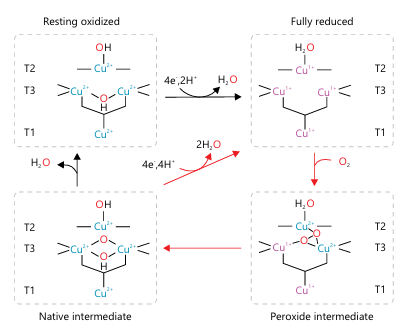
Laccase structure and mechanism of action: Laccases are multicopper oxidases characterized by the presence of four copper atoms distributed across three distinct sites: Type-1 (T1), type-2 (T2), and type-3 (T3). The T1 copper site accepts electrons from phenolic substrates, while the T2/T3 trinuclear cluster reduces molecular oxygen to water6. This electron transfer mechanism enables laccases to catalyze the oxidation of a wide range of substrates, including phenols, amines, and aromatic compounds, often with the aid of redox mediators that extend substrate specificity7. As illustrated in Fig. 1, the redox cycle of a multicopper oxidase involves transitions between four key states: Resting Oxidized, Fully Reduced, Peroxide Intermediate, and Native Intermediate, each defined by distinct copper oxidation states and ligand interactions. Electron and proton transfers, along with molecular oxygen and water, mediate the interconversion of these states, enabling efficient substrate oxidation and oxygen reduction8.
Structurally, fungal laccases are glycoproteins with molecular weights ranging between 50-100 kDa, and glycosylation contributes to their extracellular stability and resistance to proteolysis9. Their catalytic efficiency is influenced by pH, temperature, and the redox potential of the T1 copper site, which determines substrate range and reaction kinetics10. These biochemical properties underpin their widespread use in industrial bioprocesses such as pulp biobleaching, dye decolorization, and lignin valorization.
|
White-rot fungi as major laccase producers: White-rot fungi are considered the primary natural producers of laccases, owing to their ecological role in lignin degradation. Genera such as Trametes, Pleurotus, and Cerrena secrete high levels of laccases that enable the breakdown of lignin’s complex aromatic structure, thereby facilitating access to cellulose and hemicellulose9-11. These fungi are particularly attractive for industrial enzyme production because they secrete laccases extracellularly, allowing for easier recovery and purification compared to intracellular enzymes.
Recent studies highlight the potential of white-rot fungi in bioremediation, where laccases degrade xenobiotics, pesticides, and endocrine-disrupting compounds2. Their ability to function under mild conditions and in the presence of diverse pollutants makes them ideal candidates for sustainable environmental applications. Moreover, advances in solid-state fermentation using agro-industrial residues have further enhanced laccase yields, reinforcing the link between fungal ecology and biotechnological utility5.
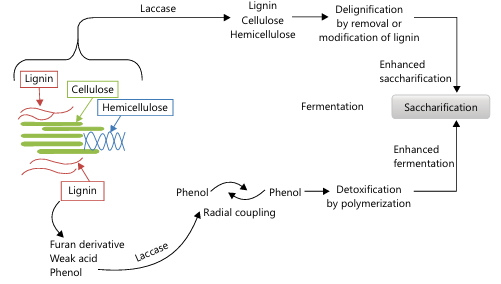
Special focus on Postia ptychogaster: Postia ptychogaster, a lesser-studied basidiomycete, has recently garnered attention for its extensive oxidative enzyme portfolio, which includes laccases. As wood-decay fungi, Postia species exhibit strong lignocellulolytic activity, making them suitable for bioconversion of agro-industrial wastes1. Although traditionally classified as a brown-rot fungus, Postia ptychogaster demonstrates oxidative capabilities that overlap with white-rot fungi, particularly in the secretion of laccases under lignin-rich conditions4. As illustrated in Fig. 2, laccase plays a dual role in lignocellulosic biomass processing, facilitating both delignification and detoxification. These pathways enhance saccharification and fermentation efficiency by modifying lignin and polymerizing toxic phenolic compounds.
|
|
Postia ptychogaster’s relevance in cassava peel valorization lies in its ability to utilize lignocellulosic substrates as inducers for laccase biosynthesis. Cassava peel contains cellulose, hemicellulose, and lignin, which stimulate laccase expression, and studies have shown that optimization of carbon sources significantly enhances enzyme titers5. This positions Postia ptychogaster as a promising candidate for sustainable laccase production, linking fungal ecology to industrial bioprocess design.
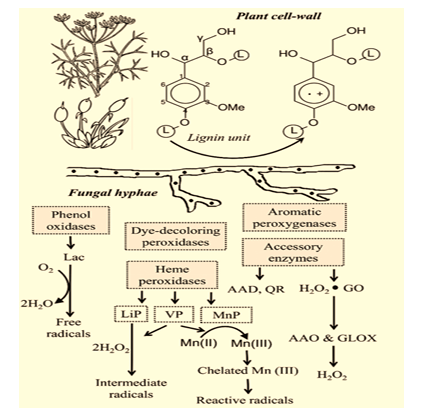
As illustrated in Fig. 3, the fungus deploys a suite of oxidative enzymes including phenol oxidases (laccase), heme peroxidases (LiP, MnP, VP), and accessory enzymes (AAD, QR, AAO, GLOX) to generate reactive radicals that cleave lignin’s complex aromatic structure. These enzymes act synergistically, converting O2 and H2O2 into free and intermediate radicals, which initiate lignin depolymerization and detoxification2,12. This mechanism is particularly effective in cassava peel bioconversion, where phenolic inhibitors and lignin barriers are major constraints to saccharification and fermentation. By breaking down these barriers, Postia ptychogaster enhances substrate accessibility and detoxifies fermentation media, making it a biotechnologically valuable organism for agro-waste valorization.
|
Structurally, fungal laccases are glycoproteins with molecular weights ranging between 50-100 kDa, and glycosylation contributes to their extracellular stability and resistance to proteolysis9. Their catalytic efficiency is influenced by pH, temperature, and the redox potential of the T1 copper site, which determines substrate range and reaction kinetics10. These biochemical properties underpin their widespread use in industrial bioprocesses such as pulp biobleaching, dye decolorization, and lignin valorization.
Agro-industrial wastes as substrates for laccase production: According to Chenthamarakshan et al.13, agro-industrial residues serve as effective co-substrates for microbial laccase production because their lignocellulosic composition provides both nutritional support and natural inducers for enzyme biosynthesis. These wastes, which include materials such as cereal straws, bran, bagasse, and fruit-derived residues, are particularly rich in cellulose, hemicellulose, and lignin components that stimulate fungal metabolism and enhance oxidative enzyme secretion. Wang et al.14 further emphasize that lignocellulosic agricultural wastes under solid-state fermentation conditions create an optimal environment for white-rot fungi, where the presence of phenolic compounds and structural polymers triggers laccase gene expression.
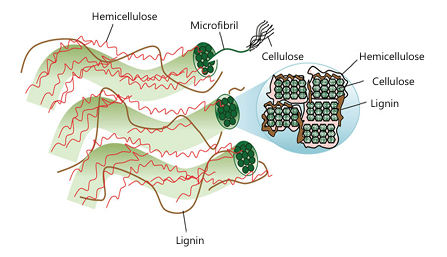
More recently, studies have shown that the balanced composition of sugarcane bagasse and the high lignin content of wheat straw not only provide carbon and energy sources but also act as strong inducers of enzyme activity, while fruit peels and corn stover contribute additional phenolic compounds that facilitate fungal colonization and enzyme induction. As depicted in Fig. 4, the intricate architecture of lignocellulosic biomass comprising cellulose microfibrils interwoven with hemicellulose and encased in lignin provides both the physical substrate and chemical signals necessary for laccase biosynthesis15. This structural complexity underpins the ecological and economic value of agro-industrial wastes, transforming them from disposal challenges into strategic resources for sustainable enzyme production.
Comparative efficiency of different lignocellulosic residues: Unuofin et al.16 demonstrated that the efficiency of agro-industrial wastes in laccase production is strongly influenced by their chemical composition, particularly the accessibility of lignin and the balance of nutrients available to the fungi.
| Table 1: | Environmental benefits of agro-waste valorization | |||
| Valorization process | Agro-waste type | Environmental benefits |
| Anaerobic digestion | Livestock manure, sewage sludge | Production of methane (renewable energy), waste stabilization, and reduction of greenhouse gas (GHG) emissions |
| Composting/ Vermicomposting | Organic waste, crop residues | Reduction of organic waste in landfills, nutrient recycling, improvement of soil health and structure, carbon sequestration |
| Pyrolysis | Rice husk, coconut shell, plant debris | Production of biochar for soil amendment (improves water retention, reduces acidity), carbon storage, and reduction of air pollution from waste incineration |
| Solid-state fermentation | Fruit/vegetable peels, palm bunch, coffee grounds | Conversion to high-value biofertilizers, animal feed, and enzymes reduces pollution and hazardous waste, withuy low energy consumption |
| Bio-adsorbent production | Walnut shells, fruit pits, agricultural residues | Remediation of wastewater by removing heavy metals, dyes, and pesticides; sustainable waste-to-wealth conversion |
| Biorefinery/extraction | Lignocellulosic waste (straw, bagasse) | Production of bioethanol, bioplastics, and bio-based polymers reduces dependence on fossil fuels and plastics |
| Source: de Dieu Marcel Ufitikirezi et al.17 | ||
Substrates such as sugarcane bagasse often outperform rice bran or wheat straw because their cellulose-to-lignin ratio provides a more balanced environment for fungal metabolism, resulting in higher enzyme titers. Abdelgalil et al.13 further highlighted that while wheat straw can be an effective substrate, its high silica content necessitates pretreatment to improve lignin accessibility and reduce inhibitory effects on fungal growth.
In contrast, rice bran tends to support moderate laccase yields but becomes more efficient when supplemented with nitrogen sources, underscoring the importance of nutrient balance in optimizing enzyme biosynthesis. More recently, research has shown that cassava peel, though less extensively studied, can achieve comparable efficiency to sugarcane bagasse when carbon supplementation strategies are applied, suggesting that under optimized conditions even unconventional residues can serve as valuable substrates14.
Environmental benefits of agro waste valorization: Beyond production efficiency, the environmental benefits of agro-waste valorization are substantial. By diverting large volumes of biomass from landfills and open burning, agro-industrial residues contribute to significant reductions in greenhouse gas emissions, thereby mitigating climate impacts15. Moreover, laccase derived from these wastes has been successfully applied in wastewater treatment, dye decolorization, and pesticide degradation, offering direct solutions to pressing pollution challenges while simultaneously reducing reliance on synthetic chemical treatments14.
This dual role of waste reduction and pollution mitigation positions agro-waste valorization as a cornerstone of sustainable bioprocessing. Importantly, the transformation of residues into value-added bioproducts aligns with circular bioeconomy principles, ensuring that agricultural by-products are reintegrated into productive cycles rather than discarded, thereby enhancing both ecological sustainability and economic resilience, as summarized in Table 116.
Economic benefits of agro-waste utilization: The effectiveness of agro-industrial wastes in laccase production is largely dependent on the structural complexity of lignocellulosic polymers, and substrates with accessible lignin fractions generally yield greater enzyme titers. For instance, it has been shown that sugarcane bagasse provides a balanced cellulose-to-lignin ratio that enhances fungal metabolism and encourages strong laccase production, while rice bran, despite its high nutritional content, requires the addition of nitrogen sources to produce yields that are comparable. Similar to this, wheat straw has been discovered to be a potential substrate; however, pretreatment is necessary to improve lignin ccessibility nd reduce the inhibitory effects on fungal growth because of its high silica concentration. Recent research has also shown that cassava peel is a good substitute, showing that it can match the effectiveness of other well-known substrates like bagasse when optimized using carbon supplementation techniques18.
|
Beyond production efficiency, the environmental benefits of agro-waste valorization are significant. By diverting large volumes of biomass from landfills and open burning, agro-industrial residues contribute to reductions in greenhouse gas emissions and mitigate the ecological burden of waste accumulation19. Moreover, laccase derived from these wastes has been successfully applied in wastewater treatment, dye decolorization, and pesticide degradation, offering sustainable solutions to pollution challenges while reducing reliance on synthetic chemical treatments (Table 2)20. This dual role of waste reduction and pollution mitigation underscores the broader ecological relevance of agro-waste valorization. Importantly, the transformation of residues into value-added bioproducts aligns with circular bioeconomy principles, ensuring that agricultural by-products are reintegrated into productive cycles rather than discarded, thereby enhancing both environmental sustainability and economic resilience21.
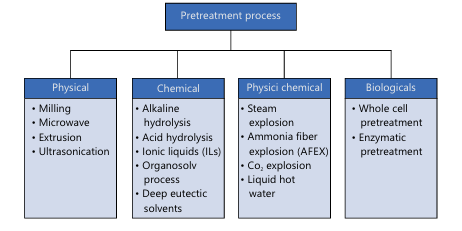
Pretreatment strategies for cassava peel: Kumar6 emphasized that pretreatment of cassava peel is critical for enhancing the accessibility of lignocellulosic components, thereby improving laccase yields. Physical methods such as drying, milling, and steam explosion increase surface area and disrupt lignin structures, while chemical approaches including alkaline, acid, and oxidative pretreatments expose cellulose fibers and generate fermentable sugars that stimulate fungal metabolism18. Biological pretreatments, though slower, are considered more sustainable, with white-rot fungi selectively degrading lignin and enzymatic cocktails improving digestibility prior to fermentation19.
These strategies collectively enhance the efficiency of cassava peel as a substrate, making it a promising candidate for enzyme bioproduction. Pretreatment methods, as displayed in Fig. 5, are broadly categorized into physical, chemical, physicochemical, and biological approaches. Each method plays a distinct role in modifying the structural integrity of lignocellulosic biomass whether by mechanical disruption, chemical hydrolysis, or enzymatic breakdown thereby improving substrate accessibility and enhancing laccase production23,24.
Recent studies have demonstrated cassava peel’s potential in supporting laccase production under both solid-state and submerged fermentation. For example, optimized carbon supplementation in Pleurotus ostreatus cultures significantly increased enzyme titers, while mixed fungal consortia enhanced lignin degradation and laccase secretion compared to monocultures21. Acid-pretreated cassava peel hydrolysates have also been shown to yield laccases with improved stability and activity in dye decolorization assays, highlighting their applicability in bioremediation20. These findings underscore cassava peel’s role as a low-cost, sustainable substrate, particularly relevant in cassava-producing regions across Africa, Asia, and Latin America.
| Table 2: | Economic benefits of agro-waste utilization in laccase bioproduction using cassava-based lignocellulosic substrates | |||
| Economic benefit | Description | Example/case study |
| Cost reduction in substrate procurement | Agro-wastes (cassava peels, bagasse, husks) are cheaper than synthetic media | Cassava peel replacing glucose reduced production costs significantly |
| Waste management and environmental savings | Valorization of agro-waste reduces landfill burden and pollution | Cassava residues converted into enzyme production instead of disposal |
| Revenue from value-added products | Laccase enzymes have industrial applications (textiles, pulp and paper, bioremediation) | Agro-waste-derived laccase used in dye decolorization |
| Energy efficiency in SSF | Solid-state fermentation requires less energy than submerged fermentation | Cassava husk SSF showed lower energy input compared to liquid fermentation |
| Circular economy integration | Agro-industrial residues re-enter the production cycle as raw materials | Cassava lignocellulosic biomass reused for enzyme production |
| Source: Osma et al.22 | ||
Carbon source optimization further influences laccase biosynthesis, as the type and concentration of sugars regulate fungal metabolism and enzyme secretion. Simple sugars such as glucose and sucrose promote rapid fungal growth but may repress secondary metabolite production through catabolite repression, whereas complex carbohydrates like cellulose, hemicellulose, and starch stimulate oxidative enzyme secretion by requiring enzymatic breakdown25. The gradual release of sugars from complex substrates avoids repression and sustains enzyme induction over longer fermentation periods, making them more effective in maintaining laccase activity.
Lignocellulosic substrates such as cassava peel, sugarcane bagasse, and wheat straw provide both structural carbohydrates and phenolic compounds that act as natural inducers, with starch residues in cassava peel bridging the lag phase before lignin degradation begins26. Case studies have shown that moderate glucose supplementation enhances fungal growth but suppresses laccase activity at higher concentrations, while sucrose supports balanced enzyme secretion. Cellulose-rich residues consistently yield higher titers compared to glucose-based media, and cassava-derived sugars sustain fungal metabolism while lignin-derived phenolics induce laccase production, resulting in enzyme activities comparable to sugarcane bagasse18.
Solid-state fermentation (SSF) for laccase production: Laccase production in fungi is strongly influenced by the choice of fermentation strategy, with solid-state fermentation (SSF) and submerged fermentation (SmF) representing the two dominant approaches. The SSF involves microbial growth on moist solid substrates without free-flowing water, a condition that closely mimics the natural habitat of ligninolytic fungi. This method has been shown to promote higher enzyme titers, greater stability, and reduced downstream processing costs compared to SmF, which relies on liquid media with dissolved nutrients9. While SmF offers easier control of parameters such as pH and oxygen transfer, it often results in lower laccase yields due to dilution effects and catabolite repression, making SSF the preferred option for large-scale enzyme production11.
The efficiency of SSF depends on the careful regulation of moisture, aeration, and the choice of support materials. Moisture content is critical for fungal metabolism, as insufficient water limits growth while excess water reduces porosity and restricts oxygen diffusion. Studies indicate that maintaining moisture levels between 60-70% provides optimal conditions for fungal colonization and laccase secretion2. Aeration is equally important, since laccase biosynthesis is oxygen-dependent; adequate oxygen transfer can be achieved by reducing substrate particle size or through periodic mixing of the fermentation bed9.
|
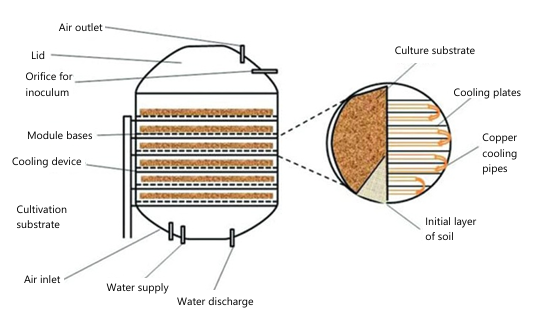
Support materials play a dual role, serving both as nutrient sources and physical scaffolds. Agro-residues such as wheat straw, sugarcane bagasse, and cassava peel are particularly effective because their porous structures facilitate fungal penetration and oxygen transfer, while their lignin and phenolic compounds act as natural inducers of laccase biosynthesis4. In some cases, inert supports such as polyurethane foam or vermiculite are incorporated to improve aeration and maintain structural integrity during fermentation. As illustrated in Fig. 6, the configuration of the fermentation system including cooling plates, copper pipes, and controlled airflow plays a vital role in maintaining optimal temperature and oxygen levels. These structural features ensure consistent fungal growth and enzyme production, especially under SSF conditions where environmental control is more challenging than in liquid systems27.
Cassava peel has emerged as a promising substrate for SSF-based laccase production. Its composition, which includes cellulose, hemicellulose, lignin, and residual starch, provides both structural carbohydrates and readily available sugars that support fungal growth and enzyme induction5. The fibrous nature of cassava peel ensures effective moisture retention, sustaining fungal metabolism throughout the fermentation process. Moreover, lignin-derived phenolics act as strong inducers of laccase biosynthesis, while starch residues accelerate early fungal colonization, bridging the lag phase before lignin degradation begins10. Case studies using Pleurotus ostreatus in SSF setups have demonstrated that cassava peel yields higher laccase activity compared to wheat straw, particularly when supplemented with simple sugars such as sucrose or glucose to balance carbon availability5.
APPLICATIONS OF LACCASE PRODUCED FROM AGRO-WASTES
Environmental applications: One of the most prominent uses of laccase is in wastewater treatment and dye decolorization. Textile effluents contain synthetic dyes that are often recalcitrant and toxic, posing significant environmental challenges. Laccases oxidize these dyes into less harmful compounds, achieving efficient decolorization without the need for harsh chemical oxidants10. Beyond dyes, laccases degrade a wide range of pollutants, including pesticides, phenolic compounds, and endocrine-disrupting chemicals, thereby contributing to bioremediation strategies2. Immobilized laccases produced from agro-waste fermentation have been successfully applied in continuous-flow bioreactors, demonstrating high efficiency in pollutant removal and reusability, which reduces operational costs and enhances sustainability9. These environmental applications highlight the dual role of laccase in both waste valorization and pollution mitigation.
| Table 3: | Applications of laccase produced from agro-wastes | |||
| Application area | Description | Example/Case study |
| Textile industry (dye decolorization) | Laccase oxidizes synthetic dyes, reducing chemical load in effluents | Decolorization of textile wastewater using laccase from Pleurotus sajor-caju grown on sawdust+wheat bran |
| Pulp and paper industry | Enzymatic biobleaching reduces chlorine use, lowering toxicity | Laccase from agro-waste SSF is used in pulp biobleaching |
| Environmental bioremediation | Degradation of phenolic pollutants, endocrine disruptors, and PAHs | Agro-waste-derived laccase applied in soil detoxification |
| Food industry | Laccase improves food quality by removing phenolics and stabilizing beverages | Clarification of fruit juices using laccase from agro-waste fermentation |
| Bioenergy and biomaterials | Enhances lignin degradation, aiding bioethanol and biopolymer production | Cassava peel pretreatment with laccase improves fermentable sugar yield |
| Nanobiotechnology | Laccase used in biosensors | Agro-waste derived laccase immobilized |
| for phenolic detectionin biosensor platformsSource: Wang et al.14 | ||
Industrial applications: In the pulp and paper industry, laccases are employed for biobleaching processes, where they degrade lignin and reduce the need for chlorine-based chemicals, thereby lowering environmental toxicity and improving sustainability11. In the textile sector, laccases are used for eco-friendly finishing processes such as denim bleaching, fiber modification, and dye removal, offering greener alternatives to conventional chemical treatments4.
Furthermore, laccases play a critical role in bioethanol production, where they assist in lignin degradation, improving the accessibility of cellulose and hemicellulose for saccharification and fermentation. Agro-waste substrates such as cassava peel and sugarcane bagasse have been shown to enhance laccase yields, thereby improving the efficiency of biomass conversion in biorefineries5. These industrial applications demonstrate how agro-waste-derived laccases contribute to circular bioeconomy models by integrating enzyme production with sustainable manufacturing processes.
Biomedical and biopharmaceutical applications: Laccases have also emerged as valuable tools in biomedical and pharmaceutical applications. Their ability to catalyze mild oxidative reactions makes them suitable for drug design, where they are used to synthesize bioactive compounds with antimicrobial and anticancer properties. Laccase-based biosensors have been developed for the detection of phenolic pollutants, glucose, and clinical biomarkers, offering high sensitivity, stability, and reproducibility11. Additionally, laccases exhibit antioxidant roles, as they can neutralize reactive oxygen species, contributing to therapeutic formulations and functional biomaterials10.
Recent advances in nanotechnology have expanded its biomedical potential, with laccase-nanoparticle hybrids showing enhanced catalytic activity and stability in biosensing and drug delivery applications4. These biomedical applications underscore the enzyme’s versatility and its potential to bridge environmental biotechnology with human health innovations, as summarized in Table 3.
CHALLENGES AND FUTURE PERSPECTIVES
Despite the promising advances in laccase bioproduction from agro-industrial wastes, several challenges remain that hinder large-scale implementation. One of the primary obstacles is scale-up limitations. While solid-state fermentation using agro-residues such as cassava peel has demonstrated high enzyme yields at laboratory scale, translating these processes into industrial bioreactors is complex. Issues such as uneven aeration, moisture gradients, and difficulties in maintaining uniform substrate quality often reduce reproducibility and efficiency at larger scales9. Addressing these limitations requires innovations in bioreactor design, process monitoring, and substrate pretreatment strategies.
Another critical area is genetic engineering and strain improvement. Native fungal strains often produce laccases with variable activity and stability. Advances in molecular biology, including CRISPR-Cas9 and directed evolution, have enabled the development of engineered strains with enhanced laccase yield, thermostability, and tolerance to industrial conditions11,28-31. Recombinant expression systems in yeast and filamentous fungi also offer opportunities to standardize production, though challenges remain in achieving cost-effective scalability.
The integration of laccase bioproduction into circular bioeconomy models represents a future direction with significant potential. Agro-waste valorization not only reduces environmental burdens but also generates value-added products such as enzymes, bioethanol, biogas, and biopolymers. Cassava peel, sugarcane bagasse, and wheat straw can serve as feedstocks in biorefineries, where laccase production is coupled with other bioprocesses to maximize resource efficiency. Such integration aligns with global sustainability goals, particularly in reducing waste, promoting renewable energy, and advancing green chemistry.
The potential of cassava peel in developing countries is especially noteworthy. Cassava is a staple crop in Africa, Asia, and Latin America, and its processing generates millions of tons of peel waste annually. Utilizing cassava peel for laccase production offers a dual benefit: Reducing environmental pollution from discarded residues and providing a low-cost substrate for enzyme bioproduction5. This approach can empower local industries, create employment opportunities, and foster sustainable biotechnology in regions where cassava is abundant. By leveraging cassava peel, developing countries can position themselves as leaders in waste-to-value bioprocessing, contributing to both economic growth and environmental sustainability.
CONCLUSION
Cassava peel has emerged as a promising lignocellulosic substrate for laccase bioproduction, owing to its balanced composition of cellulose, hemicellulose, lignin, and residual starch. Its nutritional richness and availability make it particularly suitable for solid-state fermentation, where moisture retention and phenolic induction enhance enzyme yields. The optimization of carbon sources, combining simple sugars for initial fungal growth with complex carbohydrates for sustained induction, further improves laccase titers and stability.
The importance of cassava peel lies not only in its role as a cost-effective substrate but also in its potential to drive sustainable biotechnology in cassava-producing regions. By integrating laccase bioproduction into circular bioeconomy frameworks, agro-waste valorization can contribute to waste reduction, renewable energy generation, and green industrial processes. Future opportunities include genetic engineering of fungal strains, nanotechnology-based enzyme stabilization, and bioreactor innovations that overcome scale-up limitations.
Ultimately, laccase bioproduction from cassava peel represents a convergence of environmental sustainability, economic feasibility, and technological innovation. As research advances, this approach has the potential to transform agro-industrial residues into valuable biocatalysts, fostering a new era of laccase-based biotechnology that supports global sustainability and industrial competitiveness.
SIGNIFICANCE STATEMENT
The significance of this work lies in its potential to provide a sustainable and cost-effective approach for laccase enzyme production by utilizing cassava-based lignocellulosic agro-industrial wastes as substrates. By converting abundant and low-cost agricultural by-products into valuable biochemical resources, this research not only addresses environmental concerns related to agro-waste disposal but also reduces the production costs of industrially relevant enzymes. Optimizingcarbon sources for laccase synthesis further enhances enzyme yield, making this process.
ACKNOWLEDGMENT
We thank all the researchers who contributed to the success of this research project.
REFERENCES
- Malhotra, M. and S.K. Suman, 2021. Laccase-mediated delignification and detoxification of lignocellulosic biomass: Removing obstacles in energy generation. Environ. Sci. Pollut. Res., 28: 58929-58944.
- Garrido-Bazán, V., M. Téllez-Téllez, A. Herrera-Estrella, G. Díaz-Godínez and S. Nava-Galicia et al., 2016. Effect of textile dyes on activity and differential regulation of laccase genes from Pleurotus ostreatus grown in submerged fermentation. AMB Express, 6.
- Domingues, L., A.R.C. Duarte and A.R. Jesus, 2024. How can deep eutectic systems promote greener processes in medicinal chemistry and drug discovery? Pharmaceuticals, 17.
- Brijwani, K., A. Rigdon and P.V. Vadlani, 2010. Fungal laccases: Production, function and applications in food processing. Enzyme Res., 2010.
- Hang, N.T.B. and C.C. Doan, 2025. Improving nutrition facts of cassava and soybean residue through solid-state fermentation by Pleurotus ostreatus mycelium: A pathway to safety animal feed production. Fermentation, 11.
- Kumar, M., 2020. Recent progress in laccase study: Properties, enzymology, production, and applications. Int. J. Curr. Sci., 10.
- Hernández, C., A.M.F. da Silva, F. Ziarelli, I. Perraud-Gaime, B. Gutiérrez-Rivera, J.A. García-Pérez and E. Alarcón, 2017. Laccase induction by synthetic dyes in Pycnoporus sanguineus and their possible use for sugar cane bagasse delignification. Appl. Microbiol. Biotechnol., 101: 1189-1201.
- Abah, M.A., M.A. Oladosu, O.N. Oyibo, A.S. Ismail and B.C. Vaekosen et al., 2026. Isolation, identification and characterisation of toluene-tolerant bacteria from soil samples obtained from New Site Mechanic, Wukari, Taraba State, for bioremediation application. Microb. Sci. Arch., 6: 17-24.
- Thakur, S. and A. Gupte, 2015. Optimization and hyper production of laccase from novel agaricomycete Pseudolagarobasidium acaciicola AGST3 and its application in in vitro decolorization of dyes. Ann. Microbiol., 65: 185-196.
- Nandal, P., S.R. Ravella and R.C. Kuhad, 2013. Laccase production by Coriolopsis caperata RCK2011: Optimization under solid state fermentation by Taguchi DOE methodology. Sci. Rep., 3.
- Zeng, S., J. Zhao and L. Xia, 2017. Simultaneous production of laccase and degradation of bisphenol a with Trametes versicolor cultivated on agricultural wastes. Bioprocess Biosystems Eng., 40: 1237-1245.
- López, A.M.Q., A.L. dos Santos Silva and E.C.L. dos Santos, 2017. The fungal ability for biobleaching/biopulping/bioremediation of lignin-like compounds of agro-industrial raw material. Quím. Nova, 40: 916-931.
- Chenthamarakshan, A., N. Parambayil, N. Miziriya, P.S. Soumya and M.K. Lakshmi et al., 2017. Optimization of laccase production from Marasmiellus palmivorus LA1 by Taguchi method of design of experiments. BMC Biotechnol., 17.
- Wang, F., L. Xu, L. Zhao, Z. Ding, H. Ma and N. Terry, 2019. Fungal laccase production from lignocellulosic agricultural wastes by solid-state fermentation: A review. Microorganisms, 7.
- Thangadurai, D., J. Naik, J. Sangeetha, A.R.M.S. Al-Tawaha and C.O. Adetunji et al., 2020. Nanomaterials from Agrowastes: Past, Present, and the Future. In: Handbook of Nanomaterials and Nanocomposites for Energy and Environmental Applications, Kharissova, O.V., L.M. Torres-Martínez and B.I. Kharisov (Eds.), Springer International Publishing, Cham, Switzerland, ISBN: 978-3-030-11155-7, pp: 1-17.
- Unuofin, J.O., A.I. Okoh and U.U. Nwodo, 2019. Utilization of agroindustrial wastes for the production of laccase by Achromobacter xylosoxidans HWN16 and Bordetella bronchiseptica HSO16. J. Environ. Manage., 231: 222-231.
- de Dieu Marcel Ufitikirezi, J., M. Filip, M. Ghorbani, T. Zoubek and P. Olšan et al., 2024. Agricultural waste valorization: Exploring environmentally friendly approaches to bioenergy conversion. Sustainability, 16.
- Nguyen, K.A., S. Wikee and S. Lumyong, 2018. Brief review: Lignocellulolytic enzymes from polypores for efficient utilization of biomass. Mycosphere, 9: 1073-1088.
- Jaramillo, A.C., M. Cobas, A. Hormaza and M.Á. Sanromán, 2017. Degradation of adsorbed azo dye by solid-state fermentation: Improvement of culture conditions, a kinetic study, and rotating drum bioreactor performance. Water Air Soil Pollut., 228. 0
- Vázquez, V., E. Botto, A. Bertone, M. Turull and L.H.M.L.M. Santos et al., 2025. Production of Dichostereum sordulentum laccase and its entrapment in lignocellulosic biopolymers for estrogen biodegradation. Molecules, 30.
- Arias, M.E., A. Blánquez, M. Hernández, J. Rodríguez and A.S. Ball et al., 2016. Role of a thermostable laccase produced by Streptomyces ipomoeae in the degradation of wheat straw lignin in solid state fermentation. J. Anal. Appl. Pyrolysis, 122: 202-208.
- Osma, J.F., J.L.T. Herrera, S.R. Couto, 2007. Banana skin: A novel waste for laccase production by Trametes pubescens under solid-state conditions. Application to synthetic dye decolouration. Dyes Pigments, 75: 32-37.
- Zhang, C., L. Liu, G.M. Zeng, D.L. Huang and C. Lai et al., 2014. Utilization of nano-gold tracing technique: Study the adsorption and transmission of laccase in mediator-involved enzymatic degradation of lignin during solid-state fermentation. Biochem. Eng. J., 91: 149-156.
- Zulkifli, N.N. and L. Karim, 2022. Biorefinery approach for cassava peels: A review. Malays. J. Sci. Health Technol., 8: 1-8.
- Gomez, J., M. Pazos, S.R. Couto and M.A. Sanroman, 2005. Chestnut shell and barley bran as potential substrates for laccase production by Coriolopsis rigida under solid-state conditions. J. Food Eng., 68: 315-319.
- Mida, M., M.A. Abah, N.J. Idowu, E. Audu and F.A. Gbadeyan et al., 2025. Production of glucose oxidase from Aspergillus niger using sugarcane peels as carbon source. Adv. Biotechnol. Microbiol., 18.
- Srinivasan, C., T.M. Dsouza, K. Boominathan and C.A. Reddy, 1995. Demonstration of laccase in the white rot basidiomycete Phanerochaete chrysosporium BKM-F1767. Appl. Environ. Microbiol., 61: 4274-4277.
- Mate, D.M. and M. Alcalde, 2015. Laccase engineering: From rational design to directed evolution. Biotechnol. Adv., 33: 25-40.
- Valle, C., M. Voss, E.C. Gaudino, C. Forte, G. Cravotto and S. Tabasso, 2024. Harnessing agri-food waste as a source of biopolymers for agriculture. Appl. Sci., 14.
- Yohanna, E.R., M.A. Abah, M.A. Oladosu, O.N. Oyibo and I.C. Christian et al., 2026. Production and characterization of pectinase from Aspergillus niger using orange peels as carbon source. J. Food Biotechnol., 7: 13-19.
- Odimgbe, E.I., M.A. Oladosu, M.A. Abah, J. Ezeani, A.O. Gbadebo and C.S. Amadi, 2026. Advances in nanomaterials for chemistry-based sustainable energy technologies: Design strategies, performance and environmental considerations: Review article. Sci. Arch., 7: 163-172.
How to Cite this paper?
APA-7 Style
Yohanna,
N.R., Abah,
M.A., Abimbola,
M.O., Jennifer,
N.I., Maji,
J., Luka,
T.G. (2026). Laccase Production from Agro-Industrial Wastes: Utilization of Cassava-Based Lignocellulosic Substrates and Carbon Source Optimization. Trends in Biological Sciences, 2(4), 386-398. https://doi.org/10.21124/tbs.2026.386.398
ACS Style
Yohanna,
N.R.; Abah,
M.A.; Abimbola,
M.O.; Jennifer,
N.I.; Maji,
J.; Luka,
T.G. Laccase Production from Agro-Industrial Wastes: Utilization of Cassava-Based Lignocellulosic Substrates and Carbon Source Optimization. Trends Biol. Sci 2026, 2, 386-398. https://doi.org/10.21124/tbs.2026.386.398
AMA Style
Yohanna
NR, Abah
MA, Abimbola
MO, Jennifer
NI, Maji
J, Luka
TG. Laccase Production from Agro-Industrial Wastes: Utilization of Cassava-Based Lignocellulosic Substrates and Carbon Source Optimization. Trends in Biological Sciences. 2026; 2(4): 386-398. https://doi.org/10.21124/tbs.2026.386.398
Chicago/Turabian Style
Yohanna, Nathan, Rimamsanati, Moses Adondua Abah, Micheal Oladosu Abimbola, Nzereogu Ifesinachi Jennifer, Jonathan Maji, and Tikwe Godwin Luka.
2026. "Laccase Production from Agro-Industrial Wastes: Utilization of Cassava-Based Lignocellulosic Substrates and Carbon Source Optimization" Trends in Biological Sciences 2, no. 4: 386-398. https://doi.org/10.21124/tbs.2026.386.398

This work is licensed under a Creative Commons Attribution 4.0 International License.