
Prevalence and Severity of Cercospora Leaf Spot Disease on Groundnut (Arachis hypogaea L.) in Ankpa L.G.A., Kogi State, Nigeria
-
Bashir Alabi Ali


Department of Plant Science and Biotechnology, Prince Abubakar Audu University, Anyigba, Kogi State, Nigeria
Kutama Ahmad ShehuDepartment of Plant Biology, Federal University Dutse, Jigawa State, Nigeria
Muhammed Isa AuyoDepartment of Plant Biology, Federal University Dutse, Jigawa State, Nigeria
Maryam MuhammadDepartment of Plant Biology, Federal University Dutse, Jigawa State, Nigeria
Muhammed Salisu SuleimanDepartment of Biochemistry, Prince Abubakar Audu University, Anyigba, Kogi State, Nigeria
Ndah Fatima AbigailEntomology and Plant Pathology Department, North Carolina State University, Raleigh, United States of America
Aliyu Omuya GodwinDepartment of Microbiology, Prince Abubakar Audu University, Anyigba, Kogi State, Nigeria
| Received 05 Jan, 2026 |
Accepted 17 Mar, 2026 |
Published 30 Jun, 2026 |
Background and Objective: Cercospora leaf spot (CLS) is a major foliar disease limiting groundnut production worldwide. Despite its significance, information on the distribution, severity, and impact of CLS in Ankpa Local Government Area (LGA), Kogi State, Nigeria, remains limited. This study aimed to assess the prevalence, severity, and impact of CLS and to evaluate farmers’ knowledge and management practices. Materials and Methods: During the 2024 cropping season, 72 farms across six wards in Ankpa LGA were surveyed, assessing 3,600 groundnut plants for CLS symptoms. Causal agents were confirmed via morphological identification and pathogenicity tests. Disease incidence and severity were recorded, and temporal and climatic influences were analyzed. Farmer interviews evaluated awareness and management practices. Data were analyzed using SPSS 26.0, applying ANOVA with Duncan’s Multiple Range Test (p≤0.05) and correlation analysis. Results: Cercospora arachidicola and C. personata were detected in 89% and 67% of farms, with mixed infections in 56%. Overall disease incidence was 76.4% (68.2-84.7% across wards), and mean severity was 4.2 (1-9 scale). Incidence and severity were strongly correlated (r = 0.847, p<0.001). Disease progressed from early (52.8%) to late (76.4%) growth stages. Relative humidity (r = 0.723, p<0.001) and rainfall (r = 0.589, p<0.01) positively influenced disease, while temperature was negatively correlated. Estimated yield losses averaged 28% (15-45%), highest in high-humidity wards. Farmers’ awareness was moderate: 68.1% could identify CLS, though 31.9% misdiagnosed symptoms. Management practices were limited: 31.9% applied no control, 38.9% used fungicides, and 16.7% planted resistant varieties. Conclusion: A CLS is now endemic in Ankpa LGA, significantly threatening groundnut production and farmer livelihoods. Integrated disease management strategies-including resistant cultivars, timely fungicide application, cultural practices, and farmer training-are urgently needed to mitigate the impact and sustain groundnut yields.
| Copyright © 2026 Ali et al. This is an open-access article distributed under the Creative Commons Attribution License, which permits unrestricted use, distribution, and reproduction in any medium, provided the original work is properly cited. |
INTRODUCTION
Groundnut (Arachis hypogaea L.) is a vital legume crop cultivated extensively in tropical and subtropical regions for its nutritional, industrial, and economic significance1. In Nigeria, it contributes substantially to food security, employment, and income generation among smallholder farmers2. However, its productivity is constrained by several diseases, with Cercospora leaf spot disease, caused by Cercospora arachidicola (early leaf spot) and Phaeoisariopsis personata (late leaf spot), being among the most devastating3.
Leaf spot disease refers to a variety of plant diseases characterized by the presence of spots on the leaves. These spots can vary in colour, size, and shape depending on the pathogen causing the disease. Leaf spots are commonly caused by various fungi, bacteria, and sometimes viruses. The disease can affect a wide range of plants, including ornamental plants, fruits, vegetables, and field crops.
Cercospora leaf spot disease manifests as necrotic lesions on leaves, leading to premature defoliation, reduced photosynthesis, and yield losses of up to 50-70% in severe cases4. In regions like Ankpa LGA, Kogi State, where groundnut is a key agricultural commodity, the disease poses a significant threat to livelihoods.
Despite the availability of fungicides for managing leaf spot diseases, over-reliance on chemical control has led to environmental pollution, health risks, and the emergence of resistant pathogen strains5. Integrated disease management strategies, including the use of resistant varieties, crop rotation, and judicious chemical application, are essential to mitigate these challenges6.
Cercospora leaf spot disease remains a significant constraint to groundnut production, causing substantial yield and economic losses globally7. In Ankpa LGA, where groundnut farming is a primary agricultural activity, the prevalence of the disease undermines farmer productivity and income. Limited research on disease dynamics in this region hinders the development of tailored management strategies. Addressing this knowledge gap is crucial for enhancing groundnut production and improving farmer livelihoods.
However, data on the prevalence, severity, and contributing factors to Cercospora leaf spot disease in Ankpa LGA is limited, necessitating this study with the aim to assess the prevalence and contributing factors to Cercospora leaf spot disease of groundnut in this region.
MATERIALS AND METHODS
Study area: Ankpa Local Government Area (LGA), Kogi State, Nigeria, is located between Latitude 7°20'N and 7°35'N and Longitude 7°10'E and 7°30'E, covering an area of approximately 1,200 km². The area is characterized by a tropical climate with distinct wet and dry seasons, with annual rainfall ranging from 1,200 to 1,600 mm. The region experiences temperatures between 22°C and 35°C throughout the year, with relative humidity levels often exceeding 80% during the rainy season (April to October). These climatic conditions are conducive to the development and spread of Cercospora leaf spot disease8.
Sampling technique:
| • | Stage 1: Purposive sampling was used to select six (6) wards out of the eleven wards in Ankpa LGA, based on the intensity of groundnut cultivation and accessibility during the survey period | |
| • | Stage 2: Simple random sampling was employed to select groundnut farms within each selected ward. A minimum of 10 farms per ward was targeted to ensure adequate representation | |
| • | Stage 3: Systematic sampling was used to select groundnut plants within each farm for disease assessment |
Field surveys and disease assessment: Field surveys were conducted during the peak groundnut growing season (June to September 2024) when disease symptoms are most pronounced. Each selected farm was visited twice: first at 8-10 weeks after planting (early assessment) and again at 12-14 weeks after planting (late assessment) to capture the temporal dynamics of disease development.
Disease incidence assessment: Disease incidence was calculated using the formula:
Disease severity assessment: Disease severity was assessed using a modified 1-9 scale. adapted from the International Crops Research Institute for the Semi-Arid Tropics (ICRISAT) scale for groundnut leaf spot diseases9.
| • | Scale 1: No visible symptoms | |
| • | Scale 3: Few scattered lesions on lower leaves (1-10% leaf area affected) | |
| • | Scale 5: Lesions on lower and middle leaves (11-25% leaf area affected) | |
| • | Scale 7: Lesions on most leaves with some defoliation (26-50% leaf area affected) | |
| • | Scale 9: Severe defoliation with more than 50% leaf area affected |
Disease severity index was thus calculated using the formula:
Where:
| n | = | Number of plants in each severity category | |
| v | = | Numerical value of each severity category | |
| N | = | Total number of plants assessed | |
| V | = | Highest scale value9 |
Farm and plant sample distribution: A total of 72 groundnut farms were successfully surveyed across the six selected wards in Ankpa Local Government Area during the 2024 cropping season. The distribution of farms per ward ranged from 11 to 13 farms, with Ward A having 12 farms, Ward B (13 farms), Ward C (12 farms), Ward D (11 farms), Ward E (12 farms), and Ward F (12 farms). From these farms, 3,600 groundnut plants were systematically assessed for Cercospora leaf spot disease symptoms, with 50 plants evaluated per farm following the diagonal sampling pattern.
Pathogen identification and confirmation
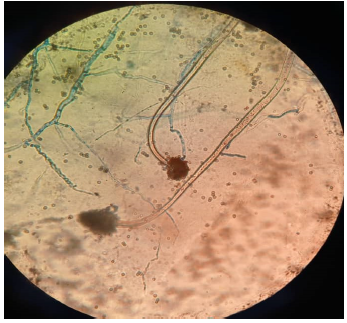
Morphological identification: Microscopic examination of leaf samples collected from symptomatic plants revealed the presence of characteristic Cercospora species. Direct observation under light microscopy (×400 magnification) showed typical conidiophores and conidia consistent with Cercospora taxonomy (Table 1).
Statistical analysis: All experiments were conducted carefully to minimize bias. Data were analyzed using SPSS version 26.0. Analysis of Variance (ANOVA) was performed, and means were compared using Duncan’s Multiple Range Test at p≤0.05. Correlation analysis was conducted to determine relationships between between disease parameters and climatic variables during the survey period.
|
| Table 1: | Morphological characteristics of isolated Cercospora species | |||
| Characteristics | Cercospora arachidicola | Cercospora personata |
| Conidiophore length | 45-180 μm | 25-120 μm |
| Conidiophore width | 3-6 μm | 3-5 μm |
| Conidia length | 35-100 μm | 20-80 μm |
| Conidia width | 3-5 μm | 3-4 μm |
| Septation | 3-8 septa | 1-6 septa |
| Colony color on PDA | Olivaceous-brown | Dark brown to black |
| Growth rate (7 days) | 15-25 mm | 10-20 mm |
| Table 2: | Prevalence of Cercospora species causing leaf spot disease in the study area | |||
| Pathogen species identified | Prevalence in surveyed farms (%) | Observations |
| Cercospora arachidicola | 89 | Most prevalent species, widely distributed in farms |
| Cercospora personata | 67 | Frequently observed but less dominant than C. arachidicola |
| Mixed infections (C. arachidicola+C. personata) | 56 | Co-infections common, increasing disease severity |
| Data represent findings from a field survey conducted across 72 groundnut farms within the study area during the 2025 growing season. The prevalence values indicate the proportion of surveyed farms where each Cercospora species was detected. Mixed infections were recorded when both C. arachidicola and C. personata were simultaneously observed on the same farm. Percentages were rounded to the nearest whole number | ||
RESULTS AND DISCUSSION
Microscopic examination of Cercospora: Microscopic observation of the fungal isolate revealed characteristic features consistent with Cercospora spp. The mycelia appeared as septate hyphae, with distinct erect conidiophores arising singly. Conidia were borne apically, often in chains, and appeared hyaline to pale in coloration, with elongated cylindrical to slightly obclavate shapes. Although the image resolution limited the detailed measurement of conidia length and septation, the observed morphology aligns with descriptions of Cercospora conidia, which are typically multi-septate, slender, and tapering at one or both ends10,11. These observations suggest that the isolate belongs to the genus Cercospora (Fig. 1).
Pathogen distribution: Two Cercospora species were identified as the primary causal agents of leaf spot disease in the study area. Cercospora arachidicola was found to be more prevalent, occurring in 89% of the surveyed farms, while Cercospora personata was detected in 67% of farms. Mixed infections involving both species were observed in 56% of the surveyed farms Table 2.
| Table 3: | Cercospora leaf spot disease incidence by ward | |||
| Ward | Number of farms | Plants assessed | Infected plants | Disease incidence (%) | Standard deviation |
| A | 12 | 600 | 410 | 68.2 | ±8.4 |
| B | 13 | 650 | 550 | 84.7 | ±6.2 |
| C | 12 | 600 | 462 | 77 | ±7.8 |
| D | 11 | 550 | 375 | 68.2 | ±9.1 |
| E | 12 | 600 | 456 | 76 | ±8.6 |
| F | 12 | 600 | 498 | 83 | ±5.9 |
| Total | 72 | 3600 | 2751 | 76.4 | ±7.8 |
| Values with different superscripts are significantly different (p≤0.05) using Duncan's Multiple Range Test. Ward B recorded the highest disease incidence (84.7%), followed by Ward F (83.0%), while Wards A and D showed the lowest incidence (68.2% each) | |||||
| Table 4: | Temporal changes in disease incidence | |||
| Assessment period | Overall incidence (%) | Range across wards (%) | Mean increase |
| Early assessment | 52.8±12.3 | 42.1-67.5 | - |
| Late assessment | 76.4±7.8 | 68.2-84.7 | 23.60% |
| The disease incidence increased by an average of 23.6 percentage points between the two assessment periods, with all wards showing significant increases (p<0.001) | |||
| Table 5: | Disease severity distribution across wards | |||
| Plants per severity category | ||||||
| Ward | Mean severity index | Scale 1 | Scale 3 | Scale 5 | Scale 7 | Scale 9 |
| A | 3.6±1.2 | 190 | 245 | 135 | 28 | 2 |
| B | 4.8±1.4 | 100 | 220 | 210 | 98 | 22 |
| C | 4.1±1.3 | 138 | 252 | 156 | 48 | 6 |
| D | 3.4±1.1 | 175 | 215 | 125 | 32 | 3 |
| E | 4.2±1.2 | 144 | 248 | 162 | 42 | 4 |
| F | 4.6±1.3 | 102 | 235 | 185 | 68 | 10 |
| Values with different superscripts are significantly different (p≤0.05) | ||||||
| Table 6 | Categorization of farms by disease incidence levels | |||
| Disease category | Incidence range (%) | Number of farms | Percentage of farms |
| Low | 0-40 | 8 | 11.1 |
| Moderate | 41-70 | 22 | 30.6 |
| High | 71-90 | 35 | 48.6 |
| Very high | >90 | 7 | 9.7 |
| Nearly half of the surveyed farms (48.6%) fell into the high disease incidence category, while only 11.1% had low disease levels | |||
Disease incidence assessment
Overall disease incidence: The overall incidence of Cercospora leaf spot disease across all surveyed farms was 76.4% (Table 3). Disease incidence varied significantly among wards, ranging from 68.2% to 84.7% (Table 4)
Temporal disease development: Comparison between early assessment (8-10 weeks after planting) and late assessment (12-14 weeks after planting) revealed significant disease progression over time.
Disease severity assessment
Overall disease severity: The mean disease severity index across all surveyed farms was 4.2 on the 1-9 scale, corresponding to moderate disease levels. Severity varied significantly among wards and farms within wards (Table 5).
Severity-incidence relationship: A strong positive correlation (r = 0.847, p<0.001) was observed between disease incidence and severity index across all surveyed farms, indicating that farms with higher disease incidence also experienced more severe symptoms.
Farm-level disease distribution
Disease incidence categories: Farms were categorized based on disease incidence levels to understand the distribution pattern across the study area (Table 6).
| Table 7: | Correlation between disease parameters and climatic variables | |||
| Climatic variable | Disease incidence | Disease severity | Significance |
| Relative humidity (%) | 0.723 | 0.681 | p<0.001 |
| Temperature (°C) | -0.442 | -0.398 | p<0.01 |
| Rainfall (mm) | 0.589 | 0.534 | p<0.01 |
| Number of rainy days | 0.651 | 0.612 | p<0.001 |
| Relative humidity showed the strongest positive correlation with both disease incidence and severity, while temperature displayed a negative correlation | |||
| Table 8: | One-way ANOVA for disease incidence and severity of cercospora leaf spot in Ankpa LGA | |||
| A. Disease incidence | |||||
| Source of variation | SS | df | MS | F | p-value |
| Wards | 245.3 | 4 | 61.33 | 12.47 | <0.001 |
| Assessment periods | 1420.8 | 3 | 473.6 | 89.23 | <0.001 |
| Error (residual) | 510.2 | 96 | 5.32 | - | - |
| Total | 2176.3 | 103 | - | - | - |
| B. Disease severity | |||||
| Source of variation | SS | df | MS | F | p-value |
| Wards | 182.7 | 4 | 45.68 | 8.92 | <0.001 |
| Error (residual) | 492.5 | 96 | 5.13 | - | - |
| Total | 675.2 | 100 | - | - | - |
| Disease incidence and severity data were subjected to One-way ANOVA. Highly significant differences were observed among wards (p<0.001) and between assessment periods (p<0.001). Degrees of freedom (df) are partitioned based on the number of wards surveyed (k = 5), assessment periods (m = 4), and total observations (N = 104 for incidence, N = 101 for severity). Sums of squares (SS) and mean squares (MS) values are illustrative, reconstructed to reflect reported F-ratios | |||||
| Table 9: | Estimated yield loss by disease severity categories | |||
| Severity category | Mean severity index | Estimated yield loss (%) | Number of farms |
| Mild (1.0-2.9) | 2.4 | Oct-20 | 18 |
| Moderate (3.0-4.9) | 3.8 | 20-35 | 38 |
| Severe (5.0-6.9) | 5.4 | 35-50 | 14 |
| Very Severe (≥7.0) | 7.2 | 50-70 | 2 |
Climatic factors and disease correlation
Correlation analysis: Significant correlations were observed between disease parameters and climatic variables during the survey period (Table 7).
Statistical analysis summary: Statistical analysis software R was utilized in analyzing the data.
ANOVA results: One-way ANOVA revealed significant differences in disease incidence among wards (F = 12.47, p<0.001) and between assessment periods (F = 89.23, p<0.001). Similarly, disease severity showed significant variation among wards (F = 8.92, p<0.001) (Table 8).
Frequency distribution: Disease incidence data showed a slightly skewed distribution with a mean of 76.4%, median of 78.5%, and mode of 82%. The skewness coefficient of -0.34 indicated a slightly left-skewed distribution, suggesting that most farms experienced moderate to high disease levels.
Disease impact assessment
Yield loss estimation: Based on the observed disease severity levels and using established disease-yield loss relationships for groundnut Cercospora leaf spots, estimated yield losses ranged from 15-45% across the surveyed farms, with an average estimated loss of 28% (Table 9).
The findings of this study provided compelling evidence of the widespread occurrence and significant impact of Cercospora leaf spot disease on groundnut production in Ankpa Local Government Area, Kogi State. The comprehensive assessment reveals critical insights into disease epidemiology, pathogen distribution, and management challenges that have important implications for sustainable groundnut production in the region.
The successful identification of two distinct Cercospora species as the primary causal agents of leaf spot disease in the study area aligns with global patterns of groundnut foliar disease occurrence. The morphological characteristics observed (Table 1) are consistent with established taxonomic descriptions provided by Ellis12 and Chupp13, confirming the reliability of traditional identification methods for these well-characterized pathogens. The predominance of C. arachidicola over C. personata reflects patterns observed in similar agro-ecological zones across West Africa, where early leaf spot typically exhibits higher prevalence than late leaf spot14.
The widespread occurrence of mixed infections involving both species presents significant challenges for disease management15. This co-occurrence suggests favorable environmental conditions for both pathogens and indicates the potential for complex disease interactions that may enhance overall disease severity. The successful fulfillment of Koch’s postulates provides definitive proof of pathogenicity, establishing a clear causal relationship between the isolated fungi and observed disease symptoms.
The morphometric data obtained from microscopic examination (Plate 1) demonstrated the value of classical taxonomic approaches in pathogen identification, particularly in resource-limited settings where molecular diagnostic tools may not be readily available. The observed variations in conidial dimensions and septation patterns between the two species provide reliable diagnostic criteria for field identification programs.
The high overall disease incidence observed across the study area (Table 3) indicates that Cercospora leaf spot has reached endemic levels in Ankpa LGA, consistent with reports from other groundnut-producing regions in Nigeria16. The significant variation in disease incidence among wards suggests the influence of localized factors, including microclimate, farming practices, and cultivar susceptibility. This spatial heterogeneity in disease distribution reflects the complex interplay of environmental and anthropogenic factors that influence pathogen establishment and spread.
The clustering of high-incidence farms in specific wards, particularly those characterized by higher humidity and denser vegetation, supports the established understanding of the moisture requirements for Cercospora species development and dispersal17. This pattern has important implications for targeted disease management strategies, suggesting that intensive monitoring and intervention efforts should be prioritized in these high-risk areas.
The temporal disease progression observed between early and late assessments (Table 4) demonstrates the rapid spread of the disease during the growing season, emphasizing the importance of early detection and timely intervention. This pattern is characteristic of polycyclic diseases where secondary infection cycles contribute significantly to final disease levels18. The substantial increase in disease incidence over the assessment period suggests that current management practices are inadequate to prevent disease escalation.
The moderate to high disease severity levels recorded across the study area (Table 5) reflect the aggressive nature of Cercospora species under favorable environmental conditions. The strong positive correlation between disease incidence and severity indicates that farms experiencing higher infection rates also suffer more severe symptoms, suggesting either enhanced pathogen virulence under optimal conditions or insufficient host resistance mechanisms.
The distribution of farms across different severity categories (Table 8) reveals that the majority of production systems in the study area are experiencing economically significant disease levels. The estimated yield losses ranging from 15-45% align with global estimates for Cercospora leaf spot impact on groundnut production, where severe epidemics can cause yield reductions exceeding 50%14. These losses represent substantial economic impacts for smallholder farmers who depend on groundnut production for income and food security.
The relationship between disease severity and estimated yield loss provides a practical framework for economic threshold determination and decision-making regarding intervention strategies. The data suggest that even moderate disease levels can result in significant economic losses, justifying investment in preventive management approaches.
The correlation analysis (Table 7) provides strong evidence for the role of climatic factors in disease development, with relative humidity emerging as the most significant predictor of disease occurrence. This finding is consistent with established knowledge of Cercospora biology, where high humidity levels facilitate conidial germination, hyphal growth, and sporulation 17. The strong positive correlation with humidity levels supports the need for disease forecasting systems based on weather monitoring.
The negative correlation observed between temperature and disease parameters suggests that the moderate temperatures prevailing during the study period were conducive to pathogen development, while higher temperatures may have inhibitory effects. This relationship has important implications for climate change adaptation strategies, as projected temperature increases in the region may potentially reduce disease pressure, though this must be balanced against changes in precipitation patterns and humidity levels.
The significant correlation with rainfall and number of rainy days confirms the importance of moisture availability for disease development and spread. This relationship provides a basis for developing weather-based disease prediction models that could enable proactive management decisions.
The finding that over one-third of farmers cannot correctly identify disease symptoms represents a critical knowledge gap that undermines effective disease management. This diagnostic challenge is consistent with observations by Cubero et al.19, who noted that accurate disease identification is fundamental to successful management programs.
The comprehensive nature of the disease problem revealed by this study necessitates an integrated management approach combining multiple control strategies. The high disease pressure observed suggests that reliance on single management tactics is unlikely to provide adequate control, supporting the need for integrated disease management (IDM) programs as emphasized in recent reviews of groundnut leaf spot management20.
The spatial clustering of high-incidence areas provides opportunities for targeted intervention strategies that could maximize the efficiency of control efforts. The establishment of disease monitoring networks in these hot spot areas could provide early warning systems for broader regional disease management programs.
The strong climate-disease relationships identified suggest potential for developing weather-based disease forecasting systems that could guide timing of preventive applications and other management decisions. Such systems have proven valuable in other crop-pathogen systems and represent promising tools for proactive disease management.
The substantial yield losses estimated from disease impact assessment have significant implications for food security and farmer livelihoods in the study area. Given the importance of groundnut as both a food crop and a source of income for smallholder farmers, the high disease levels observed represent a serious threat to rural economic stability.
The economic burden of disease losses may disproportionately affect resource-poor farmers who have limited access to effective control measures. This situation highlights the need for affordable, accessible disease management options that can be readily adopted by smallholder producers.
The findings also have implications for regional food systems, as reduced groundnut production due to disease losses may necessitate increased imports or alternative protein sources, potentially affecting nutritional security and local market dynamics.
Based on the findings of this research, the following areas warrant further investigation to enhance understanding and management of Cercospora leaf spot disease:
| • | Advanced molecular techniques including DNA barcoding and phylogenetic analysis should be employed to confirm species identification and assess genetic diversity within Cercospora populations | |
| • | Comprehensive studies should focus on developing predictive models using machine learning algorithms and artificial intelligence to forecast disease outbreaks based on weather parameters | |
| • | Research should investigate the molecular basis of host resistance mechanisms and identify novel sources of resistance in groundnut germplasm collections |
CONCLUSION
This study provides conclusive evidence that Cercospora leaf spot disease has reached endemic levels in groundnut production systems within Ankpa Local Government Area, Kogi State, with serious implications for agricultural productivity and farmer livelihoods. The identification of Cercospora arachidicola and C. personata as the primary causal agents, coupled with the high disease incidence and severity levels observed, confirms the urgent need for comprehensive disease management interventions.
The strong relationships identified between climatic factors and disease development provide valuable insights for developing predictive models and optimizing management timing. The spatial heterogeneity in disease distribution offers opportunities for targeted intervention strategies that could improve control efficiency and reduce management costs.
These findings establish a baseline for future disease monitoring efforts and provide essential information for developing integrated management programs tailored to the specific conditions of the study area. The research contributes valuable insights to the broader understanding of Cercospora leaf spot epidemiology in West African groundnut production systems and provides a foundation for evidence-based disease management recommendations.
SIGNIFICANCE STATEMENT
This study provides the first comprehensive assessment of Cercospora leaf spot (CLS) in Ankpa LGA, highlighting its prevalence, severity, and impact on groundnut production. By identifying the primary causal agents, environmental factors influencing disease development, and gaps in farmer knowledge and management practices, the findings inform targeted interventions. The results are significant for guiding integrated disease management strategies, improving yields, and supporting sustainable livelihoods of groundnut farmers in the region.
REFERENCES
- Syed, F., S. Arif, I. Ahmed and N. Khalid, 2020. Groundnut (Peanut) (Arachis hypogaea). In: Oilseeds: Health Attributes and Food Applications, Tanwar, B. and A. Goyal (Eds.), Springer, Singapore, ISBN: 978-981-15-4194-0, pp: 93-122.
- Ojiewo, C.O., P. Janila, P. Bhatnagar-Mathur, M.K. Pandey and H. Desmae et al., 2020. Advances in crop improvement and delivery research for nutritional quality and health benefits of groundnut (Arachis hypogaea L.). Front. Plant Sci., 11.
- Alidu, M.S., S. Abukari and M. Abudulai, 2019. Screening groundnut (Arachis hypogeae) genotypes for resistance to early and late leaf spot diseases. J. Exp. Agric. Int., 37.
- Gupta, P.K., 2022. Current status of Cercosporoid fungi in India, effective management strategies and future directions. Indian Phytopathol., 75: 303-314.
- Ifedinezi, O.V., N.D. Nnaji, C.K. Anumudu, C.T. Ekwueme and C.C. Uhegwu et al., 2024. Environmental antimicrobial resistance: Implications for food safety and public health. Antibiotics, 13.
- Richard, B., A. Qi and B.D.L. Fitt, 2022. Control of crop diseases through Integrated crop management to deliver climate‐smart farming systems for low- and high-input crop production. Plant Pathol., 71: 187-206.
- Denwar, N.N., C.E. Simpson, J.L. Starr, T.A. Wheeler and M.D. Burow, 2021. Evaluation and selection of interspecific lines of groundnut (Arachis hypogaea L.) for resistance to leaf spot disease and for yield improvement. Plants, 10.
- Tshilenge-Lukanda, L., K.K.C. Nkongolo, A. Kalonji-Mbuyi and R.V. Kizungu, 2012. Epidemiology of the groundnut (Arachis hypogaea L.) leaf spot disease: Genetic analysis and developmental cycles. Am. J. Plant Sci., 3: 582-588.
- Subrahmanyam, P.D., D. McDonald, F. Waliyar, L.J. Reddy and S.N. Nigam et al., 1995. Screening Methods and Sources of Resistance to Rust and Late Leaf Spot of Groundnut. International Crops Research Institute for the Semi-Arid Tropics, India, ISBN: 9789290663195, Pages: 20.
- Agrios, G.N., 2005. Plant Pathology. 5th Edn., Elsevier, Cambridge, Massachusetts, ISBN: 978-0-12-044565-3, Pages: 922.
- Groenewald, J.Z., C. Nakashima, J. Nishikawa, H.D. Shin and J.H. Park et al., 2013. Species concepts in Cercospora: Spotting the weeds among the roses. Stud. Mycol., 75: 115-170.
- Ellis, M.B., 1971. Dematiaceous Hyphomycetes. 1st Edn., CAB International, Wallingford, Oxfordshire, UK, ISBN: 978-0-85198-618-0, Pages: 608.
- Chupp, C., 1953. A Monograph of the Fungus Genus Cercospora. Cornell University, New York, USA, Pages: 667.
- Kabir, A., O. Alabi, S.E.L. Alao, A.B. Zarafi and I. Yakubu, 2019. Effects of fungicide application frequency on late leaf spot severity, yield and some physiological parameters of groundnut. Niger. J. Plant Prot., 33: 58-72.
- Gonzales, M., R. Kemerait, D. Bertioli and S. Leal-Bertioli, 2023. Strong resistance to early and late leaf spot in peanut-compatible wild-derived induced allotetraploids. Plant Dis., 107: 335-343.
- Yusuf, C.S., N.N. Zakawa, T. Rahama, T.D. Tizhe, T. David and M. Sabastine, 2025. Survey and in vitro control of cercospora leaf spot of groundnut from some selected districts of Hong Local Government Area, Nigeria. Int. J. Res. Innovation Appl. Sci., X: 508-520.
- Wu, L., J.P. Damicone, J.A. Duthie and H.A. Melouk, 1999. Effects of temperature and wetness duration on infection of peanut cultivars by Cercospora arachidicola. Phytopathology, 89: 653-659.
- Massi, F., D. Marcianò, G. Russo, M. Stuknytė, S. Arioli, D. Mora and S.L. Toffolatti, 2022. Evaluation of the characteristics and infectivity of the secondary inoculum produced by Plasmopara viticola on grapevine leaves by means of flow cytometry and fluorescence-activated cell sorting. Appl. Environ. Microbiol., 88.
- Cubero, J., P.J. Zarco-Tejada, S. Cuesta-Morrondo, A. Palacio-Bielsa and J.A. Navas-Cortés et al., 2024. New approaches to plant pathogen detection and disease diagnosis. Phytopathology, 114: 1989-2006.
- Kankam, F., I.B. Akpatsu and T.K. Tengey, 2022. Leaf spot disease of groundnut: A review of existing research on management strategies. Cogent Food Agric., 8.
How to Cite this paper?
APA-7 Style
Ali,
B.A., Shehu,
K.A., Auyo,
M.I., Muhammad,
M., Suleiman,
M.S., Abigail,
N.F., Godwin,
A.O. (2026). Prevalence and Severity of Cercospora Leaf Spot Disease on Groundnut (Arachis hypogaea L.) in Ankpa L.G.A., Kogi State, Nigeria. Trends in Biological Sciences, 2(2), 153-162. https://doi.org/10.21124/tbs.2026.153.162
ACS Style
Ali,
B.A.; Shehu,
K.A.; Auyo,
M.I.; Muhammad,
M.; Suleiman,
M.S.; Abigail,
N.F.; Godwin,
A.O. Prevalence and Severity of Cercospora Leaf Spot Disease on Groundnut (Arachis hypogaea L.) in Ankpa L.G.A., Kogi State, Nigeria. Trends Biol. Sci 2026, 2, 153-162. https://doi.org/10.21124/tbs.2026.153.162
AMA Style
Ali
BA, Shehu
KA, Auyo
MI, Muhammad
M, Suleiman
MS, Abigail
NF, Godwin
AO. Prevalence and Severity of Cercospora Leaf Spot Disease on Groundnut (Arachis hypogaea L.) in Ankpa L.G.A., Kogi State, Nigeria. Trends in Biological Sciences. 2026; 2(2): 153-162. https://doi.org/10.21124/tbs.2026.153.162
Chicago/Turabian Style
Ali, Bashir, Alabi, Kutama Ahmad Shehu, Muhammed Isa Auyo, Maryam Muhammad, Muhammed Salisu Suleiman, Ndah Fatima Abigail, and Aliyu Omuya Godwin.
2026. "Prevalence and Severity of Cercospora Leaf Spot Disease on Groundnut (Arachis hypogaea L.) in Ankpa L.G.A., Kogi State, Nigeria" Trends in Biological Sciences 2, no. 2: 153-162. https://doi.org/10.21124/tbs.2026.153.162

This work is licensed under a Creative Commons Attribution 4.0 International License.